Tag: fiction

Not Ready

What follows is a new short story. Would love to hear your comments.
Not Ready

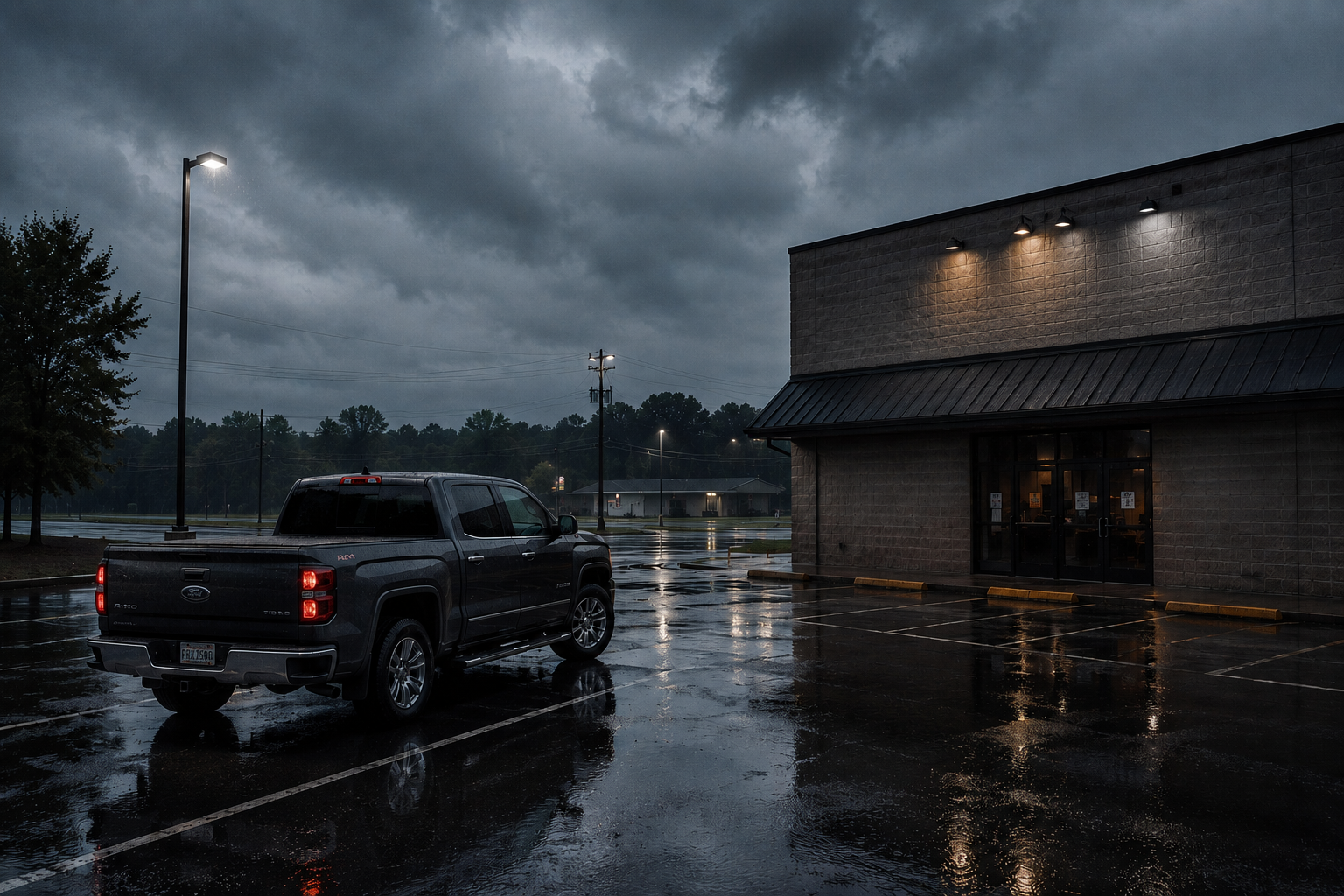
It was a dark, overcast afternoon in mid-July when I pulled into the small parking lot.

Much like my mood, the sky had been sulking all morning. Heavy gray clouds hung low overhead, threatening rain for hours before finally giving in with scattered showers and distant rolls of thunder.

Another burst had just passed as I shifted into park and killed the engine.

For a moment, I sat there in silence, watching the last thin streams of water slide down the windshield. Tiny rivulets merged together, slipping past the resting wiper blades.

I watched them disappear into the growing puddles below and wondered what it might be like to simply let go.

I glanced up at the sign mounted on the building’s façade.

Yes. This was the place.

The structure sat on the far side of town, an anonymous block of concrete that looked like it might once have been a small warehouse. Most people would drive right past it without giving it a second thought. But I knew what it was. 

Or more accurately, I knew what waited inside.

That knowledge settled over me like a weight.

I had already promised myself I wasn’t buying anything today. I was only here to browse. Maybe ask a few questions. Maybe take a brochure home and leave it unopened on the kitchen counter for six months.

The truth is, I could have learned everything online in less than ten minutes, but that wasn’t the point. I needed to stand here. I needed to see it for myself.

Mostly, I needed proof that I could.

A large man stood outside the entrance smoking a cigarette. He looked to be in his mid-sixties, with weathered features and salt-and-pepper hair. A bright yellow construction vest hung loosely from his shoulders.

The rain didn’t seem to bother him.

He drew deeply from the cigarette and exhaled toward the sky, the smoke joining the dark clouds above.

Those things will kill you, I thought. 

The irony wasn’t lost on me.

A few moments later, a delivery driver approached carrying a long cardboard box. He handled it carefully, as though dropping it wasn’t an option.

The older man dropped his cigarette, crushed it beneath his boot, and held the door open for him.

The driver smiled.

The older man smiled back.

Then both disappeared inside.

Through the glass, I caught a glimpse of wooden stocks hanging on a wall before the door swung shut again.

I sat there for several minutes after that, replaying the simple exchange. 

It felt like I was stalling. Maybe I was.

My thoughts drifted to the cemetery a few blocks away.

My grandfather is buried there. It struck me that nearly forty years had passed since they lowered him into the ground.

I remembered the old .22 rifle he kept locked in the hall closet. He’d taught me how to handle it when I was twelve.

“Always respect what it can do,” he’d told me.

Back then, I thought he was talking about the rifle.

“Where does the time go?” I whispered aloud.

Rain tapped softly against the roof.

I thought about my grandfather resting nearby in a place where pain no longer touched him. A place where he could no longer speak, yet somehow always seemed capable of listening.

I remembered something I’d read years ago in high school—a story, maybe a poem. I couldn’t recall the details. Only the image of a smile slowly leaving someone’s eyes. 

The memory brushed against me like a cold hand. My heart skipped.

Outside, the rain began falling harder. 

I looked up at the sign again through the distorted curtain of water. 

The answer came immediately. Not today.

My hand moved almost on its own, turning the key in the ignition. Smooth jazz filled the cabin.

The windshield wipers sprang to life, sweeping away the rain with steady determination. They were doing exactly what they had been designed to do.

Me? I wasn’t so sure.

I shifted into drive and pulled out of the lot.

I didn’t look back. Instead, I took the long way home, following the road that passed the cemetery.

I didn’t stop. I simply glanced toward the section where my grandfather’s headstone stood.

The weather wasn’t right for a visit, but that didn’t matter. This wasn’t about saying hello. It was about hearing one last piece of advice.

And somehow, from a place beyond words, I felt like he understood.

I tightened my grip on the steering wheel and continued driving. 

I’d make a few phone calls once I got home.

I’m not ready.

(c) 2026 James Wood
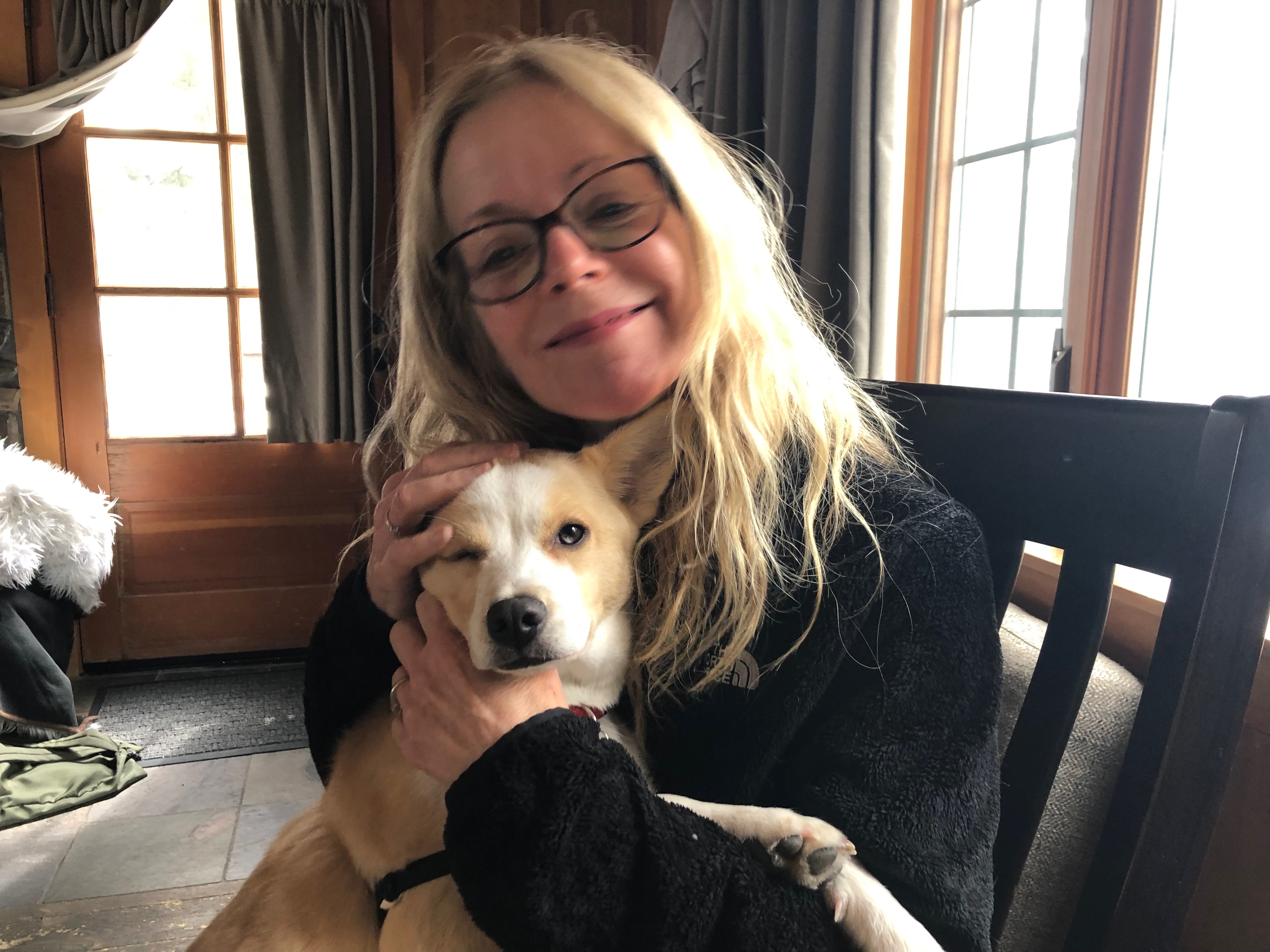
Victoria Morsell Hemingson Discusses 30th Anniversary of ‘Phantasmagoria,’ Writing

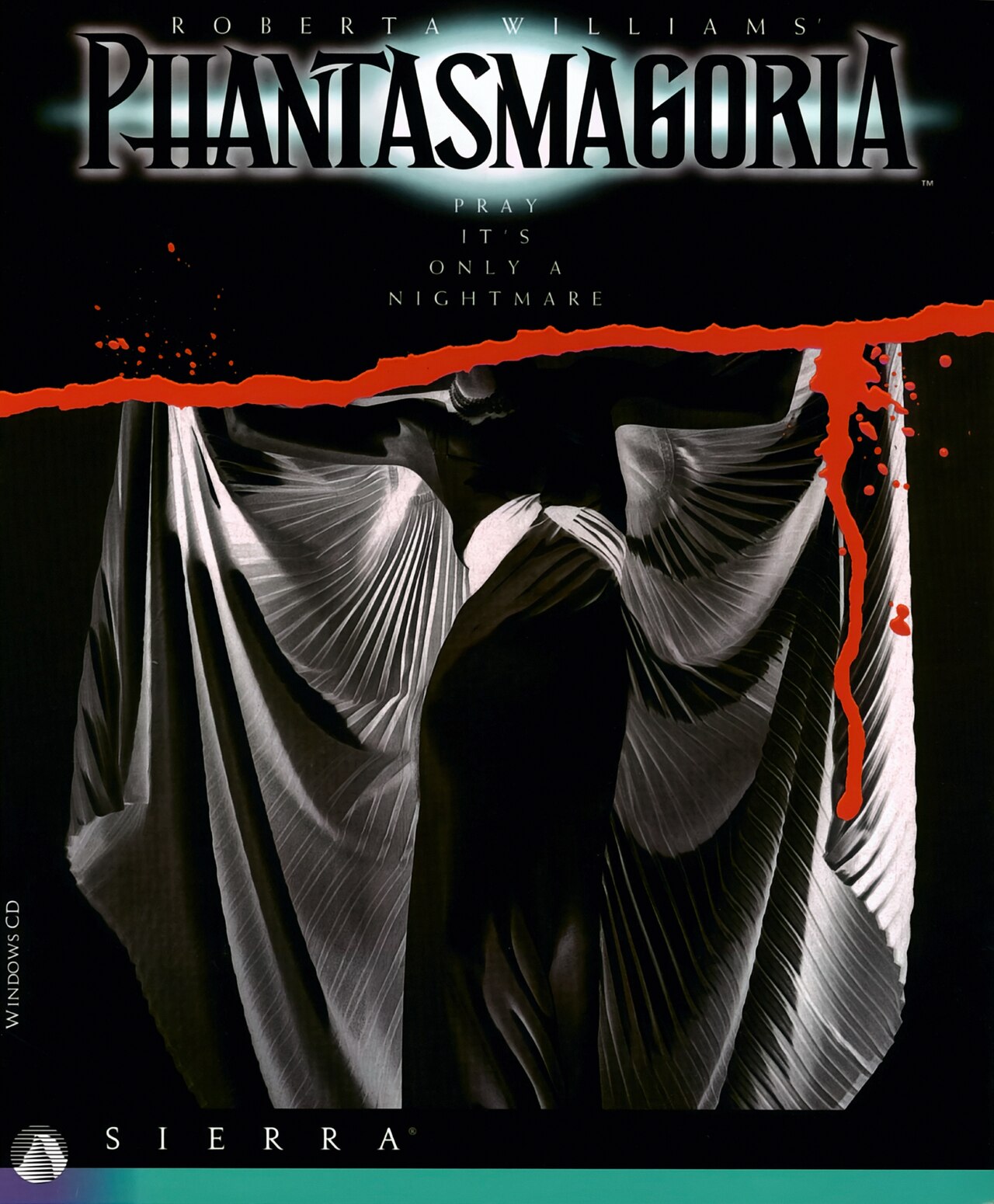
Widely regarded as one of the most successful and controversial computer video games of its time, Phantasmagoria wowed gamers when it was released in the summer of 1995.

The interactive point-and-click horror adventure created by Sierra Online, one of the first games for both MS-DOS and Windows, spanned seven discs and grossed more than $12 million dollars on its opening weekend, easily becoming one of the year’s best-selling games.

The hugely detailed 550-page script developed by Roberta Williams told the story of Adrienne Delaney (portrayed by actress Victoria Morsell Hemingson), a writer who moves into a remote mansion only to find herself terrorized by supernatural forces. The game featured both live action and cinematic footage mixed within a three-dimensionally rendered environment.

Despite the buzz and high demand it generated, Phantasmagoria was also considered controversial upon its release in 1995, with several major retailers refusing to even stock the game because of content they considered to contain “highly realistic violence.” Something that seems trivial in comparison to the games currently occupying store shelves three decades later.

Although the game was hugely successful, Victoria Morsell Hemingson decided to switch gears from acting in order to pursue a career in writing shortly after the release of Phantasmagoria, as well as to concentrate on marriage and raising a family. In 2021 she was awarded the grand prize in the Mystery/Thriller category in Book Pipeline Unpublished for her novel, “Awful Necessary Things.”

Today, she’s concentrating on several different writing projects, including novels as well as a powerfully written and personal non-fiction piece about a difficult time in her life. She’s also had the opportunity to actually play Phantasmagoria herself for the very first time on the Conversations with Curtis YouTube channel.

I recently spoke with Hemingson about Phantasmagoria’s 30th anniversary and its impact, her writing and more in this new interview.

It’s been thirty years since the release of Phantasmagoria. When you look back now with so much perspective what thoughts come to mind?

Victoria Morsell Hemingson: I remember it was actually really fun to make. We had such a great time because it was like a dream job. They put us up in cabins and we all got to stay by a lake. We were a tight knit group and it was nice to have something steady for a few months. If you follow Conversations With Curtis on YouTube, that was the first time I ever actually played the game. I remember when I was hired I really didn’t know very much about computer video games but I was told it was a new kind of game that was cutting edge. I had originally auditioned for the director for another project. He had seen me act before and knew I’d be right for the part in Phantasmagoria.

Did you know what you were getting into with this game?

Hemingson: It was hard to envision exactly what it was going to look like at first. It was a gigantic script and there was a lot we didn’t understand going in. For example, the set was in front of a blue screen and was completely empty. There was no furniture; just boxes for steps, beds and chairs. I remember we had to stand facing a monitor and could see the animation that they already had done on the TV and where we were going to be in relation to the game while we were doing it. It took a while to get used to how to move and be in the right place on screen. As an actor it was a bit of a challenge not knowing how big or small to go. We were all figuring it out as we went along.

What was it like learning the story and what were some of the little nuances in the 500+ page script?

Hemingson: Roberta Williams told me the story. The script itself was all in order but it contained everything, like first I would have to open a drawer to find the matches. Then I would open the drawer to see the matches, then open the drawer and not see the matches. Each of those kinds of variations was part of the script. I remember when we filmed we were there for a few months and then brought back in a few months later to shoot for a final few weeks.

What made you decide to make the transition from acting to writing?

Hemingson: I always wrote when I was a kid and a lot of the acting I was starting to do wasn’t as satisfying or fulfilling. I wanted to do something I was really proud of. I still remember the exact moment I realized that I was done acting. I had gone on an audition for a play and they kept everyone waiting around for hours and hours. Then when it was finally my turn to audition it was like a split second. It just felt like it wasn’t worth it. So I decided to go back to school and got a master’s in writing. The writing was something I always wanted to do.

What’s your writing process like?

Hemingson: It can be difficult trying to get into the groove but I try to write in the morning and then later on in the afternoon, Of course, it’s different when I’m revising. When I was in school I was a little more efficient with my time working and writing.

What are some of the projects you’re currently working on?

Hemingson: I recently wrote a personal non-fiction piece for Hippocampus Magazine. I used to work as a receptionist when I was younger and had an eating disorder. It was during this time that I started seeing this actor, whose name I won’t reveal.

I’ve also written a fiction piece for South Carolina Review about a woman in Los Angeles who’s trying to get off a cycle of bad choices and am working on a new novel.

What are you most looking forward to about this next phase of your career?

Hemingson: I guess it would have to be completing these new projects. I’m excited about working on them. I need to get them out of me. I may also be collaborating with my husband on something which will be fun. He’s a screenwriter who wrote the film, “The Holdovers.”