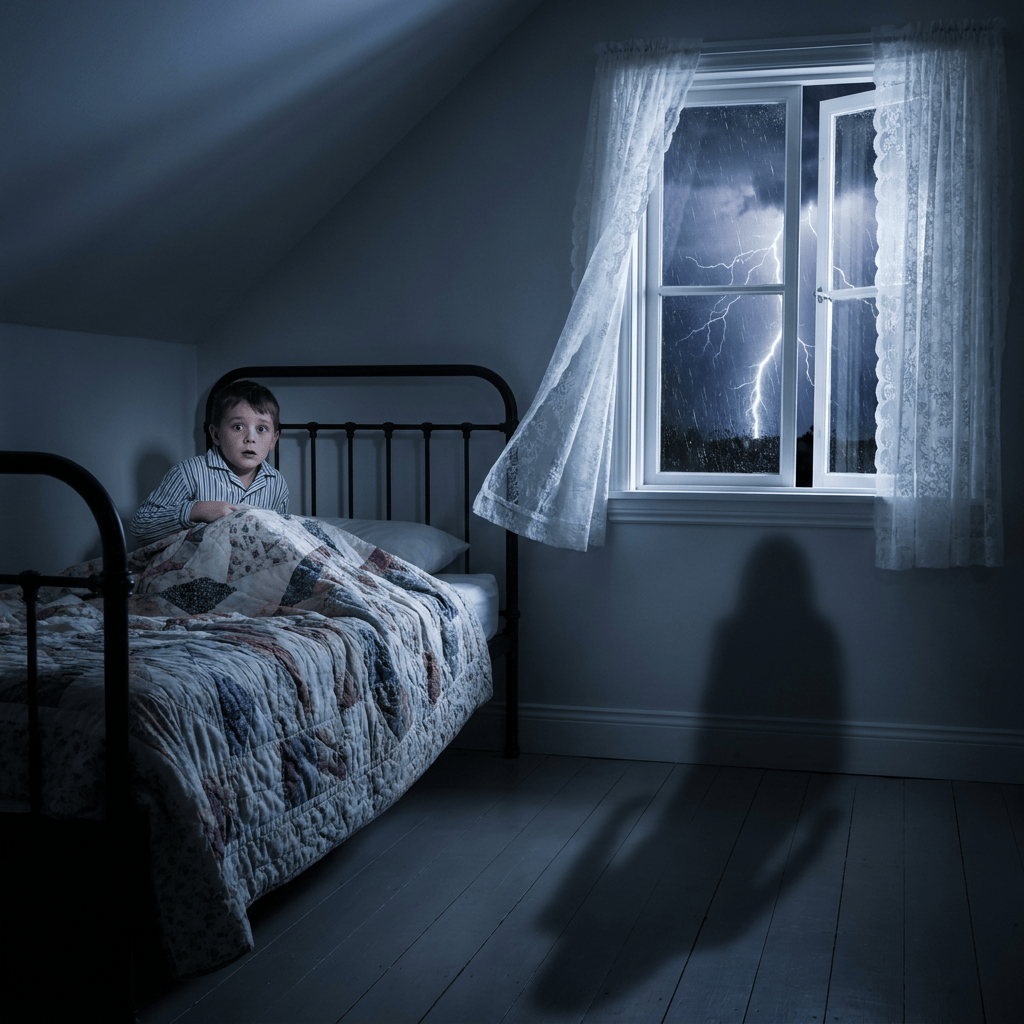
Not Ready

What follows is a new short story. Would love to hear your comments.

Not Ready

It was a dark, overcast afternoon in mid-July when I pulled into the small parking lot.

Much like my mood, the sky had been sulking all morning. Heavy gray clouds hung low overhead, threatening rain for hours before finally giving in with scattered showers and distant rolls of thunder.

Another burst had just passed as I shifted into park and killed the engine.

For a moment, I sat there in silence, watching the last thin streams of water slide down the windshield. Tiny rivulets merged together, slipping past the resting wiper blades.

I watched them disappear into the growing puddles below and wondered what it might be like to simply let go.

I glanced up at the sign mounted on the building’s façade.

Yes. This was the place.

The structure sat on the far side of town, an anonymous block of concrete that looked like it might once have been a small warehouse. Most people would drive right past it without giving it a second thought. But I knew what it was. 

Or more accurately, I knew what waited inside.

That knowledge settled over me like a weight.

I had already promised myself I wasn’t buying anything today. I was only here to browse. Maybe ask a few questions. Maybe take a brochure home and leave it unopened on the kitchen counter for six months.

The truth is, I could have learned everything online in less than ten minutes, but that wasn’t the point. I needed to stand here. I needed to see it for myself.

Mostly, I needed proof that I could.

A large man stood outside the entrance smoking a cigarette. He looked to be in his mid-sixties, with weathered features and salt-and-pepper hair. A bright yellow construction vest hung loosely from his shoulders.

The rain didn’t seem to bother him.

He drew deeply from the cigarette and exhaled toward the sky, the smoke joining the dark clouds above.

Those things will kill you, I thought. 

The irony wasn’t lost on me.

A few moments later, a delivery driver approached carrying a long cardboard box. He handled it carefully, as though dropping it wasn’t an option.

The older man dropped his cigarette, crushed it beneath his boot, and held the door open for him.

The driver smiled.

The older man smiled back.

Then both disappeared inside.

Through the glass, I caught a glimpse of wooden stocks hanging on a wall before the door swung shut again.

I sat there for several minutes after that, replaying the simple exchange. 

It felt like I was stalling. Maybe I was.

My thoughts drifted to the cemetery a few blocks away.

My grandfather is buried there. It struck me that nearly forty years had passed since they lowered him into the ground.

I remembered the old .22 rifle he kept locked in the hall closet. He’d taught me how to handle it when I was twelve.

“Always respect what it can do,” he’d told me.

Back then, I thought he was talking about the rifle.

“Where does the time go?” I whispered aloud.

Rain tapped softly against the roof.

I thought about my grandfather resting nearby in a place where pain no longer touched him. A place where he could no longer speak, yet somehow always seemed capable of listening.

I remembered something I’d read years ago in high school—a story, maybe a poem. I couldn’t recall the details. Only the image of a smile slowly leaving someone’s eyes. 

The memory brushed against me like a cold hand. My heart skipped.

Outside, the rain began falling harder. 

I looked up at the sign again through the distorted curtain of water. 

The answer came immediately. Not today.

My hand moved almost on its own, turning the key in the ignition. Smooth jazz filled the cabin.

The windshield wipers sprang to life, sweeping away the rain with steady determination. They were doing exactly what they had been designed to do.

Me? I wasn’t so sure.

I shifted into drive and pulled out of the lot.

I didn’t look back. Instead, I took the long way home, following the road that passed the cemetery.

I didn’t stop. I simply glanced toward the section where my grandfather’s headstone stood.

The weather wasn’t right for a visit, but that didn’t matter. This wasn’t about saying hello. It was about hearing one last piece of advice.

And somehow, from a place beyond words, I felt like he understood.

I tightened my grip on the steering wheel and continued driving. 

I’d make a few phone calls once I got home.

I’m not ready.

(c) 2026 James Wood

Kansas bringing 50 years of rock history to Wind Creek show

(Photo by Jason Kempin/Getty Images)

With a career that spans more than five decades, Kansas has secured its place as one of the most enduring and influential acts in American rock history.

Since their formation as a garage band in Topeka in the early 1970s, Kansas has sold more than 30 million albums worldwide and produced a catalog of songs that remain staples of classic rock radio and pop culture alike. Anthems such as “Carry on Wayward Son,” “Dust in the Wind,” “Fight Fire with Fire” and “Point of Know Return” continue to resonate with generations of fans.

The band’s remarkable documentary, 2015’s “Miracles Out of Nowhere,” chronicles the band’s rise from the Midwest bar circuit to international fame. Even after decades on the road and in the studio, Kansas continues to push forward creatively. Their 2020 studio release, The Absence of Presence, debuted at No. 10 on the Billboard charts, ushering in a new era in the band’s legacy.

On Friday, Kansas returns to the Lehigh Valley for a performance at Wind Creek Event Center in Bethlehem, for a show that promises familiar favorites, deep cuts, and the musical virtuosity that’s defined Kansas for more than half a century.

I recently spoke with Kansas keyboardist Tom Brislin about the band’s return to the region and how the band continues to keep its music alive for longtime fans while inspiring a new generation of listeners.

Q: How did you become a member of Kansas?

A: A few of the members of the band were familiar with me through my work with Yes and a few of the other 70s rock acts I had played with. In 2018 I was working with a group called The Sea Within and we were label mates of Kansas. So it was also our label that brought me to their attention, and when they needed someone they gave me a call.

Q: What was it like for you to be asked to join such a legendary band and did you feel you were ready for such an endeavor?

A: It was really unexpected, as have all the calls I’ve gotten through the year have been. I was fortunate that one of the first big calls I received was from Meat Loaf back when I was 24-years-old. That was the one that really set me on a path of playing big stages. He really took me under his wing and helped me become calibrated to that type of touring and work. I’ve taken my music seriously ever since.

Read the rest of my Morning Call interview with Tom Brislin by Clicking Here.

Interview: Comedian Jeff Foxworthy previews State Theatre performance

With a career spanning more than four decades, Jeff Foxworthy has firmly established himself as one of the most recognizable and successful comedians of all time.

The Georgia-born funnyman is the biggest-selling comedy recording artist of all time, a best-selling author and television host, whose easygoing style and sharp observational wit have made him a household name. Offstage, Foxworthy is also an avid outdoorsman who enjoys spending time in nature when he isn’t touring the country making audiences laugh.

Foxworthy first rocketed to fame in the early ’90s with his popular “You might be a redneck if” one-liners — a series of rapid-fire jokes that affectionately poked fun at everyday Southern culture. The bit quickly became a pop-culture phenomenon, spawning bestselling comedy albums, books and calendars. Now, Foxworthy is bringing his familiar down-to-earth humor back to the stand-up stage when he returns to the historic State Theatre in Easton on Thursday.

Ahead of his upcoming performance, I spoke with Jeff Foxworthy about the enduring popularity of his comedy, memorable moments and why audiences continue to connect with humor that finds the funny in ordinary life.

Q: How would you describe your style? Is there a way you can put into words what your comedy is all about?

A: Like most comics, when I started out I remember looking at billboards or watching commercials and thinking, “What can I talk about?” I learned early on that there’s a commonality we as human beings have where we’re all doing the same goofy stuff in life. I always trusted that. I’ve been doing this for 42 years but if you go back in time the first material I did was about dating, then it was about being a newlywed, then about having kids, then having teenagers. If you go listen to an old CD or watch a special I did, it’s almost like a snapshot of what was going on in my life that year. I can’t imagine doing anything else. I’m still fascinated by it after 42 years.

Q: What are fans in store for during your State Theatre performance?

A: It’s a new season of life for me. You always hear comedians talk about the bad parts about getting older. I thought I’m going to approach it different and talk about all of the great things about getting older. It’s a fun template to turn upside down. As you get older you don’t have to worry about the cops showing up if you’re having a party. If there’s flashing lights in my driveway it’s usually an ambulance telling you not to play Twister with people in their 80s [laughs].

You can read the rest of my Morning Call interview by Clicking Here.

Rewriting the Script: Sarah Vandella on Life, Legacy and Her Next Chapter

Sarah Vandella isn’t disappearing — she’s rewriting the script.

After years as one of adult entertainment’s most recognizable performers, she’s stepping back from the persona that defined her and into something far more personal. While slowly transitioning the “Vandella” moniker in favor of “Moon,” the stunning beauty is turning her focus toward online platforms, wellness, and a more intentional way of living.

The shift comes after a career that thrived both on-camera and within the world of legal sex work. But this isn’t a story about walking away. It’s about taking control.

On her own terms, Sarah is carving out a life that prioritizes autonomy, sustainability, and growth, while still finding ways to channel the same creative energy that once fueled her work in front of the camera in the adult industry. But she’s not saying goodbye, she’s simply moving in a new direction.

I spoke with Sarah about stepping back from on-camera work and in-person sex work, what she’s building now, and why this next chapter might be her most defining yet.

You’re scaled back a lot in your career- what was the catalyst?

I always said from the beginning that I’d keep doing it until it stopped being fun. It’s not that it suddenly wasn’t fun anymore — it was more that the world just stopped feeling as safe. There wasn’t one specific moment or event that triggered it. It was something that built up over time, just watching things shift and change. I’d spent so much time building my brand, but the legal side of sex work, and the back-and-forth to Reno, started to wear on me.

Was there a particular moment that stood out in coming to the decision?

I think I really knew something was off when I noticed my routine changing. On my way to the ranch, I used to stop overnight just to ground myself before going into that environment. Eventually, I started feeling depressed and my body was telling me not to go anymore. I sat with that feeling for a few months and that’s when I knew it was time. The decision was met with a lot of support and love, and I’m incredibly grateful for my time there. It’s a part of my story, and I’ll always be thankful for the Mustang Ranch. I still have friends there and I care about them deeply.

What’s the biggest thing you’ve learned about yourself — and about the industry — over the course of your career?

A few things, honestly. First, no matter what’s legal or how much security is in place, you’re never completely safe. Despite the trajectory of adult work, there’s always some level of risk when it comes to safety. That was a hard truth to accept, especially given how the industry has evolved. I also came to understand just how deeply the structure of porn is rooted in patriarchy. It was never really built for female performers to truly thrive or have longevity. There’s this unspoken “expiration date” for female performers — people say it’s around thirty-six — which is frighteningly sad. In some ways, I found myself circling back to that idea more than I expected.

At the same time, I did learn that I was able to carve out moments that were genuinely mine — times where I was having fun on my own terms. Those are the things I hold onto. Little pieces of that were real, and mine.

What were some of your biggest highlights in the adult industry?

The contract years, the traveling and the signings was a really fun chapter. I got to experience a lot, especially before Covid. I had a strong run where I was working consistently, doing photo shoots, shooting movies, and just staying busy in a way that felt exciting. There were a lot of genuinely good moments in that stretch. I also loved doing the conventions and signing with Reality Kings, which really set the tone for where my career could go. Those experiences stick with me. There were a lot of grateful moments.

What would you say was the most challenging?

For me, it was a lot more about my internal struggles than anything else. The hardest stretch was the period right before I got sober. There was a time when I was basically unshootable — my agent couldn’t book me, and I wasn’t showing up in the way I needed to. That forced me to really look at myself and do the work. I had to dig deep and completely reinvent who I was, both personally and professionally. Changing how I lived off camera ended up changing everything. It brought me back to a more grounded, authentic version of myself, and that shift allowed me to come back stronger.

Is there a bit of advice you can give for those wanting to start a career in adult entertainment?

The industry is such a broad term now — it doesn’t even necessarily mean you have to work with studios anymore to create content. But if you do want to shoot with studios then do your research on agents, find someone you genuinely connect with, and make sure you feel comfortable with them. Don’t sign anything right away. Sit with it, ask questions, and have someone you trust go through the legal jargon with you. Protecting yourself is everything.

Most importantly, don’t say yes to anything you’re not fully comfortable with doing. You might grow into certain things over time, but that should happen on your own terms. If you agree to something and it ends up going in a direction that feels wrong or even traumatic, that can set you back in a real way. It’s not worth putting yourself through that.

What new projects are you currently working on?

I’m always working and doing my online work managing my OnlyFans and other platforms. I’m also certified in sound healing and taking coaching classes. For now, I’m formatting my foundation for where I want to go next in the healing arts and wellness industry. I want these next few years to be different in terms of energy. I’ve always been working on myself, even while I was doing sex work and porn. I believe in the kindness and hope of humans. We can hold space for the joy and the resistance. It doesn’t have to be one or the other. Whatever we do, we have to just keep living the best that we can.

Follow Sarah on Instagram at https://www.instagram.com/sarahlivesfreely/

The Bangles’ Vicki Peterson and The Cowsills’ John Cowsill bring harmonies, hits to Sellersville Theater

Photo: Henry Diltz

For Vicki Peterson and John Cowsill, singing and touring together wasn’t part of a grand design. It began almost accidentally — a casual blending of voices that revealed an undeniable spark.

As songs emerged and their unique harmonies locked in, it became clear that the married pair shared more than just a personal bond. They had discovered a rare creative chemistry. Drawing on decades spent inside some of pop music’s most influential bands, Peterson and Cowsill quickly developed a musical shorthand that transformed a chance collaboration into a fully formed partnership.

Peterson first captured the spotlight as a founding member of The Bangles and some of the most indelible hits of the 1980s, including the global smash “Walk Like an Egyptian.” Cowsill’s resume is equally storied, beginning with the platinum-selling family group The Cowsills and continuing through more than 20 years as drummer and co-vocalist with The Beach Boys.

Together, they bring a deep well of pop history to a project that honors classic songwriting while embracing an avant-garde spirit.

That spirit is especially evident on their debut Americana album, “Long After the Fire,” a deeply personal collection built upon songs written by John’s late brothers, Barry and Bill Cowsill.

Many of the compositions date back more than half a century, carrying an unmistakable AM-radio warmth, while never once feeling nostalgic. Instead, the songs sound fresh and immediate, animated by the duo’s distinctive harmonies and shared devotion to their craft.

Fans of Peterson and Cowsill — as well as devotees of their respective bands — will have the opportunity to experience that chemistry firsthand when the duo performs at the intimate Sellersville Theater on Tuesday.

I recently spoke with Peterson and Cowsill about their upcoming performance, the making of “Long After the Fire,” and the remarkable stories that have shaped their careers.

Q: Both of you have performed on some of the world’s biggest stages. What do you enjoy about having the opportunity to perform in a smaller, more intimate venue?

Vicki Peterson: When it’s just John and me, I prefer the more intimate settings. We can hear each other because it’s just two guitars and two voices. From where you’re sitting, it gives you the sense of being in someone else’s living room, hanging out and singing songs. The interesting aspect is that, even though we’ve both been doing this for decades, this is the first project where each of us have our own name on it and not being part of a collective. It’s exciting to be alive at this point in time and have something completely new and challenging ahead of you.

You can read the rest of my Morning Call interview with Vicki Peterson and John Cowsill by Clicking Here!

Matchbox Twenty’s Rob Thomas previews intimate Wind Creek performance benefiting Sidewalk Angels nonprofit

For the past two decades, multi-platinum, Grammy-winning artist Rob Thomas has made it a tradition to kick off the new year with a series of special benefit concerts supporting his Sidewalk Angels Foundation.

Founded with his wife, Marisol, the nonprofit provides critical funding to more than 20 no-kill animal shelters and rescue organizations across the country, with all proceeds from the shows going directly to the cause.

Thomas, of course, needs little introduction. From fronting Matchbox Twenty to a wildly successful solo career, he’s been a defining voice in modern pop and rock. His collaborations are just as legendary, including the iconic 1999 hit “Smooth,” which he co-wrote and then recorded with Carlos Santana. The song spent 12 consecutive weeks atop the Billboard charts, earned three Grammy Awards, and was once ranked as the second most successful song in Billboard history.

On Friday, Thomas will bring his stripped-down, acoustic Sidewalk Angels performance to Wind Creek Event Center. The intimate evening will feature career-spanning hits, deep album cuts, and personal stories behind the songs that shaped his journey.

I recently caught up with Rob Thomas to talk about the Sidewalk Angels show, Matchbox Twenty, memorable moments and more in this new interview.

Q, What inspired Sidewalk Angels?

Thomas: When we started off my wife and I would go to this place in Middletown, N.Y., called Pets Alive and would donate money and our time. We began to realize we were missing an opportunity with all of the platforms I had. We thought if we wanted to do something on a bigger scale, we could figure out a way to help out with all of the organizations. The foundation is still small in that it’s still me, my wife and her mother. The thing that helps make it work is that my business managers donate their time. So we don’t have the overhead of salaries or giant galas that we have to pay for. If we raise a million dollars in a year, then a million dollars goes directly to no kill shelters and animal rescues.

You can read the rest of my Morning Call interview with Rob Thomas by Clicking Here!

From classic rock to comedy, Broadway to children’s music, here are some of the top shows coming to the Lehigh Valley in 2026

The arrival of 2026 can mean only one thing: another year packed with the best live entertainment the Lehigh Valley has to offer.

Over the next 12 months, the region’s stages will welcome something for everyone — from world-renowned artists and top-tier comedians to Broadway sensations and beloved regional favorites. As we do at the start of each year, here’s a look at some of the highlights music and performance fans can look forward to across the Lehigh Valley in 2026.

Several legendary acts will make what may be their final visits to the region as they embark on farewell tours. The sendoffs begin at Allentown’s PPL Center, where two-time Rock & Roll Hall of Fame inductee Sir Rod Stewart brings his One Last Time Tour to town on Saturday, March 14. The evening promises a career-spanning set filled with unforgettable hits from his more than 50 years in music.

Classic-rock icons Journey follow on Thursday, June 11, with their Last Frontier Tour. Billed as a special “Evening With” performance, the show reunites guitarist Neal Schon and  keyboardist Jonathan Cain from the band’s pivotal ’80s lineup for an extended, all-Journey set with no opening act.

Also in Allentown, Archer Music Hall rings in the new year with a diverse slate of artists.

Alternative rockers Seahaven perform their album Winter Forever in its entirety on Tuesday, Feb. 3, celebrating its 15th anniversary. Maggie Lindemann brings her ethereal pop sound to the stage on Sunday, March 1, followed by melodic death-metal favorites Nekrogoblikon on Thursday, March 12.

Read the rest of my Morning Call feature on the entertainment lineup for 2026 by clicking here!

Pierogie Phobia – 15th Anniversary Edition

I only have two real fears in life. Sure, like everyone else, I dislike the usual suspects—heights, creepy bugs, drowning, the DMV. But my true fears are far less reasonable. One of them is Coke Zero. Don’t ask.

The other—and the one I want to talk about today—is pierogies. Laugh if you want, but I have my reasons.

Thirty five ago, I was a pierogie connoisseur. A professional. A craftsman. My routine was sacred: pan-fry each little doughy pocket of cheese-and-potato perfection in roughly half a gallon of vegetable oil, bury them under a snowstorm of salt, then make a direct sprint to the couch. No detours. No witnesses. I usually consumed six to eight in a sitting. Solo. Focused. Invincible.

I was immortal.

Until one Sunday afternoon, when everything changed.

It was a hot summer day at my mom’s house. I was home from college, living the proud tradition of deadbeat sons everywhere. Mom had gone to the NASCAR race at Pocono with my brother and a few others. I chose to stay behind, watch the race on TV, and host what can only be described as Pierogie-Palooza.

I followed my usual process: eight pierogies, fried to golden perfection, aggressively salted. I filled a large glass with Diet Coke (this was before I discovered Coke Zero, but that’s a separate tragedy), plopped onto the couch, and turned on the race.

I couldn’t tell you a single thing about that race. All I remember is the blissful union of carbs, fat, and salt hitting my tongue. The smell of fried glory. The taste of empty calories and future regret. I ate every last one and slipped into a pierogie coma. It was Zen. Pure, greasy enlightenment.

Then I smelled something else.

At first, I tried to ignore it. Maybe it would go away. It did not. A cold wave of dread washed over me as I realized my life was about to take a sharp turn. That’s when I saw the smoke drifting in from the kitchen.

In my haste to reach the ninth plane of starch heaven, I had forgotten to turn off the pan. The pan containing—let me remind you—a shit ton of vegetable oil.

I rushed into the kitchen and managed to put out the fire just in time. Disaster averted, I told myself. Close call. No harm done.

Then I looked around.

Oh shit.

The smoke had lovingly redecorated the kitchen, painting a thick black film across the once-white walls and cabinets.

Oh shit… she’ll be home soon.

My brain briefly tried humor. *Well, at least you’re not a little kid anymore or you’d be getting the beating of your life.* Ha. Thanks, brain. Super helpful.

But this was serious. For one terrifying moment, I genuinely wondered if my mother might still beat the hell out of her 21-year-old son. (Looking back, I think I could’ve taken her—but at the time, I didn’t want to test that theory.)

I had to clean it. Quickly. She’d walk in and it would be like nothing ever happened.

I grabbed a bucket, filled it with water and some cleaner, and got to work. By the second or third swipe on the wall, reality hit me hard: this shit was NOT coming off.

My heart started racing. Was this karma? Payback for the time I “accidentally” put my car in neutral and rolled it into our house on the South Side? Everyone was just happy I survived that one—no punishment. Maybe this was the universe settling the score.

I saw my future flash before my eyes.

This would be my legacy.

“Jimmy almost burned the house down cooking pierogies.”

Family gatherings would never be the same. Job interviews would somehow bring it up. At my wedding, people would throw pierogies instead of rice. And worst of all, I was certain my mom would have the Mrs. T pierogie logo etched into my tombstone.

So what did I do?

I dumped the bucket in the sink. Opened the windows. Went back to the couch. Finished the race.

I haven’t touched a pierogie since. I can’t even look at one without being transported back to that helpless moment. Yes—I am afraid.

To this day, I’m still the butt of the joke at family get-togethers. But I’ll never forget the look on my mom’s face when she walked in and saw the aftermath.

There was so much I wanted to say.

All I managed was:

“So… how was the race?”

Concert pick: Gogol Bordello at Allentown’s Archer Music Hall

Fueled by a relentless blend of primal drive and unshakable optimism, Gogol Bordello roots its sound in hyper-charged, forward-leaning post-punk textures.

The band has long prided itself on pairing infectious, techno-driven rhythms with sharp social and political commentary. That approach continues on the recent single “Hater Liquidator,” taken from the forthcoming album “We Mean It, Man!” — a defiant, high-energy track that plays like post-punk revenge set to a dance-floor pulse.

Led by Ukrainian-born frontman Eugene Hütz, Gogol Bordello is closing out the year with a run of East Coast dates, including a stop at Archer Music Hall in Allentown on Sunday.

I recently spoke with Hütz about the upcoming Allentown performance, the new album and more in the interview below.

Q. What can fans expect from the band’s upcoming performance at Archer Music Hall in Allentown?

Hütz: We just came back from touring Europe and spent two months sizzling up to perfection our new material. So it’s a safe time to say the new material is fully activated. We’re not going to be testing it out. It’s fully blazing. It’s going to be a broiler and a boiler.

Is there a way you can put into words what the music of Gogol Bordello is all about?

As a band we wanted to do something that was going to be chimney for our love of music. We have all of these logs burning with our love for punk rock, gypsy music, classical, hardcore and techno in this one fireplace called Gogol Bordello. It’s a synthesis of all of these elements. By margining this orchestra pit with mosh pit aesthetics we stumbled into this Frankenstein of high energy sinful, gypsy and hardcore folk punk.

Read the rest of my Morning Call interview with Eugene Hütz and subscribe for more feature content by clicking here.

Concert pick: Banjo player Tony Trischka brings holiday show to Godfrey Daniels

Banjo player Tony Trischka performs Thursday, Dec. 11, 2025, at Godfrey Daniels in Bethlehem. (Greg Heisler)

There’s no question that Tony Trischka stands as one of the most preeminent banjo artists of our time. For more than 50 years, his innovative style, dazzling speed, and musical ingenuity have shaped and inspired generations of bluegrass musicians.

Beyond his celebrated career as a performer, Trischka has authored 15 influential instructional books, produced artists like fellow banjoist Steve Martin, and recently released “Earl Jam,” an album paying tribute to one of his own musical heroes, Earl Scruggs.

Trischka continues to maintain an active touring schedule, and on Thursday, the Syracuse native will bring a banjo-fueled celebration of the season to Godfrey Daniels in Bethlehem.

I recently spoke with Tony Trischka about his upcoming performance and more in this new interview.

Q. What can you tell me about your upcoming performance at Godfrey Daniels?

Trischka: I’ve got a great band and we’ll be doing Christmas, holiday and seasonal tunes. Many of which are not the standard ones you hear. We have Hannah Read from Scotland who’s an incredible singer/songwriter. We also have Tim Eriksen, who’s been doing these Christmas shows with me for the last 27 years. Then there’s Jared Engel on bass and my son, Sean, who’s also in the band playing drums and mandolin.

Read the rest of my Morning Call interview with Tony Trischka by Clicking Here.