
I was standing in line at the convenience store one morning with my usual 20-ounce coffee in hand—a ritual that’s survived changing jobs, changing schedules, and the ever-rising price of caffeine.
As I waited for my turn, my attention drifted to the battlefield of impulse purchases lining the checkout counter.
There were tiny bottles promising “five hours” of energy. Candy bars strategically positioned at eye level. Beef jerky. Breath mints. Protein cookies masquerading as health food. And enough varieties of gummy candy to convince any adult that buying candy before sunrise was somehow a reasonable life decision.
Had it been any later in the day, I’m not entirely convinced a bag of Swedish Fish wouldn’t have found its way into my purchase. Then I noticed the customer ahead of me buying a pack of cigarettes… and a pack of gum.
Now there’s one of life’s enduring mysteries. Chewing gum has been around for centuries, yet despite all of humanity’s technological advances, it still leaves me with two questions.
First, we’ve built reusable rockets, put tiny helicopters on Mars, and carry more computing power in our pockets than NASA had during the moon landing. So why, after all this progress, can nobody make a stick of gum keep its flavor for longer than about fifteen seconds?
Seriously. Every new package promises “long-lasting flavor,” but somehow that translates to about half a song on the radio before you’re chewing what feels like a pencil eraser.
My second question is even bigger: Has anyone really stopped to appreciate the incredible significance and social power of gum?
When I was in school in the 1980’s, gum wasn’t just discouraged—it was considered contraband. Teachers could detect the faintest jaw movement from across the room with military-grade precision, and if you were foolish enough to get caught chewing in class, you’d be instructed to dispose of it immediately, usually while enduring a lecture about respect, responsibility, and perhaps a threat of detention.

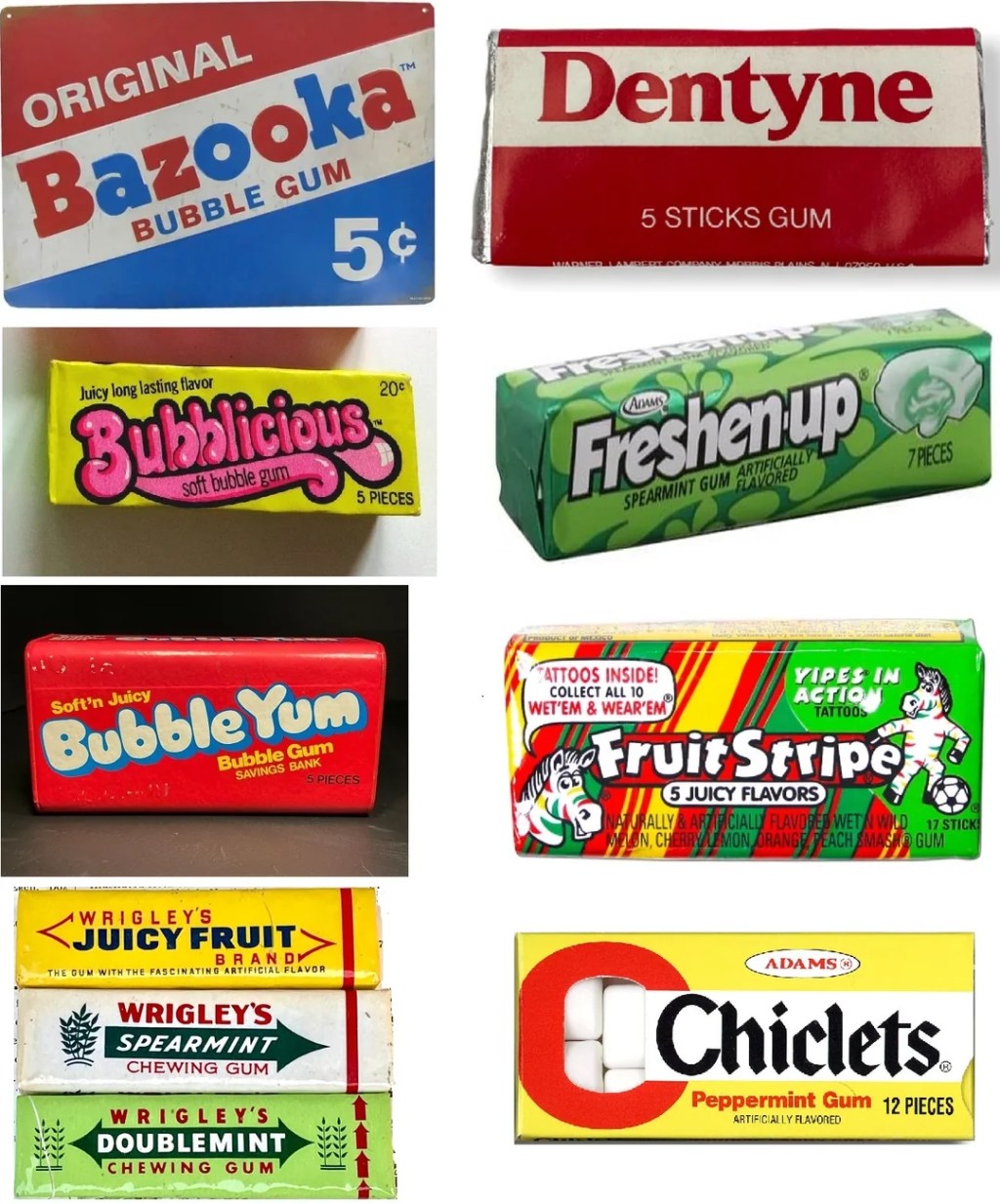
Naturally, that only made gum more valuable. It became classroom currency. Packs changed hands between classes. Friends shared sticks behind locker doors. Someone always knew who had the Freshen Up, Hubba Bubba, or whatever other brand happened to be popular that week. I wasn’t above sneaking a few sticks out of my mom’s purse before school because, frankly, the risk was worth it.
Looking back, it wasn’t really about the gum. It was about what the gum represented: Confidence.
I was painfully shy as a teenager. Starting a conversation with a girl felt like attempting open-heart surgery with a butter knife. Small talk? Impossible. Asking someone to the Enchantment Under The Sea dance? Not happening. But give me a fresh pack of gum, and suddenly I’m Michael J. Fox.
“Want a piece of gum?” I’d ask.
It wasn’t Shakespeare, but it worked. Nine times out of ten the answer was yes, and just like that, the conversation had begun.
That little foil wrapper accomplished what years of teenage courage never could. Which makes me wonder if we’ve been underestimating gum all along.
Maybe diplomacy has been overcomplicated. Imagine if history had included a little more chewing gum.
What if John F. Kennedy had slid a stick of Bubblicious across the table to Nikita Khrushchev? Perhaps instead of staring each other down during the Cuban Missile Crisis, they’d have ended up seeing who could blow the biggest bubble.
What if Ronald Reagan had offered Mikhail Gorbachev a piece of Freedent during one of their summits? Maybe the Cold War would’ve thawed just a little faster.
Yes, I realize that’s a ridiculous theory.
But then again, so is the idea that offering someone a stick of gum can instantly transform two awkward strangers into people having a conversation.
And yet…it happens every day. A simple gesture breaks the ice. It says, “Here—you can have one.”
It’s a tiny act of generosity with surprisingly good odds of producing a smile.
Maybe that’s the real power of gum. Not the minty freshness. Not the bubbles. Not even the fleeting burst of flavor that disappears far too soon.
It’s the reminder that sometimes the smallest things are enough to turn a stranger into a friend.
And for something that loses its flavor in less than a minute, that’s a pretty lasting legacy.


 go.Jimmy.go
Leave a comment