Last night I found myself doing something I hadn’t done in years—digging through the forgotten corners of my basement.
You know the place. The one where old cardboard boxes go to wait out the decades.
Inside were the usual artifacts of a life already lived: faded photographs, school papers, old love letters, torn comic books, VHS tapes, notebooks filled with amazing terrible teenage poetry, and countless other things I’d promised myself I would throw away “someday.”
Apparently, someday never came, and I’m glad it didn’t.
There’s something oddly comforting about opening a box that hasn’t seen daylight in years. It’s like shaking hands with an earlier version of yourself. The curious kid. The dreamer. The one who believed anything was possible.
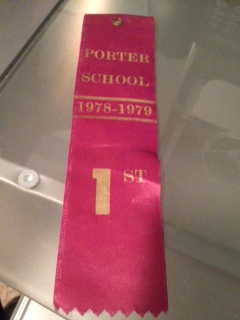
And buried beneath all that forgotten history was something I never expected to see again: a single purple ribbon.
Across the front it read:
Porter School
1978–1979
1st Place
I stared at it for a long moment, trying to remember what incredible feat of athleticism had earned me such a prestigious honor.
Thankfully, the little paper tag attached to the ribbon solved the mystery.
June 5, 1979.
The Sack Race.
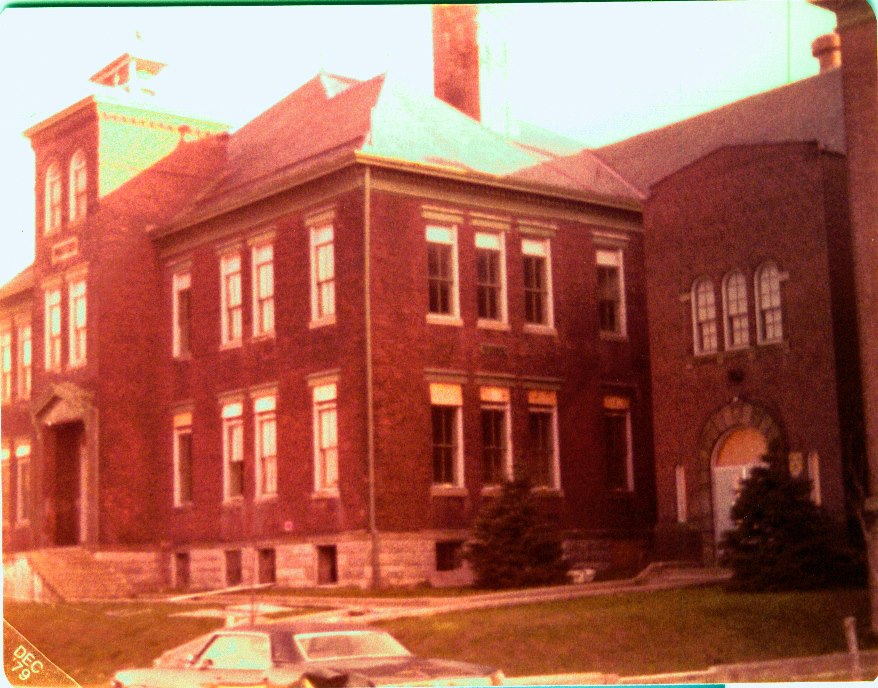
Near the end of fourth grade, Porter Elementary held its annual field day at a local park. There were egg tosses, three-legged races, relay races, and every other event designed to let elementary school kids burn off enough energy to make it through the last week before summer vacation.
On that day, nine-year-old me managed to win the sack race.
Now, I may be remembering this through the eyes of a fourth grader, but I’m fairly certain I defeated at least a thousand competitors that day.
Or… maybe it was twelve.
Either way, it felt enormous.
The funny thing is, it wasn’t just a ribbon. It marked the end of something much bigger.
That school year was Porter Elementary’s last. After nearly ninety years serving Easton’s South Side, the building was scheduled to be demolished. That fall, I would be bused across town to Palmer Elementary.
No more three-block walk to school. No more stopping at Lucey’s afterward to spend my pennies on candy. No more familiar classrooms or hallways. It was the first truly significant change I remember experiencing as a child.
Growing up has a funny way of happening like that. One day you’re hopping across a finish line inside a burlap sack, convinced you’ve conquered the world. The next, you’re riding a yellow school bus to somewhere unfamiliar.
Then come lockers. Late bells. Final exams. First jobs. First heartbreaks. Careers. Families.
Life keeps moving, whether you’re ready or not.
While digging through the same box, I also found another ribbon—a second-place finish in my fifth-grade silent spelling competition exactly one year later.

Objectively, it was probably the more impressive accomplishment. But it wasn’t the one that stayed with me.
Over the years I’ve celebrated accomplishments that nine-year-old James never could have imagined. I’ve interviewed some of my musical heroes, written books, seen my work published in magazines, and watched dreams slowly become reality.
Yet somehow, this little faded ribbon still feels special. Today it sits inside my curio cabinet alongside other keepsakes that tell the story of my life.
Not because I won a sack race, but because it reminds me of who I was before life became complicated.
Before responsibilities, deadlines, and before the world expected anything from me.
Sometimes the smallest objects become the most valuable. Not because they’re worth anything, but because they’re the last surviving witnesses to a version of ourselves that only exists in memory.
Maybe that’s why I never threw it away. Not because it represents winning, but because it represents innocence. And every once in a while, it’s nice to remember the kid who thought crossing a finish line in a burlap sack on a hot summer day was the greatest victory in the world.
Lately, as I’ve been talking about The Seventh Echo, I’ve realized that’s exactly what the novel is about in many ways.
The places we leave behind. The memories we think we’ve forgotten, and how the smallest relics from our past have a remarkable way of finding us again when we need them most.


 go.Jimmy.go
Leave a comment