A lot of people have asked me how I spent my summers growing up.
Okay, that’s not entirely true. I don’t think anyone has ever actually asked me that. But I’m going to tell you anyway.
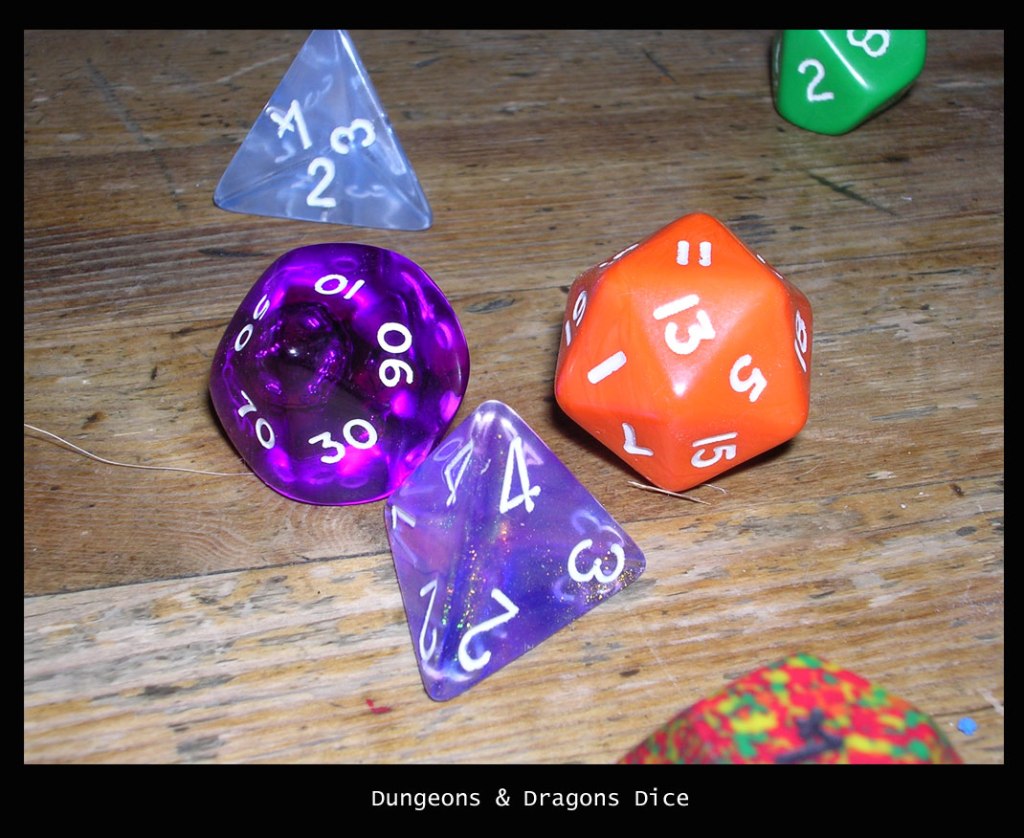
While plenty of teenagers in the 1980s spent their summer afternoons at camp, hanging around the Palmer Community Pool, listening to Michael Jackson on the radio or trying desperately to look cool at a Dip-N-Dance, my friends and I were usually gathered around a table somewhere with pencils, character sheets, greasy pizza and a collection of oddly shaped dice.
If you’ve ever watched “Stranger Things” then you know — We were playing Dungeons & Dragons.
And we took it very, very seriously.
For anyone unfamiliar with D&D—which is probably far fewer people today than when I originally wrote about this years ago—it’s a role-playing game where a group of players creates characters and ventures into a fantasy world filled with monsters, magic, treasure and usually at least one person who takes the whole thing far too seriously.
Think The Lord of the Rings, except Gandalf occasionally has to stop the adventure because somebody’s mother is yelling downstairs that the pizza has arrived.
My friends and I could play for hours. We’d usually start sometime in the early afternoon and continue deep into the night, surviving almost entirely on Coca-Cola and pepperoni pizza while battling goblins, trolls, giants and whatever other horrible creatures awaited us.
My brother and his friends thought I was a complete dork, but that didn’t bother me. I didn’t need my Atari 2600. I didn’t need MTV, and I sure as heck didn’t need Madonna. Just give me my boys, a stale slice of pepperoni pizza and a twenty-sided die and I was good to go.
My friends and I were so invested in these games that even taking a bathroom break became an inconvenience. Nobody wanted to leave the table during an important encounter because God only knew what might happen while you were gone.
I’m fairly certain that if adult diapers had been readily available to teenage boys in those days, somebody would have at least suggested it.
But when I think about those marathon gaming sessions now, it isn’t really the pizza or the monsters I remember most.
It’s the arguments. Good Lord, the arguments.
Without fail, at some point during almost every gaming session, two or more of us would get into a heated disagreement that occasionally threatened to turn physical.
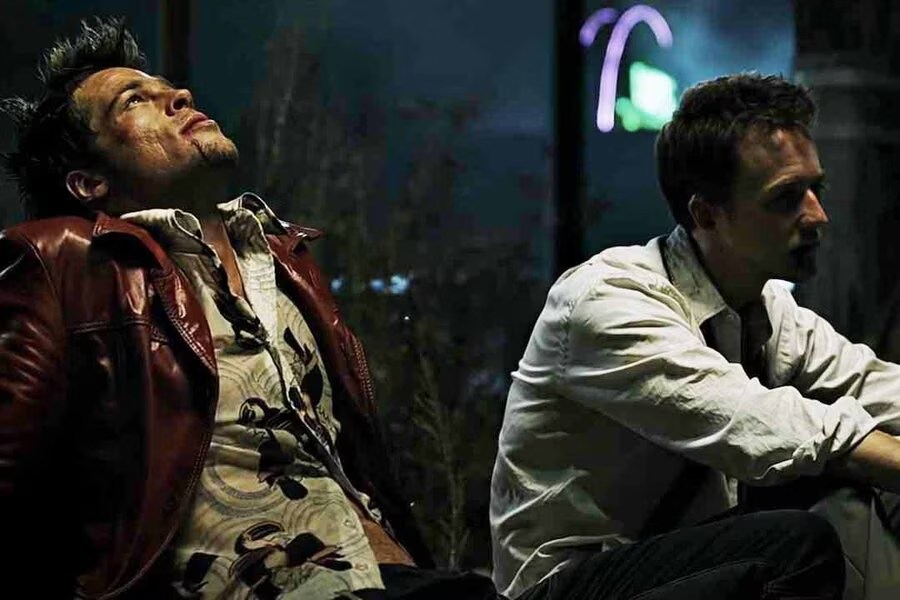
We should have called it D&D Fight Club.
And heaven help everyone if the argument involved the Dungeon Master.
For the uninitiated, the Dungeon Master—or DM—is the person who runs the adventure. He describes the world, controls the monsters and townspeople, determines what happens behind the scenes and generally keeps the story moving.
In other words, for several hours every weekend, one of our teenage friends essentially became God.
This was not always a wise decision, especially if God happened to be in a bad mood that day.
Maybe his mother hadn’t given him his allowance that week, or maybe his girlfriend wasn’t returning his calls, or maybe somebody ate the last slice of pizza.
Whatever the reason, if the Dungeon Master arrived at the table with a chip on his shoulder, you knew it was going to be a long night.
The arguments usually started the same way.
Dice.
Someone would roll, quickly scoop up the die and announce an improbably high number before the DM could see it.
“You didn’t roll that.”
“Yes, I did.”
“No, you didn’t.”
“YES, I DID.”
“LIAR!”
And there it was.
Game on.
Most of our Dungeon Masters did a pretty good job keeping things under control, which couldn’t have been easy considering that every player at the table was essentially united against him.
We had our characters. The DM had everything else…. and sometimes “everything else” wanted us all dead.
You could actually watch a Dungeon Master’s blood pressure rise when some supposedly terrifying creature he’d unleashed upon us was unexpectedly destroyed within the first few rolls.
We’d cheer.
We’d high-five.
We’d celebrate.
The DM would quietly stare at us from behind his little cardboard screen.
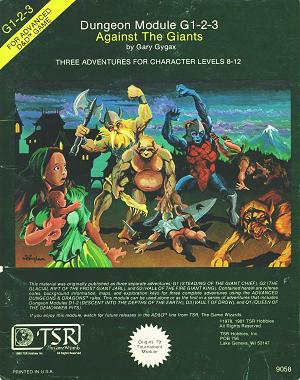
That’s when you knew we were in trouble. Because suddenly that lone Frost Giant we had just defeated would somehow manage to summon six of his closest Frost Giant friends.
Funny how that worked.
I don’t remember seeing those guys mentioned in the adventure. But there they were.
At that point, the dice started flying harder, accusations of cheating intensified and what had begun as a heroic quest for treasure and glory quickly became a personal vendetta between a group of teenage adventurers and an increasingly irritated Dungeon Master determined to kill every last one of us.
Sometimes we survived. Sometimes we didn’t. Occasionally feelings were hurt.
There were even nights when someone would angrily gather up his Coca-Cola-stained character sheets, shove his dice into a cloth bag and storm out of the room declaring that he was NEVER PLAYING WITH US AGAIN!
But youth is a wonderful thing, and by the following afternoon, everyone was usually friends again.
Nobody apologized. Nobody discussed what had happened. We simply sat back down, ordered another pizza and continued the adventure.
Because there was an unwritten rule among us:
The first rule of D&D Fight Club was that you did not talk about D&D Fight Club.
Eventually, of course, things changed.
Girls became more interesting.
I discovered guitars.
Weekends started filling up with different adventures, and the dice and character sheets slowly disappeared into drawers and boxes. Dungeons & Dragons became part of my childhood.
What’s fascinating is that D&D never really went away.
If anything, it’s more visible today than it ever was when my friends and I were huddled around those tables in the 1980s. Movies, television shows, podcasts, streaming campaigns and online gaming have introduced entirely new generations to something we once got mocked for playing.
Apparently, we weren’t dorks. We were just about forty years ahead of the curve. And looking back now, I realize D&D probably gave me something else I didn’t appreciate at the time.
It taught me how much I loved telling stories.
We created characters. We gave them histories and personalities. We put them in impossible situations and tried to figure out what they would do next. We built worlds that existed only in our imaginations and then spent hours living inside them.
Sound familiar?
Decades later, instead of rolling dice and filling out character sheets, I sit at a computer creating people and places that exist only in my head and sending them off on adventures.
The monsters might be different, and the worlds may have changed. And these days there’s usually coffee sitting beside me instead of a two-liter bottle of Coke. But maybe I’m still doing essentially the same thing.
As for actually playing Dungeons & Dragons again? I haven’t rolled a twenty-sided die in decades. And despite the nostalgia, I’m not sure I ever will.
I treasure my friendships too much.
After all, I still remember the first rule of D&D Fight Club.
And some rules were meant to be obeyed.



 go.Jimmy.go
Leave a comment