Tyler Bryant and the Shakedown have been setting the music world on fire with their soulful writing and tasty guitar work—and for good reason.
Bryant, the band’s singer and guitarist, spent the better part of five tours with Jeff Beck, often jamming with the legend during encores. Meanwhile, guitarist Graham Whitford is about as close to rock royalty as you can get; his father, Brad Whitford, is a founding member of Aerosmith.
On the band’s new EP, The Wayside, which will be released November 13, we find Bryant and the Shakedown—which also features Caleb Crosby (drums) and Noah Denney (bass)—continuing their trend of penning roots-infused melodies and riffs, tightly woven with an alternative, psychedelic mystique.
I recently spoke with Bryant and Whitford about the new EP, their gear and more.
GUITAR WORLD: How would you describe The Wayside?
BRYANT: It’s the first body of work I can say was a complete band endeavor. Every song was crafted by the band. Everyone brought their own personality to the songs and we took some chances we’ve never taken before. It’s a more mature record than anything we’ve ever done. We crafted a record around the songs and a vibe we were all inspired by, which was edgy rock and roll.
What was the writing process like for the new EP?
WHITFORD: A lot of times it starts with a guitar riff, but sometimes we’ll get together and one of us will have a general lyrical idea or a guitar part we think is cool, and we’ll start to dig deep on it. It’s always a different process. There’s no one method to songwriting.
BRYANT: When Graham and I get together, it normally starts with a riff. I also collect lyrical ideas every day and am constantly writing lyrics or thoughts that can turn into something. We jam, sing and talk a lot of trash to each other and before you know it, there’s a song!
You can read the rest of my Interview with Tyler Bryant and Graham Whitford Here!
Two years after taking the world by storm with their infectious self-titled 2013 debut, the Winery Dogs are back with a blistering new album dubbed Hot Streak.
On the new album, which is set for an October 2 release, we find the power trio of guitarist Richie Kotzen, bassist Billy Sheehan and drummer Mike Portnoy once again firing on all cylinders, not to mention expanding their horizons while staying true to their roots.
Whether it’s the blistering guitar attack of “Oblivion,” the Eighties-rock feel of “Captain Love” or the hauntingly beautiful “Fire,” Hot Streak shows the evolution of the Winery Dogs as artists and songwriters.
In conjunction with the release of Hot Streak, the Winery Dogs will embark on their first-ever world tour. Stay tuned for those dates.
In the meantime, see what Kotzen and Sheehan have to say about Hot Streak, their gear and more.
GUITAR WORLD: What was the writing process like for Hot Streak?
SHEEHAN: We approached this album a lot like the first one, without any planning or discussion. We all just got in a room together and started playing to write. The only thing we brought in differently was the experience of having done 100-plus shows on stage together.
KOTZEN: We all had some down time this past January and decided to get together at my place to throw some ideas around. Before we knew it, we had about 15 musical “skeletons,” as I like to call them. I sat with them for a few months and out of nowhere started hearing melodies and lyrics. Then I sent them to the guys and said, “Hey, I think we have a record here!” Everything was fresh from the very beginning. It’s a true representation of what we do together.
Did you take any chances musically on this record?
SHEEHAN: “Ghost Town” is a track that people find appealing. It has spooky, distant lyrics and an unusual breakdown in the middle. “Spiral” is a real wild one that came from an arpeggiated bass line that’s going to be an arm buster to play live.
You can read the rest of my Interview with Kotzen & Sheehan by Clicking Here!
I’d like to share with you my thoughts on the passing of guitarist, Gary Richrath….
When I took my first guitar lesson back in the spring of 1985, one of the things I told my guitar teacher was that I wanted to learn as many songs as I could from REO Speedwagon’s album, “Hi Infidelity”.
My teacher, a musical genius as well as an astute professor in the art of all things Hendrix, Zeppelin and Sabbath, took one look at my long blond hair and started scratching his head.
“Uhm, you mean you don’t want me to teach you how to play ‘Purple Haze,’ ‘Stairway To Heaven’ or ‘Paranoid’?” he asked.
“Nope.” I replied. “I want to learn how to play ‘Take It On The Run,’ ‘Keep On Loving You’ and ‘Shakin’ It Loose’.” I then presented him with my copy of the Hi-Infidelity album to prove my intentions were valid.
Little did my instructor know was that just prior to that first guitar lesson I saw REO Speedwagon perform in a college gymnasium on the south side of Bethlehem, PA. Getting to witness a guitarist at the top of his game was a spiritual awakening. It became one of the main reasons I decided to pick up the guitar and start playing.
And so for the next few weeks, in addition to learning chord basics and scales, my teacher and I dissected songs written by Kevin Cronin and Gary Richrath. Immersing ourselves in the sweet sound of a Les Paul guitar while studying every nuance of the power ballad.
Gary Richrath was an inspiration to me as a guitarist and writer. His tasty songs not only included “Take It On The Run,” and “Shakin’ It Loose” but a plethora of others the band still regularly includes in their set. “Golden Country,” “Like You Do,” “Only The Strong Survive,” “Son of A Poor Man” and of course, “Ridin’ The Storm Out”. A track the band closes their show out with each night and one that will now have extra meaning.
Although Gary left REO Speedwagon more than 25 years ago, he joined the band in 2013 for a surprise performance to help raise money for tornado victims in the Midwest.
This is how I choose to remember Gary Richrath. As an artist who used his time and talent to help others and in the process, left an invaluable mark on the music world as well as a teenage guitarist who first learned his songs thirty years ago.
Oh, and in case you don’t believe my story, I did keep all of my material from those early years of guitar lessons….
Back in 2014, Paul McCartney had a great idea for an album. He just needed a world-renowned guitarist and singer to make it happen.
Enter John Pizzarelli, whose musical interpretations of such legendary artists as Frank Sinatra, James Taylor and McCartney’s former band, the Beatles, have received critical acclaim. Pizzarelli even worked with McCartney on his 2012 album, Kisses on the Bottom.
McCartney invited Pizzarelli to delve into his deep catalog of post-Beatles material and take some of his lesser-known tunes and reinterpret them in a mellow jazz style.
The resulting album, Midnight McCartney (which will be released September 11), features “Silly Love Songs,” “Maybe I’m Amazed,” “Coming Up” and other tunes from McCartney’s 45-year-long solo career—all tastefully done in Pizzarelli’s trademark style.
I recently spoke with Pizzarelli about the new album, his work with Paul McCartney, guitars and more.
GUITAR WORLD: How did this project begin?
I had worked on Kisses on the Bottom with Paul in 2012, and we promoted it the following year. We played “My Valentine” on the Grammys and he did a MusiCares event and a live iTunes concert. Then in May of 2014, I got this letter from Paul out of the clear blue sky. He said, “I have this crazy idea to run by you.”
The idea was that maybe I would do a record of some of his post-Beatles catalog as well as some lesser-known songs like “Junk,” “Warm and Beautiful” and “My Valentine.” He said if I liked the idea maybe I could call the record Midnight McCartney and include a dishy little picture of me against the Manhattan skyline [laughs].
I was like, “OK! Whatever you want to call it. Let’s go!” So I went in, did some demos, recorded the record at the beginning of this year and now here we are—Midnight McCartney!
For those of us who have never had the pleasure of meeting him, what’s Paul McCartney like?
I remember my sisters watching The Ed Sullivan Show, getting Abbey Road in the late Sixties and listening to all of the records and then following him through the Seventies and Eighties as well as the new stuff. Then meeting him and going, “OK. Now this all makes perfect sense!”
He’s a fine musician with amazing musical instincts and has done pretty much everything you could possibly imagine. I remember being in my twenties and going to William Paterson College. When he was in his twenties, he was getting off of a plane and there were 50,000 people screaming! Then he played Shea Stadium when he was 23.
To have all of that happen in his lifetime and then find out that not only is he a really great musician but he’s also a very down-to-earth guy—that’s what really stuck with me. There’s no mistaking that he’s Paul McCartney.
You can read the rest of my Interview with John Pizzarelli by Clicking Here!
To fans of classic rock and arena rock, it just wouldn’t be summer without the music of Styx.
For more than 40 years the band, whose hits include “Blue Collar Man (Long Nights),” “Renegade,” “Too Much Time on My Hands” and “Come Sail Away,” has been delivering the goods the only way it knows how: through infectious live performances.
This summer, Styx—Tommy Shaw (vocals, guitars), James “JY” Young (vocals, guitars), Lawrence Gowan (vocals, keyboards), Todd Sucherman (drums) and Ricky Phillips (bass)—are teaming up with Def Leppard and Tesla on what promises to be one of the season’s hottest tour packages.
I recently caught up with Phillips to ask him about the new tour as well as his time with Styx, the Babys and Bad English. He also gave me an inside look into his new album project, the final recordings of Ronnie Montrose.
GUITAR WORLD: What can fans expect from the new tour with Def Leppard and Tesla?
We’ve been wanting to work with Def Leppard again for quite some time. We did some dates with them around 2007 and it was a really good fit. If you’re familiar with Tesla’s catalog you already know that they’re a very aggressive, cool, no-frills band. They just come balls out and do it! Then we go everywhere from a little bit of prog to the guitar duo of Tommy Shaw and James Young to having three lead singers. Then Def Leppard come out with their big arena rock show. It’s a special package where fans will really have a great time.
You’ve been with Styx for more than a dozen years. What’s it like being part of such an iconic band?
The cool thing about this band is that everybody recognizes that what we have is really special. It’s rare to get a group of guys that gel as good as this band does. We all have a lot of strengths to lean on personally and musically. There’s a lot of fun and joking around to keep things entertaining, but once we get on stage it’s all business, which is a good time as well.
Has there been any talk of new Styx music in the future?
I can’t talk about it too much, but there’s certainly some stuff in the works. It’s going to happen. We’re just not sure when.
Let’s discuss a few of the other bands you were involved with. What was the story behind you joining the Babys?
I had always been a big fan of Tony Brock and John Waite and thought “Isn’t It Time” was just a masterpiece of cool rock. Shortly after I got to LA, a sound man for the band saw me play and tracked me down. It was around the same time that John had decided he wanted to front the band and not be weighed down by playing an instrument [Waite had also played bass in the Babys].
I was working in the music store across the street from where they were auditioning when the sound man came in and told me that I needed to go across the street and play. I remember pulling a bass off of the wall and (with the price tag still swinging from the headstock), went over and jammed with the guys for about 15 minutes. We played “Run to Mexico” and “Head First” and then Jonathan Cain and I harmonized with John on “Isn’t It Time.” After that, they all left the room and came back in with their manager and asked me to join the band. That’s how it all started.
Read the rest of my Interview with Ricky Phillips by Clicking Here!
From her days performing her hypnotic blend of hook-laden music in Arizona coffee shops, it was only a matter of time before twenty-year old singer/songwriter Zella Day made the move to the larger pastures of the California music scene – and with impressive results!
Day’s debut album, Kicker is an introduction to Day both as an artist and person. Her hauntingly infectious songs personify the young singer as a cosmic force to be reckoned with.
Songs like “Hypnotic” and “Compass” lend themselves well to the self-conscious while tracks like “Jerome” offer up a revelation to the solace of home.
I recently spoke with Zella Day about Kicker, her music and where she finds her inspiration.
How would you describe Kicker?
This was such a big project for me and encapsulates so many elements of who I am and what I’ve been through. You really get a strong idea of who I am as a person by listening to this record. It’s very eclectic. There are elements of pop, ballads, outlaw country and even some desert gypsy rock.
What was the writing process like for you?
I have so many different voice memos on my phone and song titles in my notes. Sometimes I’ll have a chord progression that will be sitting around for a long time when the lyrics will suddenly hit me. Other times it may start out with just a title. It’s always different but I try to write a little something everyday. It’s important to keep your creative muscle strong and working. My most inspiring method though is just sitting down with an acoustic guitar and coming up with melodies. It’s what I’ve been doing nice I was nine years old.
Let’s discuss a few tracks from Kicker. What can you tell me about the song, “Hypnotic”?
That song was actually written on acoustic guitar. I had my producer bring up a beat that I was really inspired by, wrote a progression and then did a little rap melody over it. That’s how it was born. The song sounds great acoustically, which is something that’s very important to me. Part of my roots are playing my acoustic guitar in coffee shops. So it’s important that these songs can be broken down to the basics.
“High”.
“High” was written after I saw The National play a show in California. I was so inspired by that experience. I remember it was outside the Santa Barbara amphitheater and it was raining and the whole crowd was immersed in a blue light that they were shooting out from the stage. It was one of the most beautiful things I had ever seen. That’s where the line ‘blue line in the sky tonight’ comes from. I came home that night and wrote the song.
“Compass”.
That song was written from a stream of consciousness. I like it when that happens. I don’t know exactly what I’m trying to say while I’m in the moment but later find out that I’ve either taught myself a lesson or got something off of my chest that I needed to. In this case, I had just moved from Arizona to California and the more I listened to it the more I realized that it was a love song for my hometown. “Compass” was my revelation song.
“Jerome”.
That song was placed #1 on the album because the song is about the woman I was named after. She was the wife of a coal miner in 1842 in Jerome; the town where my parents got married. I didn’t know much about her but I’ve always had this idea of who she was and what the ghost of Zella is and our connection to each other. I wrote the song about her and am essentially introducing myself by name.
What was the recording process like and working with collaborators like Wally Gagel and Xandy Barry?
I’ve worked with them for a few years now and we have a great chemistry. We really know each others strengths and know how to write together. By being able to push through the hard moments we’ve been rewarded with good songs. We’ve written a lot of tracks together and I’m so lucky to be able to work with such talented people.
Did always know that music would be your calling?
I’ve always played music because it just feels right and have been grateful for everything I have and the shows that I play. Even when I was playing coffee shops; it’s how its always been. Every day feels really good right now.
What excites you the most about Kicker?
I’m really proud of every song on this record. I’m not moving forward feeling doubtful or self-conscious about the creative decisions I’ve made. I’m fully behind what I’ve created and put out into the world. Whatever happens, I have that foundation and am really excited to tour the new record and connect with people. There are no secrets and as a new artist I think that’s a pretty good place to start.
From her early days working with her brothers in the power trio Trampled Under Foot, bassist/vocalist Danielle Nicole has always found an outlet for her creative, blues-infused songs.
Collectively, Trampled Under Foot recorded five albums, with its most recent, Badlands, reaching Number 1 on Billboard’s Blues Albums chart in 2013.
But as the band wound down after 13 years, Nicole decided it was a good time to branch out on her own. Her debut solo album, Wolf Den, which will be released August 21, represents the fruits of her labor and is a treasure trove of blues, funk and groove.
Produced by Grammy-winning producer and guitarist Anders Osborne—whose songs have been covered by the likes of Brad Paisley and Jonny Lang, Wolf Den is a collaborative, New Orleans-themed album buried deep in tasty, blues-based rock.
I recently spoke with Nicole about Wolf Den, working with Osborne, her gear and more.
GUITAR WORLD: To someone who might not be familiar with your sound, how would you describe Wolf Den?
It’s an extension of the songwriting from my days playing with my brothers in Trampled Under Foot as well as some songs I’ve never had a chance to record. A few of the other tunes were ideas Anders helped collaborate on and develop with me. The album as a whole is a collaboration rather than all of the songs stringing together.
How does the songwriting process start for you?
Most of the time it starts with a bass line groove or melody, and then I’ll start writing lyrics to it. If it’s a specific instance or taken from experience, it usually starts with lyrics.
What can you tell me about the track “You Only Need Me When You’re Down?”
That was a tune Anders and I had written together. At the time, I was in a bad place in a relationship and had the line, “You only want me when you need me. You only come to me when you’re in trouble.” Anders came up with the groove and we started expanding it from that situation. That’s how it came about.
Read the rest of my With Danielle Nicole by Clicking Here!
Sugarcane Jane have amassed an extremely loyal following by performing what they like to call, “organic music at its finest.”
Anthony Crawford and his wife, Savana Lee, are both virtuosos. Crawford is a songwriter who plays guitar and mandolin while Lee alternates between rhythm guitar, tambourine and snare drum.
Sugarcane Jane’s new album, Dirt Road’s End, provides a rich, homegrown brand of Americana that draws deep from a well of influences, including country, jazz, rock and gospel. The album was conceived and co-produced by legendary Americana/roots singer-songwriter Buzz Cason.
Dirt Road’s End, which was recorded on a classic Otari MTR-90 tape recorder, traverses a spectrum of moods and stories, including the autobiographical “Ballad of Sugarcane Jane” which features Anthony’s driving guitar work, and “Heartbreak Road,” which steams with rock energy and bluegrass spirit.
I recently spoke with Crawford about Dirt Road’s End, recording “old school” and what it was like touring as a member of Steve Winwood and Neil Young’s bands.
GUITAR WORLD: To someone who might not be familiar with Sugarcane Jane, how would you describe your sound?
“Saving the planet one good vibe at a time” is our slogan. Savana and I are energy pushers and write songs that make people feel good. Although we have songs in our repertoire that have deeper meaning, the lyrical content for Dirt Road’s End is more light hearted. Savana and I are in love with each other, and that shows in our music. Ultimately, it’s energetic Americana that’s positive and light hearted.
Read the rest of my Interview with Anthony Crawford by Clicking Here!
To many Eighties music fans, Jim Peterik will always be the maestro behind classic songs like “Eye of the Tiger,” “I Can’t Hold Back” and “Burning Heart.”
But prior to launching Survivor in 1978, Peterik was the front man for another successful group—the Ides of March—whose signature 1970 song, “Vehicle,” is still played regularly on the radio and in TV shows and films.
This year, the Ides of March are celebrating their 50th anniversary. In honor of the occasion, Peterik and company have released a new five-disc set, Last Band Standing: The Definitive 50-Year Anniversary Collection.
The box set includes four Ides albums: Vehicle,Common Bond,World Woven and Midnight Oil. Also included are early singles like “You Wouldn’t Listen” and “Like It or Lump It,” plus random tracks the group recorded after reforming in the Nineties, not to mention three brand-new songs.
The fifth disc is a DVD that features a 2014 Ides show from the House of Blues in the band’s native Chicago. It features songs that span the band’s career, plus re-arranged versions of Survivor songs and hits Peterik wrote with 38 Special and Sammy Hagar.
I recently spoke with Peterik about the Ides of March’s 50th anniversary box set, his new project with Marc Scherer and more.
GUITAR WORLD: When it dawns on you that this is the 50th anniversary of the Ides of March, what comes to mind?
There are so many thoughts. We always used to think we had an identity crisis. I remember we started out as a British invasion wannabe band, emulating bands like the Kinks, Zombies and Beatles. Then we got enamored with brass and started a Memphis/soul thing.
Then the big moment came when we had the whole brass section and went in and cut “Vehicle” and toured the country with groups like Cold Blood and Janis Joplin. We threw out all of these different incarnations. When I listen to it now as a whole, it all hangs together. There’s a group personality and a positivity that really shines through the music.
You can read the rest of my Interview with Jim Peterik by Clicking Here!
Shortly after Deep Purple keyboardist Jon Lord died in 2012, Whitesnake vocalist—and former Deep Purple frontman—David Coverdale reached out to guitarist Ritchie Blackmore about the possibility of working on a project together in Lord’s honor.
Although both musicians were on different pages creatively at the time and couldn’t come to an agreement, the two former Deep Purple members were able to find closure, bury the hatchet on past grievances and move on.
Then Coverdale’s wife, Cindy, suggested that David pay tribute to Lord with Whitesnake. Now Whitesnake is about to unveil Purple, a new studio album that puts insanely good spins on Mark 3 and 4 Deep Purple classics and tastefully pays tribute to one of the pioneers of progressive rock.
Purple, which will be released May 19, also marks the debut of Whitesnake’s new guitarist, Joel Hoekstra, who recently replaced Doug Aldrich. Hoekstra’s resume includes Night Ranger, Trans Siberian Orchestra and Broadway’s Rock of Ages.
These days, Whitesnake includes Coverdale (lead vocals), Reb Beach (guitar), Hoekstra (guitar), Michael Devin (bass) and Tommy Aldridge (drums).
I recently spoke to Hoekstra about Purple and what it’s like being a part of Whitesnake.
What’s it been like to work with David Coverdale?
Working with David has been great! He’s rock royalty with all of these great stories about working with Jimmy Page and Ritchie Blackmore. He really understands music and was very gracious in the studio in allowing us to play what we wanted to play. Now, we’re gearing up for the other aspect—playing these songs live. You talk about songs that lend themselves well to live performance? These songs were written in live performance. It’s going to be exciting.
How did the Purple project begin?
The project actually began before I was even in Whitesnake. Shortly after Jon Lord passed away in 2012, David reached out to Ritchie. He just wanted to touch base with Ritchie and thank him for helping to jump-start his career. The two of them then went into discussions about doing something together in memory of Jon, but [as I hear it] they were on different pages. It was David’s wife, Cindy who then suggested that David do it with Whitesnake. It was a great concept and a total honor for me to be a part of.
Let’s discuss a few tracks from Purple, starting with “Lady Double Dealer.”
That was actually my audition for Whitesnake. I remember when I went out to Reno to meet the guys, that was the song they pulled up. They asked me what I would do for a solo. So I laid down a solo and then in the next section they started taking about a harmony solo and asked me to come up with something. So I wrote the solo that actually ended up making the record. Afterwards, they pretty much said, “Well, dude, come jam with us! Let’s do this!”
You can read the rest of my Interview With Joel Hoekstra By Clicking Here!
 Tyler Bryant and the Shakedown have been setting the music world on fire with their soulful writing and tasty guitar work—and for good reason.
 Interview with Tyler Bryant and Graham Whitford Here!
 Two years after taking the world by storm with their infectious self-titled 2013 debut, the Winery Dogs are back with a blistering new album dubbed Hot Streak.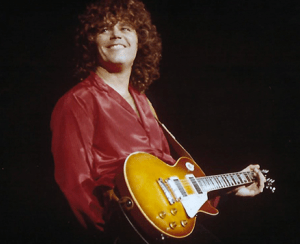

 Back in 2014, Paul McCartney had a great idea for an album. He just needed a world-renowned guitarist and singer to make it happen.
 To fans of classic rock and arena rock, it just wouldn’t be summer without the music of Styx.
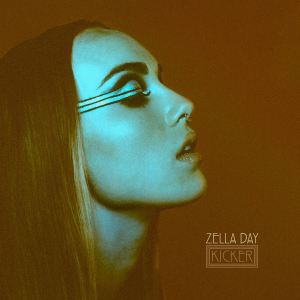 From her days performing her hypnotic blend of hook-laden music in Arizona coffee shops, it was only a matter of time before twenty-year old singer/songwriter Zella Day made the move to the larger pastures of the California music scene – and with impressive results!
 From her early days working with her brothers in the power trio Trampled Under Foot, bassist/vocalist Danielle Nicole has always found an outlet for her creative, blues-infused songs.
 Sugarcane Jane have amassed an extremely loyal following by performing what they like to call, “organic music at its finest.”
 To many Eighties music fans, Jim Peterik will always be the maestro behind classic songs like “Eye of the Tiger,” “I Can’t Hold Back” and “Burning Heart.”
 go.Jimmy.go