Category: Guitar World Interviews

Robert Knight Discusses ‘Rock Gods’ and His 50-Year Career As a Music Photographer

Legendary rock photographer Robert Knight is widely renowned for his lengthy tenure of capturing a wide cross section of highly influential artists, including Jimi Hendrix, Jeff Beck, Jimmy Page, Stevie Ray Vaughan and Slash. His ability to closely connect with and generate trust among the subjects he’s photographed has led to a deep, intimate documentation of significant pop cultural moments over the past half century.

Knight is celebrating his 50th Anniversary with the release of his amazing new book, Rock Gods: Fifty Years of Rock Photography, which is available now on Insight Editions. ​

Even if you aren’t a voracious reader, Knight’s incredibly beautiful photographs and personal stories from his time spent with some of rock’s most legendary artists at the beginning and peak of their careers is worth the price of admission.

We recently spoke with Knight about Rock Gods and some of the artists he’s worked with in this new interview.

What made you decide to write a book about your life and career?

The stars all aligned and the time was right. It was the 50th anniversary of the Jeff Beck tour and my time with Led Zeppelin. We preferred to do a smaller sized book that’s very affordable and aimed at younger people. I’ve even got younger artists I’ve worked with in the book towards the end.

What was it about the music of that generation that appealed to you and made you want to become a photographer?

Growing up as the son of a minister, I was forbidden from any of that music. Then one night at a very young age, I snuck out and saw The [Rolling] Stones when they had Brian Jones in the band, and it electrified me. Later, I found magazines with long-haired guys with weird clothes and guitars. I couldn’t figure out what it was all about, but I knew that it was music. I sent away to an English music company and got records by Hendrix, Cream, The Yardbirds and Pretty Things before they even came out in America. But once I saw the movie, Blowup and the lineup of Jeff Beck and Jimmy Page, that was it for me. I saw what Beck was doing and thought, this is someone I really want to work with.

I want to ask you about a few of the guitarists you’ve worked with and get your thoughts on them. Let’s start with Jimi Hendrix.

I first saw Hendrix back in 1968 at the Avalon Ballroom. I had heard his music before, but hearing it on your hi-fi was a lot different than when you were being pummeled by three Marshall stacks [laughs]. I remember my mouth dropped open and I was just mesmerized by what was going on. It was bigger than life. Then when I met him, he was this sweet, shy guy who was very humble. That’s what you came away with. He was this bombastic thing on stage and then the total opposite off of it.

Read the rest of my

Interview with Robert Knight by Clicking Here!
Moon Taxi’s Trevor Terndrup, Spencer Thomson and Tommy Putnam Discuss New Album, the Success of “Two High”

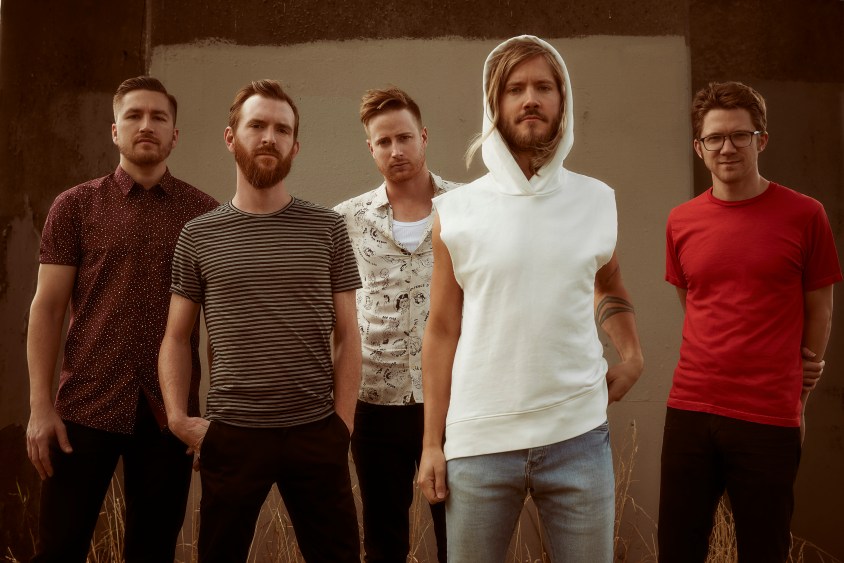
Moon Taxi – Photo by Harper Smith

Nashville’s alt-rock quintet Moon Taxi’s highly anticipated fifth studio album, Let The Record Play, marks the band’s first album for a major label. It’s an infectious, ten-track LP that includes their monster single, “Two High,” which to date has garnered more than 64 million streams on Spotify.

Produced and mixed by Spencer Thomson (who also happens to be the band’s guitarist), Let The Record Play lends itself as easily to home speakers as it does to the band’s dynamic live show.

We recently spoke with frontman Trevor Terndrup, Thomson and bassist Tommy Putnam about the band’s new album, and the incredible success of “Two High.”

To someone who may not be familiar with Moon Taxi, how would you describe Let The Record Play?

Terndrup: It’s a continuation of our story. For people discovering the band for the first time, it’s a great introduction, and hopefully, they’ll go through and check our back catalog. For fans who’ve been with us for more than a decade, they’ll appreciate that it’s a continuation of our songwriting and production skills. We’re always striving to become better songwriters, and we’re getting a more worldwide look with this record.

What was the songwriting process for this record like?

Thomson: One thing we tried to do a little more of on this album was to have a lyrical concept up front. So often, you end up having music that you like, but then you have the task of trying to put lyrics to it. It can slow down the process. What we’ve learned is that if you have an idea, lyrics or a title on the front end, it really helps the song move along and it makes it more of a cohesive concept to work with.

Terndrup: Spencer writes a lot of the lyrics, but everyone generally puts a stamp of approval on it. It’s all collaborative, so it has a pretty thick filter. Usually, it’s one person who comes in with the creative spark, and then the rest of us help push it to the finish line.

Let’s discuss a few tracks from Let The Record Play, starting with “Two High.”

Terndrup: The music and the lyrics both happened within a two-week time frame. The idea came from our keys player, Wes, who sent a text that was an auto-correct fail. He had meant to say, “too high” and it came across as “two high”. He told me about it and I immediately thought about the iconic peace symbol from the sixties. It was right around the same time the Women’s March happened and there was a lot of protesting going on. That’s really when the chorus started to shape up.

Read the rest of my
Interview with Moon Taxi by Clicking Here!

‘Got Soul’: Robert Randolph Talks Grammy Nomination, Artistic Inspiration

Robert Randolph’s recent Grammy nomination in the Best Contemporary Blues Album category for his latest offering, Got Soul, should come as no surprise.

The renowned pedal steel guitarist—who’s already collaborated with such legends as Eric Clapton, Ringo Starr and Santana—is merely taking the next step in his journey toward becoming of the genre’s most spiritual and accomplished artists.

Having heard almost no secular music while growing up singing and performing the “sacred steel” at church, Randolph was eventually exposed to the blues of Stevie Ray Vaughan as well as soul and rock music in his late teens. The rest is history.

Randolph describes Got Soul as a soulful form of rock and roll. A kinetic, raucously energetic album that puts his pedal steel guitar front and center, it combines elements of blues, funk, jazz, soul and country with the gospel music of his youth.

Guitar World recently spoke to Randolph about the Grammy nomination and more in this new interview.

This is your fifth Grammy nomination. As an artist, what’s it like when you hear your name announced for a Grammy award?

Yeah, this is our fifth time. It feels good to know that you’re respected among your peers and are appreciated by die hard music fans. It also shows the hard work we put into making music and writing songs. It’s a nice payback.

Let’s talk a little about Got Soul. What themes did you want to explore when making this album?

I really wanted to give people good songs that have messages of love, happiness and inspiration and not focus on all the negativity that’s going on in the world. It’s music with big choruses, catchy grooves and rock and roll guitars that allows people to dance. It’s all of those elements put together.

Read the rest of my
Interview with Robert Randolph by Clicking Here!

Moody Blues’ Justin Hayward Talks Rock and Roll Hall of Fame Induction, Revisiting ‘Days of Future Passed’

The Rock and Roll Hall of Fame recently announced its class of 2018. The list of inductees included—along with Bon Jovi, the Cars, Dire Straits and Nina Simone—the Moody Blues.

For the Moody Blues, who spent the year celebrating the 50th anniversary of their landmark album, Days of Future Passed, the induction is long overdue. The band, which features Justin Hayward (lead guitar, vocals), John Lodge (bass guitar, vocals) and Graeme Edge (drums), will receive the honor alongside former members Ray Thomas (flute/vocals) and Mike Pinder (keyboard/mellotron/vocals).

Guitar World recently spoke with Hayward about the Moody Blues’ upcoming induction and more.

An artist becomes eligible for induction into the Rock and Roll Hall of Fame 25 years after the release of their first commercial recording. The Moody Blues have more than doubled that. So, I guess the first logical question to ask would be, did you think this day would ever come?

To be honest, I kind of doubted it because it had been so long. But when it finally happened I was absolutely thrilled. For Moody Blues fans, it’s galvanized the music they love. I’m very pleased for them and for us. It’s a privilege to be in the same street as Buddy Holly and the Everly Brothers, and then to have Nina Simone inducted posthumously at the same time makes the whole thing complete. She was such a huge influence on me in my late teens and early twenties.

How did her music inspire you?

I think she was a musician’s musician, and those albums she made in the early to mid-Fifties were an exercise in how to put emotion across in a song and to feel it. There was a beautiful tragedy in her singing and playing that I haven’t heard since.

The band’s induction will include former members Mike Pinder and Ray Thomas. Are there any plans for a musical reunion with them at the ceremony?

I think the spirit is willing. Let’s put it that way.

The band has been celebrating the 50th anniversary of Days of Future Passed, a celebration that will continue into the new year. Can you tell me about your January tour plans that end in Vegas?

It starts with the Moody Blues Cruise, which is always great fun. It’s wonderful for the fans who get to see and hear us up close and intimate. Vegas is another place where Moodies fans like to gather. I remember the first time we ever played there I wasn’t sure if we even belonged. I thought, ‘What are we doing here?’ But then as we rolled into town I saw there was a big poster for Neil Young, who’s the king of credibility. That’s when I said, ‘Oh, this is OK, then.’ [laughs].

You can read the rest of my
Interview with Justin Hayward by Clicking Here!

Guitarist Hannah Wicklund Discusses Her New Album, Writing Process

Formed when their frontwoman was just nine years old and with a voice and guitar-driven swagger that instantly conjures up images of Janis Joplin and Susan Tedeschi, Hannah Wicklund and The Steppin Stones have consistently stood out as a young band on the rise.

The band’s self-titled, fifth album [produced by Sadler Valden and set for a January 26 release] draws from the guitarist’s classic rock influences, which range from Jimi Hendrix and Jeff Beck to Fleetwood Mac and Tom Petty. The result is a fiery combination of blues-rock passion that pays homage to her musical roots while giving them modern, 21-century feel.

With her tasty fret work and tireless work ethic, Wicklund is a guitarist to watch for 2018.

Guitar World recently spoke with Wicklund about her new album, songwriting, gear and more.

How would you describe your style of music?

It’s raw but very authentic and genuine. It’s also a good representation of what the last year and a half of my life has been like. This new album is my most mature piece of work as far as sound goes, and an ode to my classic rock roots.

What’s your writing process like?

Honestly? It’s different every song. There have been songs that begin with a musical idea approach, where the riff comes first and is followed by forming a melody. Other songs could start from just a lyrical idea.

Something else I’ve been doing lately is taking a strong title and writing the song from there. “Shadow Boxes” is an example of a song I had originally written and then scrapped everything except for the title. Then there are songs like “Crushin”, which is more of a riff-based, bluesy song. I’d been playing that riff for a long time and developed it into a song.

Let’s discuss a few other tracks from the new album, beginning with “Bomb Through The Breeze.”

That’s a song that Sadler [Valden] and I co-wrote in one sitting. It started out with the riff and then we took cues from each other and built it from there. It’s a song about standing up for yourself.

You can read the rest of my
Interview with Hannah Wicklund Here!

Collective Soul’s Ed Roland And Jesse Triplett Discuss New Live Album, the Origin of “Shine”

Photo by: Joseph Guay

Following the release of their ninth full-length album, 2015’s See What You Started by Counting, Collective Soul made the conscious decision to record more than 160 of their shows over the course of the next two years. The result is the band’s new album, the aptly titled, Collective Soul: Live.

Collective Soul rose to fame in 1993 with Hints, Allegations and Things Left Unsaid, a collection of frontman Ed Roland’s demos bolstered by the monster hit, “Shine.” Since then, the multi-platinum band have amassed an arsenal of #1 hits and album sales, while simultaneously helping to define rock with their guitar-driven attitude.

Guitar World recently spoke with Roland and the band’s guitarist, Jesse Triplett, about Collective Soul’s new live album, music, gear and more in this exclusive new interview.

What made the band decide to record a live album?

Ed Roland: Jesse joined the band about five years ago and our drummer, Johnny Rabb, joined right before that. After 24 years, I feel this is without a doubt the best line-up we’ve ever had and I’ve always said that once we caught the groove, we needed to get it down. So when we started to tour after our last album, [See What You Started by Continuing], we recorded every show.

How did you determine which live versions to include?

Roland: Of course, every night you want to do the best that you can, but some nights were better than others. Afterwards, we all came back and whittled it down to our producer/engineer/mixer, Shawn Grove. We gave him the weeks we thought were good and let him pick and choose. The only thing we made clear was that we wanted no overdubs. We just wanted what it was that night.

Jesse Triplett: Shawn came out and saw us at a few different spots during the tour. I remember during the first part he’d say to us, “You guys sound good” and by the end was like, “You guys are on fire!” There were so many shows that I sometimes forgot we were recording for a live album.

Is there any set of extra nerves knowing that you’re recording a live show and there’s no going back?

Roland: Jesse and I both like to move around on stage, so when we first started talking about recording we were concerned about how far we should take the showmanship and how much we should reel it back and make sure we we’re playing correctly. Jesse mentioned about forgetting that we were being recorded and I think that really helped with the mindset of doing the show without thinking.

Triplett: If you start thinking about it, it gets weird. It’s better to just get out there and play instead of trying to be technically sound.

Roland: Being a front man, you also have to play with a crowd and know how to entertain and bring them in and take them out. I never wanted to be withdrawn from that by having to think about singing something perfectly. It was more about letting it flow, catching the groove and forgetting about it.

Read the rest of my
Interview with Collective Soul by Clicking Here.

Michael Sweet Discusses New Sweet & Lynch Album, Gives Stryper Update

Michael Sweet & George Lynch

Unified is the sophomore release from Sweet & Lynch, the collaborative partnership centered around the talents of Michael Sweet (Stryper) and George Lynch (Lynch Mob).

The powerful combination of Sweet’s high-octane vocals and Lynch’s instantly recognizable guitar work, along with the propulsive rhythm section of James Lomenzo (bass) and Brian Tichy (drums), gives Sweet and Lynch a unique musical palette. The result is an album of traditional heavy metal grooves, hook-laden melodies, tasty guitar wizardry and positive messages.

I recently spoke to Michael Sweet about Unified and working with George Lynch. He also gave me an update on the new Stryper album and their new bassist, Perry Richardson.

Before we begin, I’d like to get your thoughts on the recent passing of AC/DC guitarist, Malcolm Young. How much of an influence did he have on you?

Like any other teenager and aspiring musician at the time, AC/DC was the pinnacle. Not so much from the sense of me trying to sound like Malcolm or Angus, but I played those songs in cover bands and to this day we still break into AC/DC songs at sound check.

There’s just something amazing about their power and simplicity, and Malcom was the driving force behind it. He was such an incredibly tight and responsive guitar player. He didn’t make a lot of noise in terms of his persona or stage presence, but if you closed your eyes and listened you would hear Malcolm above all.

Let’s discuss the new Sweet & Lynch album, Unified. How does it compare to your first release, Only To Rise?

For this album, George and I branched out a little and tried a few different things. It’s got some songs on it that are stretched a bit more in terms of creativity, particularly with songs like “Walk” and “Afterlife”. There’s nothing like that on the first album. The first album was comprised more of three and a half to four-minute songs geared toward hard rock/metal heads and radio. For this one, we had less of that in mind and made the album we wanted to make.

Was the writing process similar to Only To Rise, where George would send you musical ideas to work from?

Yes. Once we got down to it, George would send me ideas that were music only. The first time around they were less complete, but this time it was a complete song from start to finish. George is a guy who writes with a melody in mind, so it makes it easy for me to find them. George wrote all the music on this one and I wrote all the lyrics and melodies. It was a compete co-write.

Let’s discuss a few tracks from Unified, beginning with the title track.

That song is based on our world today and what we watch on the news. Whatever side you’re on. And that’s the sad part when I say that we have “sides”, especially in America where we’ve become so divided. It makes no sense to me, so I wrote a song about it. Keeping in mind the hope that it might bring people a little closer together. That’s the whole point of “Unified.”

Read the rest of my
Interview with Michael Sweet by clicking here.

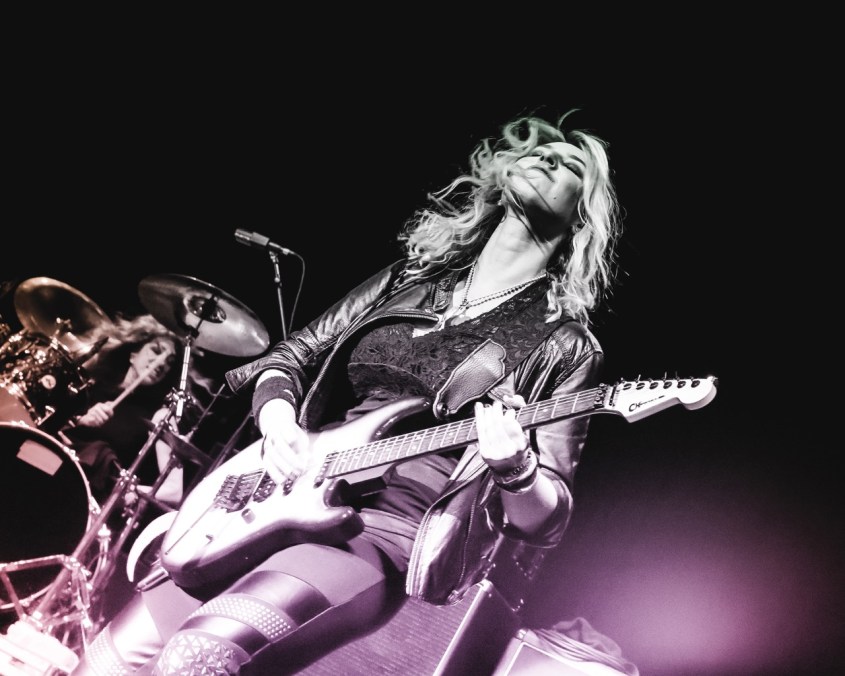
Vixen Guitarist Brittany Denaro Talks Songwriting, Gear and New Music

Photo by; Tammy Vega

After being discovered performing in an all-female Guns ‘N Roses tribute band, guitarist Brittany Denaro—or Britt Lightning—was invited to join the ranks of hard rockers Vixen.

Denaro’s impressive musical resume also includes performing alongside such artists as Alejandro Sanz, Rachel Platten and Jason Derulo as well as on television shows like Good Morning America and the finale of America’s Got Talent.

Vixen—which also consists of Janet Gardner (vocals/guitar), Share Ross (bass) and Roxy Petrucci (drums)—and whose hits include “Edge of A Broken Heart,” “Cryin’” and “Wrecking Ball,” is the only all-female hard rock band from the 80’s to sell more than a million albums. The band is currently in the studio working on a live project along with their first new music together in years.

Guitar World recently spoke to Denaro about her role in Vixen, gear, songwriting and more.

Above video by Rokken Randy

How did the gig with Vixen come about?

I was playing with an all-female Guns ‘N Roses tribute band at a pre-party for The Monsters of Rock Cruise. Coincidentally, the person who put it on also happened to be Vixen’s manager. He had known that there was some tension in the band and that they were looking for another guitar player.

After the show, he spoke to the girls and told them he thought I’d be a perfect fit. Ironically, around the same time Janet, Share and Roxy had been asking around and my name kept popping up, so they followed up. It was that simple.

What was it like for you getting together with them for the first time?

I was a bit nervous. Growing up, I had been in all-girl bands but there weren’t many of them to really look up to. I remember the first time I got together with them was without Janet. It was just the music and that took a little bit of the pressure off. Because everyone lived all over the country, the first time I actually met Janet was the night before we did a show together!

Read the rest of my
With Brittany Denaro Here

Portugal. The Man Guitarist Eric Howk Discusses The Band’s New Album, ‘Woodstock’

Photo by Maclay Heroit

It’s been quite a year for Portland rockers Portugal. The Man.

Having spent the better part of three years working feverishly on a new album, the band abruptly decided to change direction and scrap everything after front man John Gourley paid a visit to his father in Alaska. The encounter led to the discovery of an original Woodstock music festival ticket and the realization that a pattern of events from that era was eerily similar to what’s going in the world today.

Led by the hugely successful “Feel It Still,” the band’s latest album—Woodstock—addresses those concerns and more. It’s also opened the door to cross-over appeal and a monster touring schedule, which will see them in places like Europe, the Dominican Republic and beyond.

I recently spoke with guitarist Eric Howk about the success of the Woodstockalbum, songwriting, gear and more in this new interview.

The band had been working on a new album for quite a while when they decided to scrap everything and start over. Having said that, how has the reaction been to Woodstock?

That happened right around the time I started touring with the band full time. When I came in, it was around the same time all of those other songs the band had written were going out. Ultimately, it was the right call. It’s a record with meaning and gravity and the songs are the best of the bunch. It was a good decision.

What prompted the sudden change in direction?

John Gourley’s father is a gruff, unsentimental Alaskan dude and one night when they were hanging out, John’s dad showed him an original ticket from Woodstock he thought he’d lost for forty years. That coalesced with the current American political climate that none of the previous songs addressed.

In a lot of ways, Woodstock was a reactionary event that came out of fear-based, xenophobic, Richard Nixon/McCarthyism, politically-driven America. It’s eerily similar to where we’re at now. It all panned out, so Woodstock it was.

What’s the band’s writing process?

The majority of the time it starts with a groove, but it’s really all about the feel and finding something in the pocket. Other times, there might be a lyric kicking around and you’ll try to find a way to shove that in. If we knew how the process works that would be great. “Feel it Still” came together in less than an hour while some of the other songs took seven or eight months.

You mentioned “Feel It Still”. Can you tell us how it came about?

We had been working on a completely different song when we took a break and John went in and started messing around with that bass line. It had a real Sixties, spy movie feel to it. Everyone thought it sounded cool so we threw a mic on the bass amp and recorded it. Pretty much an hour later all of the lyrics and everything else that you hear came together.

Read the rest of my
Interview with Eric Howk Here!

‘Peach’: Larkin Poe’s Megan and Rebecca Lovell Discuss New Album, Songwriting

What originally began as an album of all-original material from Larkin Poe (which consists of sisters Megan and Rebecca Lovell) quickly took a turn when they began recording and posting traditional blues covers on various social media outlets.

The result was millions of views and an overwhelming demand for an album of traditional American roots music. This prompted Larkin Poe to return to the studio for Peach, a compilation of blues covers and original material that harkens towards their Southern musical heritage.

Tasty covers of songs like “Preachin’ Blues” (Son House) and “Black Betty” demonstrate reverence for the original versions but are fused with the ladies’ own unique style. The songs stand up equally against originals such as “Freedom”, “Wanted Woman” and “Pink & Red.”

The Lovell sisters are no strangers to musical attention having performed as part of the house band for the MusiCares 2017 “Person of The Year” event honoring Tom Petty and opening for the likes of Elvis Costello and Bob Seger. In short, they’re a force to be reckoned with.

I recently spoke with the duo about Peach, their songwriting process and their current setup.

Where did you draw inspiration for Peach?

Megan Lovell: We wanted to pay homage to music of the South and the Delta and make it into a very American roots rock record. It’s a culmination of all the Southern influences we’ve received over our lifetime.

Was there a certain theme you were going for when choosing covers for this album?

Megan Lovell: We’ve been making videos of covers for social media as a way to keep pushing ourselves and people have really responded to it. When the time came to make this record, there was a great demand for them, so we decided to choose our favorites from the videos. That’s what you get on the album.

Rebecca Lovell: We cover Sam House on the record [“Preachin’ Blues]. If you read the lyrics to the song written almost a century ago, they’re fantastic. It’s music that plays to a timeless human emotion. A raw questioning of soul and spirit.

Read the rest of my
Interview with Larkin Poe by Clicking Here!