Category: Interview

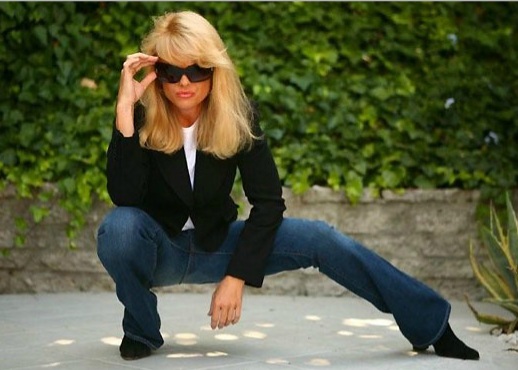
A Conversation With Blues Rock Artist Julia Alyce

Think Linda Ronstadt meets Patsy Cline & Bonnie Raitt.

That’s what you get from the debut EP of blues rock artist Julia Alyce. A collection of music that Julia co-wrote in collaboration with music producer Maia Sharp.

An album that any fan of the aforementioned artists should add to their collection.

Julia’s EP features the steel guitar work of music legend Greg Leisz, who’s played on many of Joni Mitchell’s albums. Other well-known musicians  featured include: Maia Sharp (Producer, Piano, & multiple instruments), Linda Taylor (Guitar), David J. Carpenter (Bass), and Brian Macleod (Drums).

Julia’s in it for the love of the entire music process. Not for any individual moments but for the entire ride. The whole production has a “cosmic” vibe to it as well.

While working with her vocal coach in Los Angeles prior to recording the album, Julia mentioned to him that some of her biggest influences were artists like Bonnie Raitt and the Dixie Chicks. Shortly after that exchange a friend connected her with Maia Sharp, who just so happened to have worked with…wait for it: Bonnie Raitt and the Dixie Chicks. If that’s not a sign then nothing is.

All three songs on the EP reflect different aspects of love.

“Love Me or Let Me Go” – Julia’s “baby”.  Written ten years ago at a time when she was frustrated in the moment. A story of a cat and mouse game of mixed messages being played out. Just when you think you’re at the point of being wanted they suddenly push you away. It’s back and forth drama until the conclusion is finally reached: Just love me, or let me go.

Do you need me, like I need you?
Do you want me, like I want you to?

“Since I Met You” – A song about the feeling you get when you’re not sure if you’ll ever find that special person and what its like when you finally do. Something so deep that everything looks new. Just letting go and how it feels.

And now I’m seeing everything, in a way I’ve never seen it

“Innocent”– A song written by M. Sharp, M. Daly, and L. Lucas. Julia chose this song even though she didn’t write it because she could honestly relate. Having been in that situation where someone is living in the past and trying to be with them in the present without baggage. All the while thinking, “Hey, I’m innocent!”

All that lying left you tender to the touch
She really did a number…on you

The song Love Me or Let Me Go also has taken on a life of its own and become Julia’s first music video. A fun video with universal appeal that’s a cross between Annie Lennox’s pop 80’s work and Robert Palmer’s “Simply Irresistible“.

Julia’s musical journey is actually a three-part plan. The first part was working with Maia and recording the EP the way she wanted to.

The second was creating the music video to give a visual representation of her and the music she represents.

The final piece of the puzzle is a music project Julia is immersed in now in Los Angeles. She’s putting together a specific sound by selecting a group of musicians who are not only passionate about the music, but also bring a special magical quality to the table to help take her show on a grassroots tour nationwide.

Julia says the timing of these artistic elements are key, but at the same time she’s not compromising her goal which is to be out there touring and interacting with her music fans for a long long time.

You may think that with a plan this ambitious it might be a bit challenging but not according to Julia.

“When you’re in the zone it’s a blast.” she says. “It’s not stressful at all.”

If her EP and music video are any indication, the future for Julia Alyce looks very bright indeed.

To book Julia Alyce contact her manager direct at: JuliaAlyceMusic@gmail.com

Article first published as A Conversation With Blues Rock Artist Julia Alyce on Technorati.

A Conversation With Director Jourdan McClure

“Rogue River” is director Jourdan McClure’s first feature film. A movie that will be released in the US on June 5th and a thrill-ride that horror fans will find both visually appealing and emotionally disturbing.

As a fan of the horror genre himself since the age of nine when he first saw the movie Poltergeist, Jourdan had a vision that eventually led him to film school to study the mechanics of story telling and would ultimately allow him to begin weaving his own tales of terror.

Grabbing your attention from the opening scene where a distraught, battered and bloodied Mara (Michelle Page) wanders aimlessly about in a white dress while carrying nothing but a cross and a loaded firearm, we’re left to wonder just how she wound up in such a predicament.

With tears streaming, she places the barrel of the gun to her head in a final act of desperation. The screen goes black and a single shot is fired. It’s a teaser moment of what’s to come and a fitting prelude to the horrific events we’re about to witness as the story is told.

Following the recent death of her father, a tearful Mara says farewell to her brother Andrew (Chris Coy) and embarks on a trip to the Rogue River, a place she fondly remembers her father taking her on camping trips to when she was younger. Her plan is to scatter her father’s ashes in the tranquil location where the family had often spent time together.

While preparing to release her father’s cremains into the river Mara is greeted by a seemingly nice enough gentleman named Jon (Bill Moseley). After striking up a conversation, Jon offers to walk Mara back to her car where she discovers it has been towed away by authorities.

Concerned about the possibility of being stranded out in the deep woods alone at night with no cell phone reception, Mara decides to take Jon up on his offer of a ride back to town. A decision she will forever regret.

“Rogue River” won the Audience Choice Award and Best of Festival Award for Feature Film at the 2010 Sacramento Film Festival and was an Official Selection at the 2010 ScreamFest Horror Film Festival.

Jourdan is slated to direct the supernatural thriller, “The Sum of 9: The Chosen Ones” as well as the television series: “Hell Hunters”, based on the comic book. In 2013, Jourdan will be directing “Ancient Face” and also has numerous other film projects that are currently in various stages of development… Stay tuned.

In this interview with Jourdan we’ll find out more about the making of “Rogue River” and what’s next for horror’s newest story teller.

goJimmygo (gJg): Hey Jourdan, how are you doing?

Jourdan McClure (JM): I’m doing excellent. I appreciate your time.

gJg: “Rogue River” is your first feature-length film. Tell me a little bit about how you started making movies?

JM: You know it’s kind of the same old story only I wasn’t the kid with the Super-8 camera.  I was the kid with the mini DV camera. While growing up I was always shooting little short films and wanted to go to film school to learn how to make movies.

While there I started filming metal and rap music videos and began to understand how to visually put stories together. Music videos are a great format to play around with ideas because they won’t hurt what minimal story is already there. It was a great proving ground for me and I also got to work with a lot of really talented people.

Director Jourdan McClure

gJg: How did the idea for “Rogue River” come about?

JM:  I had an idea for a story and took it to Kevin Haskin who was also a filmmaker. I was already familiar with his work from a bunch of local festivals we both attended.

I had the idea, I just needed someone to help me write it. That was the only component I was missing. So I pitched Kevin the story and at first he thought it was a little dark. <laughs>, but then we brought in Ryan Finnerty who brought another great element to the story.

Ryan was a little bit more into the horror element than Kevin was so they were able to work well off of each other. One creating more of the drama and one creating more of the horror. So while they were busy putting pieces of  it together I’d come in and offer suggestions. The whole process was very collaborative and very cool. Collaboration is my favorite way of working.

gJg: Was Bill (Moseley) one of the first people you had in mind for the role of Jon?

JM: I’ve always been a fan of horror and everyone knew those were the types of movies I wanted to make. After we had gone through a bunch of actors I finally just said “You know, I really want to get Bill Moseley.”

gJg: I thought he was the ideal man for the role. Much different than the other characters he’s portrayed. You know he’s creepy and you know something is going to happen. You just don’t know when.

JM: Exactly! I told everyone that I didn’t want to do the big, scary, crazy “Bill”. I wanted to do more of a subdued “Bill”. I wanted someone who looks like a wealthy man but who’s also scary.

And of course having someone like Bill Moseley in your film, or a Michael Cudlitz (Sheriff Boyd) for that matter, it really helps.

gJg: Was Michelle Page another actor you had in mind for the role of Mara?

JM: Michelle actually knew Kevin and Jo Haskin (Producer) from working with them on their first film. Michelle had a very small role in that film but had a huge interest in doing this one so we checked her out.

I was very fortunate to have Michelle. Especially in the scenes down by the river where temperatures were between 9 and 15 degrees. She’s an actress who really gives herself to a film. Every time I think of the movie my hat just goes off to her.

Oh, and also because I’ve never seen someone shed so many tears. <laughs>

gJg: You know, I was actually going to ask you about that. She was great! I enjoyed watching her in this role because she’s very believable. Can she actually start crying like that on cue?

TM: Oh absolutely. Sometimes the tears can be too much but in this role her character was really in a state of shock and disarray. For me it really worked.

gJg: And then you have the amazing Lucinda Jenny as Jon’s terminally ill, deranged wife Lea.

JM: We had gone through quite a few Lea’s and that’s when my manager, Judy Fox recommended her. Lucinda and Bill are a couple in real life. So we met Lucinda and thought she and Bill together would be the ideal fit. It added another interesting familial aspect to it.

gJg: Lucinda has an extensive resume of films. Have you seen her from her previous roles?

JM: I did see her in “Thinner” but for some reason couldn’t remember her name. I know that she’s never really done horror like this before. I was really lucky to have both she and Bill together for my first feature film.

Bill Moseley, Jourdan McClure & Michelle Page

gJg: The cinematography in the movie is amazing. Especially the natural surroundings and fog on the river.

JM: During that time of year all of those things are natural and it really adds an element to the film that is real. When you combine those natural elements with the dark comedy that’s infused in small parts through out the movie you wind up with something that feels a little bit different but yet still familiar with the genre. I call those “efforts”.

The thing I was concentrating on most was just making a beautiful looking horror film. Something where really terrible content exists amongst this gorgeous landscape. In a beautiful cabin next to a river that’s known for its serenity and the protection of land management. Just a gorgeous, natural organic thing.

gJg: Were there any funny stories or situations to share while you were filming?

JM: I think one of the funniest things that happened was while we were filming Michelle down by the river. There were a bunch of wild turkeys roaming around nearby, making all kinds of racket. And every time Michelle would scream into the sky it would be followed by a response from these turkeys gobbling. <laughs>

gJg: What other film projects do you have coming up now?

JM: “Children of Sorrow” is a movie I directed that’s in post production right now. It a story that was also written by Ryan Finnerty.

gJg: What’s the premise of this film?

JM: After the mysterious death of a young woman’s sister, the woman embeds herself into the cult her sister was a member of to find out exactly what happened. There she finds something terrifying about both the cult and about herself.

It’s a POV horror film but not in the traditional sense where someone has found footage and now we’re watching it. We know where this footage came from. It was put together by this self-help guru, a man who’s known to have bad intentions. He’s taken all of this footage from the cult and the woman’s stay and puts it out to be shown to the world. That’s that’s what we’re watching. The footage shot by the cult members, the cult leader and the woman.

With this project we wanted to do something that was off kilter a bit. Extremely dark but at the same time psychological and freeing. It’s very much a passion project. I think people who like a slow-burning or character driven film will appreciate it. It’s a slice of life inside of a cult… but it’s not a hack and slash movie..it’s a docu-horror.

gJg: Finally, when will “Rogue River” be released in the US and will there be any extra features?

JM: The DVD will be released on June 5th. It will be available on demand on DirecTV and Dish and you’ll also be able to obtain it from Amazon, i-Tunes and Red Box.  – There’s my simple PSA about it… <laughs>

As far as extras go, I just recently finished filmed the commentary on the film with a lot of the cast. That was fun to do because we all got to watch and discuss the art that we had made. Just being honest and genuine about it. There will also be a few minutes of additional footage on the DVD as well. 

gJg: I loved the movie and think fans of the genre really will too.
Article first published as A Conversation with Director Jourdan McClure on Technorati.

A Conversation With Suze Lanier-Bramlett

Suze Lanier-Bramlett has a story to tell.

A story that has taken her on a journey that’s included time in the theater, television, movies, music and photography.

Chances are, if you’ve been exposed to any of these mediums you’ve most likely encountered her and may not have even known it.

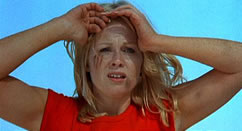
Horror fans know her as Brenda Carter from the first “The Hills Have Eyes” movie. The cult classic that made her the original “Scream Queen“.

Television enthusiasts might remember her for a number of roles she’s played over the years including a stint as John Travolta’s girlfriend on “Welcome Back Kotter”.

Musicians know her for her soulful voice and being the wife of Delaney Bramlett, one of the greatest songwriters ever.

But dig a little deeper and you really get to know what makes this amazing woman tick.

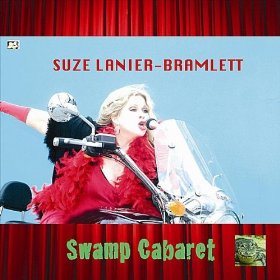
Suze’s latest album, “Swamp Cabaret” is the story of her life thus far. Its also a reflection of her own one woman show in sequence. From her life as a “B Movie Star” to the day she almost made it to Woodstock. With enough blues and cabaret mixed in to appeal to a variety of music lovers.

In my interview with Suze, we’ll discuss “Swamp Cabaret”, her loving relationship and songwriting partnership with Delaney Bramlett, her love of photography and of course “The Hills Have Eyes”. She even dishes on her latest movie project: “Cut!” where she has the challenge of playing herself.

goJimmygo (gJg): It is such a pleasure to speak with you! How are you and how’s your new CD doing?

Suze Lanier-Bramlett (SLB): I’m doing really good. You know, we’re getting some very nice airplay both here and in Europe. The European enthusiasm is surprising and exciting.

gJg: When I first wanted to speak with you it was about the 35th Anniversary of “The Hills Have Eyes”.  Then I started digging a little deeper and found out that in addition to your TV, film and music careers, you’re also a successful photographer too. Tell me a little bit about your photography.

SLB: I’ve always kind of been led through the universe in a spiritual sort of way and photography was actually a blessing. My acting career had been slowing down a bit in the 80’s and I had a son to raise. So I started thinking about other things I could do besides act because I hadn’t really done anything else since I was fifteen years old.

One night I fell asleep and actually dreamt that I was a photographer. That dream reminded me of when I was a little girl and the day my Dad had bought me a Brownie camera. I would go around and shoot Girl Scout meetings, birthday parties and friends. I suddenly remembered how much I loved taking pictures.

Following the dream, the very next day I went out and bought myself a camera. I read the manual, invited a few actor friends over and started shooting. Believe it or not within about three weeks I started making a living as a photographer. It happened that fast.

gJg: It sounds like you had the knack for it right from the start.

SLB: The real trick about photography is understanding light. I think my time spent being in the theater helped me with that. I’ve also always enjoyed looking at fashion magazines. I think because of those two things I had been subconsciously studying light for years.

gJg: Amazing that it all happened for you because of a dream.

SLB: Yeah, and the thing about photography for me is that it’s a fun career. It’s like anything else though, you have to work at it. You have to promote. I think that’s the hardest part of being an artist. There are so many people I know who are fabulous in their art but they can’t make a living of it because they don’t know how to promote themselves. How you get it out there and get people to acknowledge it. That’s the hard part, whether it’s music, acting, painting, etc.

gJg: It’s not an easy road that’s for sure.

SLB: Everyone wants to be an artist, a singer, a rock star, an actor but they have no idea how challenging and difficult it can be. It looks so easy and so glamorous but it’s not. There’s an element of luck involved too. Being in the right place at the right time and finding the right people who can help you take it to the next level.

Songwriting

gJg: When did you first start writing songs?

SLB: The first song I ever wrote was when I was about 10 years old. I had a crush on a boy named Mike and I wrote a song about him called “I Like Mike”. <laughs>

You know, even though it was awful it still gave me the feeling of a creative rush and ever since then I’ve dabbled in songwriting. I found out later that my love for it went deeper than just “dabbling”.

My mother passed away last April and as I was going through some of her things I found poems that she had written all through the years that I never knew about. Her father was also a poet and was actually related to Tennessee Williams.

gJg: Really? Tennessee Williams?

SLB: My grandfather was Thomas Lanier and Tennessee Williams’ birth name was “Thomas Lanier Williams”; cousins of some kind.  I got to work with Tennessee. He was so gifted and intense.

gJg: So it runs in the family!

SLB: Yes it does. But the music didn’t really come full circle for me until I met Delaney in 1977.  He was always in the recording studio and I occasionally would toss out a lyric or two. That’s the way it started and then we eventually began working on songs together.

Later, in the mid-80’s, I formed my own band and performed regularly at The Palomino Club in LA and a bar called The Rose Tattoo, which at the time was the second most popular cabaret bar in the US. Both of those places are closed now. I had a great West Hollywood following.

Around 1991 I decided to stop performing in clubs. It’s hard keeping a band together and I was doing well as a photographer. So I put music on the back burner.

gJg: How did the “Swamp Cabaret” project come about?

SLB: After being away from music for years, Delaney and I started co-writing again. We had been working on some songs for his album.

One night I went to a salon performance party at a friend’s house who was preparing to do a cabaret show in Hollywood.

Her director recognized me from the old days and asked if I’d be interested in performing again. It was truly flattering but I politely explained to him that I thought “that ship had sailed”.  He gave me his card anyway and said: “Lets have lunch.”

I went home and told Delaney about it and, surprisingly, he said he thought I should do it. In fact, he offered to help with the music. With his encouragement, I decided to give it a go.

We had a couple of meetings and rehearsals; however, it was halted when Delaney had a gall bladder surgery and developed complications.

Over the next seven months I never left his side. He passed at the end of 2008.  After he was gone I was devastated and had no motivation to do much of anything. Then one day the director called me and said: “Come on, let’s put your show up!”

gJg: How did it go?

SLB: I was really nervous to be on stage singing again. When Delaney had been involved, he had asked me to include the song “Superstar”.  I kept it in for him.  It was tough getting through that first show. 

It’s actually still a challenge sometimes to face the day without him here. I stay busy and some of his band members play with me, so we keep his memory alive by working and writing together.

gJg: Just listening to the CD you seem so comfortable. It’s almost natural.

SLB: Thank you. I love being in the studio. I just finished recording a song that Delaney and I wrote that was never released called “Angel In The Night”. We wrote the song on Dec 8, 1980, the night John Lennon was shot. It’s a love song and was written initially with Yoko in mind.

gJg: I love your version of “Superstar” on the CD.  I actually grew up listening to The Carpenters version but the song is still one of my all time favorites. The chords and melody are just so beautiful.

SLB: I love it too. Delaney was one of the co-writers of that song. He was such an amazing songwriter. For me to have fallen in love with him and then have him ask me to help him write – you can’t go to school for that. Being married to such a great songwriter and man was a huge gift in my life.

gJg: Another one of my favorite songs on the album is “On The Way To Woodstock”.  It’s so infectious. How true is that song?

SLB: The whole thing is actually true. I was living on The Lower East Side of New York and was very pregnant at the time.

gJg: What encouraged you to put that story into a song?

SLB: ABC news did a documentary on the 40th anniversary of Woodstock in 2009 and they had asked me if they could include a segment about my own Woodstock experience. After I saw it I decided that story could make a cool song. So I sat down at the piano and I whipped it out in about a day.

gJg: Are all of your songs written that easily?

SLB: Not always. Sometimes I’ll get an idea for a song but I’ll need to let it stew.  I might only just have a title or a rough idea about what I want to say but then I’ll sort of just forget about it and not work on it for a while. Then one day I’ll just sit down again and the song will just come out.

gJg: You can’t rush the process.

SLB: You’re right. I, personally don’t like to force the process of songwriting. There’s a formula to it but I prefer to write when the inspiration hits me.

gJg: So a lot of your songs are about personal experiences but you also tend to write from someone else’s perspective as well?

SLB: I do. Delaney would do that too. As a matter of fact, Delaney would often laugh about how all of his wives or ex girlfriends would always think he was writing a song about them personally. He’d say: “Look, I’m not always writing about the person that I’m with. I might be writing about something that I had heard on the news or I’ll write a song from someone else’s point of view.” I feel the same way.

gJg: I love the vibe of this album. Especially with the last track, “Leave Your Hat On”.

SLB: I’ve always loved Randy Newman’s songwriting. “Leave Your Hat On” is one of my favorite songs so I put it on my CD.  I often close my show with that song.

The Hills Have Eyes (35th anniversary):

gJg; You know I’ve got to ask you about “The Hills” don’t you? <laughs>

SLB: You absolutely do! <laughs>

gJg: Do you remember when they crowned Jamie Lee Curtis the “Scream Queen” because of the movie “Halloween”? Well, I did a little research and it looks like you beat her to that title by at least a year.

SLB: I did?

gJg: If you look it up you’ll see. “Hills” came out in 1977 and that’s when you were screaming. “Halloween” didn’t come out until 1978.

SLB: So I was the first screamer?

gJg: You were the first. You have the title and should be credited with that.

SLB: That’s great. <laughs>

gJg: When you think about “The Hills Have Eyes” what’s the first thought that comes into your mind?

SLB: You know how sometimes you’ll do one thing in your life and it changes your whole life forever? That was what that movie did for me.

gJg: Really?

SLB: Yes. You see my agent didn’t want me to do it. He thought it was horrible. But I went against his wishes and did it anyway because I liked the script and I like Wes Craven. It was through that movie that I met Delaney. He had seen it at a drive-in the night before we met.

This last January, I worked on a new movie called “Cut!” because of David Rountree, the director, a fan of “The Hills Have Eyes”. In 2009 I also did another project with Oren Peli (Paranormal Activity) called “Area 51”, another film of the same genre.

Some nice things have come out of me being in “The Hills Have Eyes”. Not bad for a low budget project that your agent doesn’t want you to do in the first place. I’m glad I followed my intuition on that one.

gJg: Do you have any interesting stories from being on the set?

SLB: Well, I’m not sure if I’ve ever told this story before. I remember at one point everyone was a bit on edge about filming the rape scene. Rape scenes weren’t common place back then.

Michael Berryman’s character (Pluto) was going to be the one who raped me first and Michael was a bit insecure about how I would feel about being raped by him.

I was sensing his discomfort so I said to him: “Look, when Wes calls action, let’s just be making out passionately and I’ll act like I’m really enjoying it.”

On “ACTION” they pulled back the curtain and instead of the rape, Michael and I were passionately making out like it was a love scene. It got a great laugh and broke the ice for everyone.

gJg: How was it filming the movie?

SLB: It was fun but it was a hard shoot. It was hot in the daytime and cold at night. We were stuck out in the desert but everyone got along well. It was very low-budget film and probably had more meaning for some of us then others.

I don’t consider “The Hills Have Eyes” a great work of art but its a horror classic and I’m very glad that I did it. It was important enough to make a sequel and a remake.

gJg: I agree.

SLB: Why were you such a big fan?

gJg: I was really big into the horror genre growing up. Just being scared but “safe” in my theater seat. That’s what turned me on to those types of movies.

SLB:  Not me. I don’t like to watch scary films.  It’s cool to act in the horror genre though.

gJg: Do you plan on doing any east coast dates with your band? I’d love to see you in New York.

SLB: That would be great but it’s quite expensive to take a band out. I could possible make it work playing to tracks but tracks aren’t the same as having a band on stage. Besides singing the songs, I do some stand up comedy in the show. My last gig in Hollywood I had video in the show which adds another dimension to it all. 

I want to go to New York sometime in the Spring. I want to catch up on the shows and see some friends. I’ll check out some clubs while I’m there but my focus right now is to stay in the studio until I finish a new batch of songs I’ve written and to release the next CD.

The Changes in the Musical Dynamic:

gJg: What are your thoughts on the way the music industry is changing?

SLB: I think most artists are having financial problems because of all the free downloads, resulting in fewer CD sales. I’ve even read somewhere that the physical product of a CD will probably not be in existence in a few years.

There will soon be nothing that you can hold in your hand and actually look at except your iPhone of iPad.

One of the things that I treasured the most about buying a new album was the artwork.

gJg: I could not agree more. I feel the same way. I’m really going to miss that.

SLB: All of my musician friends are very perplexed about how they’re going to manifest this new business model into income. All of the music that we’re putting out there does not guarantee that people are going to buy it. Especially if they can listen to it for free. Everybody’s trying to place songs in film or on television.

The only way an artist can make money these days is to tour but being on the road night after night is exhausting. Everybody’s trying to figure it out; how to do your art and make a living from it.

gJg: It’s hard to imagine there being any upside to this new model.

SLB: There is one thing about it that’s kind of cool. You’re not dependent on a major label to put a record out anymore. You can do it whenever and however you. The artist can have full control. That part of it is extremely cool.

It’s the same thing with movies. You can do them inexpensively if you really want to. For about $1500 you can use better equipment than Wes Craven did for “The Hills Have Eyes”. <laughs>. You can go buy a camera with a cool lens and have a better quality than he could get back in the late 70’s.

Cut! Movie:

gJg: Let’s talk about your latest movie project. Is it true that you play yourself in this one?

SLB: Yes.

gJg: How did this role come about?

SLB: It’s not a huge role and it was kind of an after thought. They already had most of the movie filmed and I think they wanted a subplot to go along with it. My manager represents David Rountree as well as Gabrielle Stone (Dee Wallace’s real-life daughter). She pitched the idea of using Gabrielle and me. So I eneded up playing the grown up horror film director: Susan Lanier,  former star of “The Hills Have Eyes” with Gabrielle playing my leading lady in the film.

Because we had such a great time on the set, I invited them out to my “Swamp Cabaret” shows and subsequently, they decided to include a scene from the bar into the plot.

The star of the movie is David Banks and he is a very talented actor. He’s also one of the writers.

gJg: This sounds like a very interesting story!

SLB: I’ve seen some of the footage and I think it’s going to be great. I’m grateful to still be working in film. The parts are not that plentiful for more “mature” actors these days.

gJg: Have you ever thought about writing a book about your life?

SLB: Yes I have. Someday I’d like to do that.

gJg: You certainly do! You have a lot to say.

SLB: It’s been a journey that’s for sure. Fame,  fortune and stardom was never the goal for me.  I just love doing the work.  Because a hundred years from now, will any of it really matter? The important thing is to enjoy the process; the ride.

Because… in the end, we’re all just stardust anyway.

For More Information on Suze Lanier-Bramlett: Click Here

Article first published as Swamp Cabaret: A Conversation with Suze Lanier-Bramlett on Technorati.

Bon Jovi, Donnie Iris and Copyright Law: A Conversation With Mark Avsec

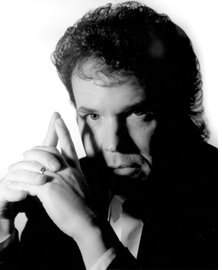
Mark Avsec

Here’s a quick Bon Jovi Jeopardy question for you:

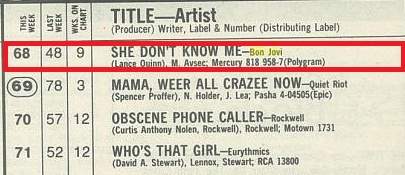
“This song, from the group’s first album, is the only song on any Bon Jovi record that was not at least co-written by a member of the band.”

Answer: What is “She Don’t Know Me?

It was the June 16th, 1984 and my brother and I had braved the Summer heat to drive to the Allentown Fairgrounds and see the Scorpions. They were out supporting their hugely successful album, “Love at First Sting” and we couldn’t wait to see them.

The only thing that stood between two teenaged metal heads and nirvana was having to listen to the opening act: some new band with a bunch of guys out of New Jersey who called themselves “Bon Jovi“.

As luck would have it, I had actually heard of these guys before and had even bought their debut album. They were mostly known for their song “Runaway”, which at the time was getting quite a bit of airplay. But that wasn’t the song that really appealed to me.

As a 15 year-old boy there was only one song on that record that I could immediately relate to. It was the third song: “She Don’t Know Me”. I can’t even begin to tell you the countless times those lyrics came into my head during my adolescence. In certain situations, where the female persuasion was involved I always found myself thinking: “If only she would look my way”…. but “She Don’t Know Me”…

To this day, whenever I think of Bon Jovi the very first thing I think about is the summer night when I first heard “She Don’t Know Me” performed live. The song still gives me chills when I listen to it today.

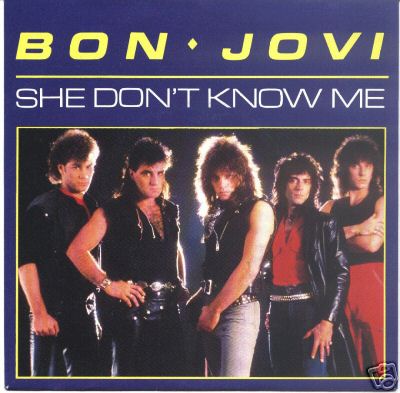
“She Don’t Know Me” is a song written by Mark Avsec that appears on Bon Jovi’s debut record and to this day is the only song from any Bon Jovi record that doesn’t have at least a co-write by a member of the band. But the story of how the song appeared on that first record is no where near as interesting as the songwriter is himself. For Mark Avsec’s story goes a lot deeper than just a Bon Jovi song.

Mark’s life as a musician, songwriter and producer includes stints with the bands Breathless and Wild Cherry (“Play That Funky Music”). The latter of which gave him the opportunity to perform on stage at the Grammy Awards.

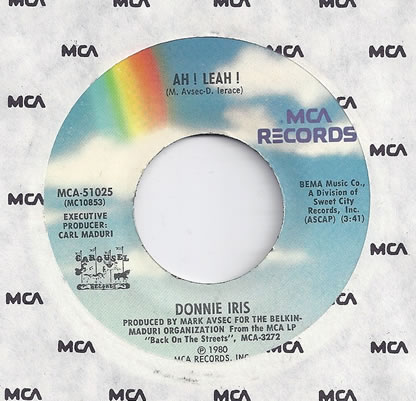
He’s also had a long relationship with Donnie Iris as a member of the Cruisers where the two of them together would write the hit song “Ah! Leah!” and subsequently lose everything gained from the song’s success by defending themselves in a frivolous lawsuit. The outcome of which led Mark himself to become an attorney to make sure that what he went through never happens to himself or anyone else again.

In this interview with Mark we’ll talk about how he came up with what I believe is one of the best and most underrated Bon Jovi songs ever. We’ll also discuss the Ah! Leah! lawsuit and his reason for becoming an attorney as well as what the future holds for himself and his long time friend Donnie Iris.

goJimmygo (gJg): What is the origin of the song “She Don’t Know Me“?  How did you come up with the idea for it and what’s it premise?

Mark Avsec (MA): I was on the road with Donnie during our tour for the first album and I was supposed to go back into the studio with La Flavour (who later became the band Fair Warning) for an album. I was going to write the songs for and produce the album.

So I wrote this on the road in a hotel room.

I generally write music first, and that’s what I did for this song. I don’t know if the lyric is anything to write home about, but it’s a basic story of when you really have fallen for someone and that person does not know you exist.  I felt that in my life. I think probably everyone has

gJg: How did the song wind up on the first Bon Jovi album?

MA: “Luck” is a factor in all of our lives and in any business. But I think “luck” plays a bigger role in the music industry or in the arts in general.  How many super-talented people are out there that we have never heard of?  A lot! Somewhere there is someone who could be as impactful as Bruce Springsteen but the stars have not aligned for that person.

However, I also believe that you have to put yourself in a position to get lucky.  That requires dedication, study, hard work. I wasted a lot of hours in recording studios working on “spec” on albums and songs that never saw the light of day. That certainly seemed to be the case for this Fair Warning album that “She Don’t Know Me” was on. It came out on an MCA label and immediately died.

What happened though, was that record executive Lennie Petze heard the song and loved it and got the song to Jon’s brother, Tony Bongiovi – with a strong suggestion that Bon Jovi should record the song for the first album. This is what was told to me – I have never independently validated this story but it makes sense.

Ironically, Bon Jovi “opened” for Donnie Iris and the Cruisers for several dates – so we got to know the guys in the band a bit. I’m a little introverted until I get to know people so I was not out there trying to meet Jon (Donnie got more friendly with Tico).

“She Don’t Know Me” was released as a second single after “Runaway” – it did respectable.  A lot of people know the song.

I’m not sure how crazy the band was about the song – It’s never shown up on any compilations or anything.

gJg: What was it like when you met Bon Jovi? Did you picture what they would turn into today?

MA: When Bon Jovi opened for us (Donnie Iris and the Cruisers) it was clear something was happening. Jon had all of the rock star moves and he was a great looking guy – the chicks loved him from the start.

gJg:The song was originally recorded by Fair Warning (Also covered by Grass Roots and Sonny Gervaci). Were you concerned at all about overkill of the song?

MA: No. Very few people knew the song until Bon Jovi recorded it.

gJg: Your song is the only one that appears on any Bon Jovi album that does not have a Bon Jovi co-write connection. Do you think this may be the reason why it’s not performed live any longer?

MA: Yes, maybe. Like I said, I’m not sure what Bon Jovi’s perspective on the song is – it really does not show up on any of the “Greatest Hits” compilations or anything, at least not yet.

Writing “Ah! Leah” and Studying Law

gJg: I read where you decided to become a lawyer because you were sued frivolously for the song “Ah! Leah!”  What was that whole lawsuit about?

MA: Some fellow from the Detroit area – he did music on the side – thought we stole a song he wrote called “Here I Go Again” or “Here We Go Again” or something like that. 

Well, I never heard the song. I knew how I wrote Ah! Leah! – I knew where I was when I wrote it.  And I certainly never heard the guy’s song.

I blame the contingency-fee lawyers who took the case, trying to take a shot. 


Except the onus fell on me and Donnie – two lower-middle class guys who were simply trying to support their families with music. 

The plaintiff, we learned during the trial, apparently went out to LA pitching the song to some MCA promo guy who promptly discarded the tape after a meeting. So the lawyers concocted this story where somehow the tape made the way to us to copy.  We eventually heard the song during the trial I think – the songs were nothing the same and there were many, many titles registered with ASCAP/BMI called “Here We Go Again” or whatever.

It was suggested I pay the guy settlement money. I would not give him a nickel. The trial went to a jury trial – the whole nine yards. And we won. But Donnie and I lost everything the song made and more because we had to pay our lawyers.

I can now say – and it has taken me a long time to get there – that the lawsuit was the best thing that happened to me. Because I love copyright law – and I love my life now, being an intellectual property attorney, teaching at law schools and speaking – and also still writing music and playing.

gJg: So the outcome of the case made you decide to put the rock and roll dream on hold in favor of studying law?

MA:  I became very interested in copyright law. That lawsuit made me think – “Geez, I did nothing wrong and I can be sued like that?  Without any basis?  I better learn how to defend myself.”  And I began to think about the legal system and if there were mechanisms that could be put in place to dissuade meritless, frivolous lawsuits.

Since that lawsuit was decided, we had the Supreme Court in the United States decide the Fogerty lawsuit – ruling that defendants who prevailed in copyright infringement lawsuits – should be entitled to attorneys’ fees recompense from the losing party. The copyright statute already provided that the prevailing party could recover attorneys’ fees from the losing party.  But before Fogerty, the statute was not applied in an even-handed manner to prevailing defendants and prevailing plaintiffs. So the Fogerty case was a step in the right direction. 

The corporate receipt doctrine is also disfavored now – so that amateur songwriters who send tapes to record companies that nobody wants to hear will have a harder time arguing that so-and-so-big-star stole my song because I sent it in to Universal Records and, you know, this big star now is signed to the label and has a big hit song with the word “love” in it and an A minor chord.

But I still think some lawyers who bring these cases (the so-called substantial similarity cases) – bring them too easily hoping for quick settlement.

gJg: How has that lawsuit and eventual outcome influenced the way you litigate cases?

MA: I don’t have a stomach for baseless cases. No lawyer should. I don’t bring them. And if I’m defending – I will work as hard as I can for my client to get the right result. I have had many successes and I cannot discuss them.

Music

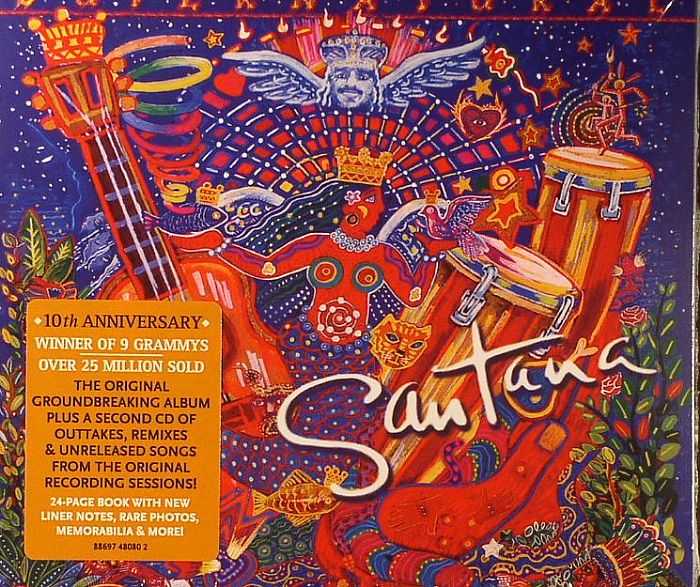
gJg: In 2010, “Angel Love (Come For Me),” a song you co-wrote was included on Carlos Santana’s Supernatural (Legacy Edition) album. How did this come about?

MA: We’re back to “luck” again, aren’t we?  And putting yourself in a position to get lucky. When I wrote that song I had a recording studio in my house. And I worked hard and spent hours writing and recording.  And in retrospect – from an economic perspective – I wasted a lot of time because the lion’s share of that stuff never saw the light of day.

But I had a friend, Alan Greene, who I played with in Breathless – and Alan was a great, great blues guitarist – still is.  And a wonderful guy.  And so we were writing some blues-based songs for possibly an Alan Greene solo project.  And Alan and I wrote the first iteration of “Angel Love” – but it was not called Angel Love.  I think it was called “Too Much About Love” or something like that.  And it had way more of an Allman Brothers vibe to it.  The music was the same as what became the music for Angel Love, but it was even more bluesy and jam-based.  I liked the music a lot.

Well, I have another dear friend – Mason Ruffner.  And I had pre-produced Mason’s Gypsy Blood album in my basement studio.  Mason used to come over and we’d work on it.  And then Dave Edmunds, the eventual producer of Gypsy Blood, even came to the United States and visited my studio. And my studio was one of the first purely virtual, MIDI studios. And so it was decided that I would bring the entire setup over to London – where we made Gypsy Blood for real.

I thought that record was very good – and Mason had a lot of promotion behind him from the record label, but the record did not achieve the success everyone had hoped for.

So, Mason was now thinking about another record – though he had not found his mojo for what he wanted to say yet.  We remained close friends (still are) and he came back to my studio to screw around.  He heard the song I did with Alan and asked if he could write his own lyrics to it. Alan did not care – and so I said “sure.”

And so the song became “Angel Love” and we recorded it with Mason but nobody heard it.  Yet somehow it got to Carlos Santana.

A lot of guitarists – Jimmy Page and Carlos Santana among them – had respect for Mason.  Bob Dylan even devotes two pages in his Chronicles book to Mason (Mason had played on “Oh Mercy” for Dylan and Daniel Lanois).  I think it is because Mason comes from a very real “roots” tradition, growing up in Oklahoma and Texas – spending so much time on Bourbon Street in New Orleans and in Memphis honing his craft.  He is very picky about his lyrics – he is very well-read and is a serious artist I think.

So somehow Carlos heard the song – I think it was on Mason’s album which was not widely released.

Soon after that Carlos began playing the song live – there is a clip on YouTube where Carlos is playing the song in Warsaw, Poland at a huge outdoor festival.  This was the early nineties.

Well, we talk about “luck” again.  Because Carlos was going to record the song – or did record the song (I am not sure which) for his Supernatural record.  Now, if “Angel Love” had been on the original release that sold 25 million copies or so – those pennies really add up and Mason, Alan and I would have done very well.

Unfortunately, the song did not make the cut for the first release.

However, 10 years later – Carlos wanted to put it on the “Legacy” anniversary edition of Supernatural.  And “Angel Love” was the first single.

Of course, the “Legacy” edition sold nowhere near the copies the first Supernatural album did. Still, it is a thrill for a legend like Carlos Santana to record your song.

Ironically, I toured with Carlos in Wild Cherry (when I was in the band that had the hit “Play That Funky Music”). Again, I never got to know him well.  But his band was smoking – and we used to hang with them a bit and go see jazz groups after-hours with them.

gJg: What was it like to perform at the Grammy awards?

MA: It was surreal. I have a tape of the show. I don’t know if you remember the television show, Laugh-In? Because, though the show was state of the art at the time, the graphics and the production seem so amateurish now. But there I was – sitting behind Ringo and standing next to Barbra Streisand backstage. 

We stayed at the Beverly Wilshire hotel and I was waiting for my limo to take me to the show – Andy Warhol was standing there waiting for his limo and so was George Benson, who finally achieved commercial success after years of paying his dues in small jazz bars. We also toured with George Benson a lot during those days. 

As for the Grammy show, we played on the show. We were a one-hit wonder but it was a BIG hit and still is. I really had nothing to do with the success of that song. That was all Robert Parisi. I just showed up in the recording studio. I learned how to make records during that period of time. My relatives thought I was probably rolling in the dough but that was not true either.

gJg: What are the plans for shows in 2012 with Donnie Iris and The Cruisers?

MA: My friendship with Donnie is one of the joys of my life. In fact my friendships with all of the Cruisers are very meaningful to me. 

We have a very respectful band. There is no back-biting. We have always been very positive with each other. I may take the lead as the prime mover – but we have some super-talented people.  Donnie, of course. And he has really become a legend in Pittsburgh.  Marty – one of the most talented and creative guitarists. Kevin Valentine – awesome drummer and a very talented engineer and producer. Paul Goll – who was not the original bass player – but has been with us so long. The perfect guy for us now.  He sings well and plays very nice bass – and is a great person. Our great band extends to our longtime crew – and in particular, Jimmy Markovich, our longtime sound guy.

I spent so much time on Ah! Leluiah! – our Christmas album. I put my heart and soul into that. Honestly, I wept when it was done. I saw it as a legacy for Donnie and for me – and I hoped people would listen to that once a year after we pass. I know, morbid but that’s the way I approached it. I also thought Donnie really shined brightly on that album. That was an emotional record for us.

I am now writing some new songs. We want to go in the studio to record an album for a landmark event – a landmark birthday for Donnie.

I cannot talk about the album yet, except to say it is beginning to take form.

For more information on Donnie Iris and the Cruisers Click Here


Article first published as Bon Jovi, Donnie Iris and Copyright Law: A Conversation With Mark Avsec on Technorati.

A Conversation With Erika Eleniak

It’s been thirty years since E.T.: The Extra-Terrestrial changed the way Americans looked at Reese’s Pieces. In 1982 you couldn’t turn on the TV without seeing the little guy with the lit-up finger munching on those chocolate and peanut butter candies.

E.T. was everywhere. From Pizza Hut glasses to Atari video games and even lunch boxes. His stickers adorned everyone’s beloved Trapper Keeper (mine included) and I still recall all of the kids in 7th grade talking about him for months.

But even thirty years after its release the one thing I remember most about the movie, aside from wanting one of those cool flying bicycles, is the scene where Henry Thomas’ character Elliott saves the frogs in his science class from certain death and kisses his female classmate.

Quite fittingly, she was credited as the “Pretty Girl” in the movie and it was one of those moments during my own adolescence where I would have given anything to be able to change places with some other guy. That other guy being Henry Thomas.

E.T. : The Extra-Terrestrial introduced the movie world to Erika Eleniak. Since then, she’s been a Playboy Playmate, a Baywatch babe and a Beverly Hillbilly just to name a few of her accomplishments.

She’s fought off terrorists in “Under Siege” and even hunted vampires in “Dracula 3000: Infinite Darkness”. Most recently, she’s appeared in episodes of “Desperate Housewives” and “CSI: Miami”.

In this interview, Erika talks about her time working on “E.T. :The Extra-Terrestrial“,  “Baywatch” and “Under Siege“. She also discusses her newest movie, “Meant To Be” which deals with a very controversial subject.

goJimmygo (gJg):  When did you first start acting and how did your role in E.T. come about?

Erika Eleniak (EE):  I first started acting when I was ten-years old. My earliest appearances included a play, some commercials and on a TV show.

Although E.T. was not my first acting role it was my first film role. I was twelve-years old and in the 7th Grade performing in an audition showcase when I was spotted by a talent scout for Steven Spielberg, who was seated in the audience.

I later went to meet with Mr. Spielberg and he asked me if I wanted to be in his movie.

I said, “Yes.” <laughs>

gJg: What was the experience like working with Steven Spielberg?

EE: Working with Steven was wonderful. He was very playful with all of the kids and caring as well.

I remember when it was time for our on-screen kiss. He cleared the set and had private conversations with both Henry Thomas (Elliott) and myself to reassure us that it would be handled with care.

gJg: Did you ever expect the movie to become the phenomenon that it did?

EE: When I was cast for E.T. great care was taken with everyone to make sure that “E.T.” stayed a secret until it was time for its release. This was done to avoid the possibility of the film being ripped off before it’s release.

I was told that the name of the film was “A Boys Life” and that it was going to be about a boy and an alien. That’s all. I had no idea what to expect.

I still remember sitting with my Mom, Grandma and Sister in the Hollywood Dome Theater for the premiere and just being wide-eyed the whole time!

gJg: Are there any funny stories from being on the set that you’d like to share?

EE: I think the funniest memory I have is that Henry had told everyone that he was in a “Girl Hater’s Club”. 

The other thing was that he was 10 years old and I was 12 so we were both pretty freaked out about having to do that kiss!

gJg: Did being part of such a big movie bring lots of offers for future films?

EE: I was very fortunate in that my Mom was the complete opposite of what a typical “stage mother” is. She made sure that I had a normal childhood and stayed in school. I had worked a couple of jobs a year on average but as far as getting roles based on E.T: there were none that I am aware of.

gJg: A few years later you were cast as Shauni McClain on “Baywatch”.

EE: Yes, I was cast in Baywatch right out of high school. I was 18 or 19 years old and one of the original cast members of the show when it was first aired on NBC.

This was the most conservative network at the time by the way.

gJg: I loved your role as Jordan Tate in “Under Siege”. Was there a reason why you didn’t appear in the sequel?

EE: “Under Siege” was a great film and a fantastic project to be a part of. The role of Jordan Tate was pure FUN to play. I am often asked why I was not cast in the sequel.

From what I understand, they wanted to make a completely different theme and therefore a new cast.

gJg: What was it like working with Tommy Lee Jones in that movie?

EE: Working with Tommy Lee Jones was an honor for me. He is one of my favorite actors of all time. Watching him work with Gary Busey was also inspiring. They wrote, re-wrote, created, improvised. It was amazing to watch.

gJg: Have you made any lasting relationships with any of the cast from those movies?

EE: I have run into various actors I’ve worked with over the years and that is always cool but it’s very difficult to maintain relationships with us gypsies sometimes! We move around from town to town, working and traveling.

I’m kidding though, we are not gypsies. We all just have our own very different and busy lives.

Erika on CSI:Miami

gJg: What is the biggest question fans ask you the most?

EE: Most fans ask me what it was like working on Baywatch or what it was like to work with certain actors.

That is the biggest question really: “What was it like working with…..”

gJg: And I’ve asked a few of those too…. <laughs>

gJg: Out of all of the people you’ve worked with over the course of your career thus far, who would you say is the one person you’ve enjoyed working with the most and why?

EE: I have been fortunate in my career to meet and work with many fascinating and interesting people but, if I have to choose a favorite, it would have to be Cloris Leachman. She is a wild, wonderful woman! So full of Joy-for-Life and her spirit is as contagious as her laughter. (Ms. Leachman co-starred with Erika in The Beverly Hillbillies)

gJg:  Finally, what can you tell me about your new film “Meant To Be”?

EE: My new film, “Meant To Be” looks at the very controversial topic of abortion and what happens to those involved in the process. It is a very interesting point of view of a “possibility” of what the consequences of having one “may be”.

I play a woman who previously had an abortion and later on goes on to have a child. After her child goes off to college she finds herself “mentoring” a young girl in the very same situation that she was faced with many years ago.

There’s also a young man in this story in search of his birth mother as well which takes on a very interesting twist.

For more information on Erika check out the links below:

Erika Eleniak’s Official Website * Erika’s Latest Show-Reel


Article first published as A Conversation With Erika Eleniak on Technorati.

A Conversation With Michael Berryman

When I was first introduced to Michael Berryman it was most likely the same way many other metal head purists from my era had first met him: by seeing his performance as the mean principal in the Mötley Crüe video for the song: “Smokin’ in The Boys Room”.

He was the ideal fit for the foreboding and intimidating figure that roamed the school halls and scared any would be malcontent. Someone you’d never want to meet in a dark alley let alone a principal’s office because a dog ran off with your homework.

Mr. Berryman has built quite an extensive resume of portraying these frightening and intimidating characters. From a mutant biker in “Weird Science” to even the devil himself in an episode of the 1980’s television show “Highway to Heaven“.

He’s been a part of the Star Trek franchise and is also a favorite of director Rob Zombie, having appeared in his films “The Devil’s Rejects” (2005) and the soon to be released “The Lords of Salem”.

But Michael is quite the opposite of the types of characters he portrays on-screen. In fact, it may surprise you to learn that he’s a strong advocate for the environment and leaving something behind for future generations to enjoy.

And here’s something else you might not know: the second film Michael was cast in just happened to be “One Flew Over The Cuckoo’s Nest”, the 1975 film starring Jack Nicholson that went on to win five Academy Awards including Best Picture.

But the role Michael is probably best known for is his portrayal of Pluto in the 1977 Wes Craven Film “The Hills Have Eyes”. Considered a cult favorite among horror enthusiasts the film has spawned two sequels (one in 1985 and the other in 1995) and two separate remakes (2006/2007). The original film also ranks #41 on Bravo’s list of 100 Scariest Movie Moments.

I had the pleasure of speaking with Michael and get his thoughts on the Hills as it turns 35. We also discuss the Mötley video, the importance of preserving the environment, his thoughts on working with film legend Jack Nicholson and his newest thriller,
Below Zero“.

goJimmygo (gJg): Hi Michael, this is James Wood, how are you?

Michael Berryman (MB): Pretty good James!

gJg: It’s good to talk with you.

MB: You too!

gJg: Did you ever think that after 35 years people would still be talking about “The Hills Have Eyes“?

MB: Oh gosh, has it been that long? <laughs>

gJg: Isn’t that crazy?

MB: That really is. <laughs>

gJg: How did the role of Pluto come about for you?

MB: Well, I had just gotten home from my second gig which was Cuckoo’s Nest. We had worked 127 days on it and I had really learned a lot. So I came home to Santa Monica and actually had no idea what was going to happen next.

Then one day my agent called me and said he had a part for me to look at for a movie called “Blood Relations”. That was the name of the company but was also originally going to be the title. He said there was a producer named Peter Locke and some director named Wes Craven he wanted me to meet with. So he set up a meeting and I went and met everyone and was handed the script.

They told me it was going to be about a three-week shoot out in the desert north of Los Angeles. I told them that I was already familiar with the area. The temperatures there were always hot in the daytime and cool at night.

So a few days went by and they called my agent and offered me the role.

gJg: Any interesting stories from the set?

MB: I remember the day I went into wardrobe. I met a gal there who was also working on a degree in anthropology at UCLA. I guess you’d say she had some knowledge of the kinds of things a cannibal family might wear.

The necklace she gave me had some cool things on it: a pair of dentures, some bullets. My bracelet was actually comprised of real human teeth that she had gotten from a friend of hers who was a dentist.

We were going for realism and I guess they just figured I had the look for it. <laughs>. They discussed the premise and I said “Ok, let’s have some fun with it.”

gJg: Were there any accidents on the set? I look at the rocky terrain it was filmed on and I could just imagine people twisting their ankles on it.

MB: I was familiar with that area so that wasn’t really a problem. The worst part though was climbing those mountains. No one got hurt but it was very precarious.

One of the biggest issues though as far as people almost being hurt was probably the day we had the rattlesnake on the set. It wasn’t just your typical diamond back, it was a Desert Mojave Green and they are as deadly as a cobra. I mean really, really dangerous.

I remember we were all sitting in the ravine one day having lunch and I noticed that people were jumping out-of-the-way of something. I looked over and saw that the snake had some how gotten out of the cloth while the animal handler was getting something to eat.

Now here’s the scary part: one of the actresses actually picked it up and handed it back to him and he almost fainted. Wes and Peter were freaking out.

Fortunately, what the handler had done was taken some thin line and looped it through the jaw of the snake over the bone so it couldn’t get its jaws open far enough for fangs. But still…

gJg: Still scary!

MB: Yes it was. So he took care of that and then I asked him: “Why a Mojave Green?” and he said, “Well, its actually my pet.”

So I knew right then that he was a whack job. <laughs>

gJg: Do you see anyone from the movie anymore?

MB: Well, I actually have. I ran into Janus (Blythe who portrayed Ruby) a few years ago. Once in a blue moon I’ll run into some others.

I saw Peter Locke (producer) a few years ago in LA when they were getting ready for the first remake of The Hills Have Eyes (2006). Peter told me he’d see me in Morocco. The only problem with that was the director didn’t want me. So I’m not sure why they even bothered to call me in.

gJg: Anyone else?

MB:  I’ve run into Dee (Wallace, who portrayed Lynne Wood) at a few conventions over the years. Ken Horn (make-up artist) is the curator of the Hollywood Wax Museum. I bump into him every once in a while.

gJg: Now your character, Pluto, supposedly dies in the original film when the dog attacks him. Was that the way it was supposed to be or did they leave it open-ended for a sequel?

MB: No, originally we didn’t think there was going to be a sequel so I was pretty much dead. But in part two I explain how I managed to get patched up after the dog attack.

The one thing I really liked about Part 2 was the fact that we used a different type of film so it has a real vintage look to it.

About the only thing I wasn’t too thrilled about was the “Reaper” character. I just didn’t feel that he was a very complete character.

gJg: And then that damn dog got you again (the same dog that supposedly killed Pluto in the first Hills movie pushes him off a cliff in this one).

MB: <Laughs>… Yeah well, what can you do?

***

Michael on the Mötley Crüe Video:

gJg: What was the story behind the video for Smokin’ in the Boys Room?

MB: My first agent was still with me when I got the video. He called me up and he says, “Hey, there’s this band called Mutley…uh, Motley Crew and they want you for their video.” So I said, “Sure, I’ll go do it”.

So we went into this high school auditorium and all hung out in a make shift green room they had set up behind the curtain. They were all super nice guys, very down to Earth.

As we were sitting there making small talk we started bouncing around ideas on how to make my character silly. That’s when we came up with the idea for the wig, the bow tie and eventually, the ear wiggle.

gJg: Ah yes, the ear wiggle!

MB:  You know, there’s actually an interesting story with that. I told Mick (Mars, guitarist for Mötley Crüe) that I could independently wiggle my ears. Well once he and everyone else in the band saw me do it they loved it and wanted to use it. So the ear wiggle was put in at the very end of the video right after they snatch off my wig. It must have worked because the video was number one on MTV for quite a long time.

Well one day people started calling me up and telling me that they had noticed that the ear wiggle scene had been taken out of the video. Apparently, “someone” didn’t care for it and had an editor go into work one day and remove it.

But I guess over time enough people complained about it so they went back in and put my ear wiggle back into the end of the video..

So you know, it’s a cute rumor.

Years later I’m working on a voice over for Penny Dreadful, and low and behold the guy who was doing the editing for the film comes up to me and says, “Hey, a long time ago I used to work for MTV as an editor and one day I had to put your ear wiggle back into the Mötley Crüe video”.

<laughs>

So it’s a full circle kind of thing.

***

Michael on his newest thriller, “Below Zero”:

gJg: I see that you have a new movie out now, Below Zero.

MB: You betcha.. Below Zero.

gJg: What’s the premise of this film?

MB: It’s a thriller. Eddie Furlong plays a screenwriter who can’t meet a deadline. So he arranges to be shipped out into the middle of nowhere, locked inside of a freezer at a slaughterhouse. He’s got everything in there he needs to work. He just can’t come out until he has a finished script. And all during the process you don’t know if what you see is something he is writing or if it’s real.

I play the part of Gunnar who is the guy who runs the slaughter-house.

gJg: Oh, so Gunnar is a real character. He’s not part of his imagination. He’s real?

MB: Well, no he’s not….but then again….(pause)…maybe he is….. <laughs>

gJg: How did I know you were going to say that? <laughs>

MB: The movie leads in three directions and the cinematography is exquisite.


gJg: The trailer for it looks great!

MB: We’re all very proud of it. We filmed it two years ago in Canada. People can go check out the Facebook page or the official website to learn more about it. I know they’ve been playing the trailer most recently. It’s got a great musical score and is doing very well at festivals all over the world.

I’m saying that probably by summer it should be out for sale. I think its going to do really, really well.

gJg: Just from what I’ve seen of it so far I’d have to agree.

MB: It’s really, really good. I actually have a DVD copy of it and I’ll watch it every once in a while. The cool thing about it is that every time you watch it you enjoy it again, freshly. It’s not something you watch once and then put away. It doesn’t lose any impact over subsequent viewings. It’s really strong and I’m proud of it.

In fact, if you want to know the truth, I think it’s my best work yet.

And why?

Because it was my last work. And every time I work I do a little bit better.<laughs>

gJg: Yeah, that’s a good way to look at it.

MB: Well, you try. <laughs>.

***

Michael on giving back:

gJg: I noticed the tattoos they gave you for this role as well.

MB: Oh those aren’t fake, those are real.

gJg: Really? Wow, those are really colorful.

MB: Yes, they are. The one on my right arm is the sunset with the moon rising and mountains in the background. The one on my left arm is of a mother wolf and a pup. I actually lived at a wolf sanctuary for ten years.

gJg: Oh really?

MB: Wolf Mountain Sanctuary.in Lucerne Valley, CA. It’s run by my good friend Tonya Carloni. She rescues wolves and gives them a descent place to live. What she does is a very noble cause.

We also teach people about habitat preservation and the importance of preserving what we have before it turns into something like Joni Mitchell said: “Paradise turned into a parking lot.” We really need to leave something for our children to enjoy.

***

Michael on working with Jack Nicholson in “One Flew Over the Cuckoo’s Nest“:

gJg: Michael, I just can’t end our interview without asking you about what it was like working on Cuckoo’s Nest with Jack Nicholson.

MB: I get asked quite a bit about Jack and I tell everyone that I found him to be such a down to Earth regular guy.

He told me one day, “Michael, if I was as tall as you I’d be an NBA star right now.” (Michael is 6′ 2″). Jack was very athletic but just didn’t have the height for it.

He was just a real, honest, wonderful guy and a terrific talent and I was just tickled that he won an Oscar for it because he just threw himself into that role.

gJg: Well Michael it’s been so great talking with you. Is there anything else you’d like to say in closing?

MB: I just want to wish the very best to all of my fans. May you all have a peaceful, wonderful life and when you wake up tomorrow, make it a great day.

gJg: Couldn’t ask for anything more than that.

MB: That’s the plan I’m keeping.


Article first published as A Conversation With Michael Berryman on Technorati

Survivor 2012: A Conversation With Frankie Sullivan (Part Two)

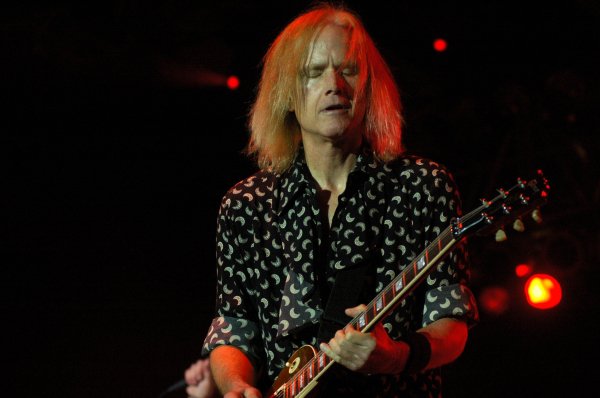
Photo by Mary Hanley

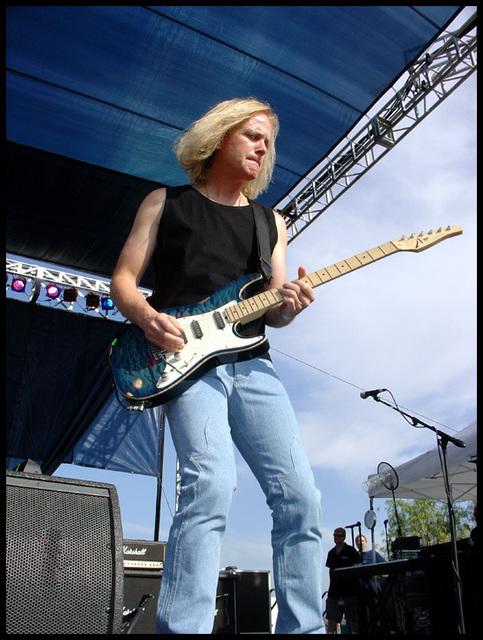
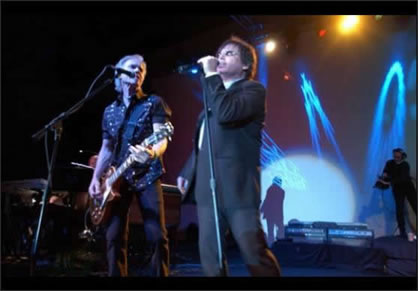
In November of 2011 guitarist Frankie Sullivan and vocalist Jimi Jamison together announced that after a long hiatus Jimi would be returning as lead vocalist of the band Survivor. The group, which has a plethora of hits including “Eye of The Tiger”, “The Search is Over” and “I Can’t Hold Back” among others, will soon embark on a tour and begin work on their first album of new material with Jamison in more than five years.

The new lineup of Survivor includes Jimi Jamison (vocals), Frankie Sullivan (guitar), Marc Droubay (drums), Billy Ozzello (bass) and Walter Tolentino (keyboards/guitar).

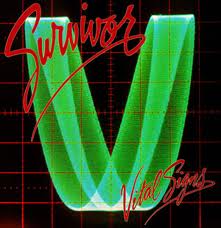
In the second of my two-part interview with Frankie Sullivan I ask him about his approach to songwriting, the sessions for the album Vital Signs, his take on X-Factor/American Idol and why paying your dues as a musician is so important.

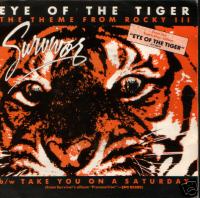
We’ll also discuss the upcoming 30th anniversary of “Eye of The Tiger”, the theme song from Rocky III, which earned the band an Academy Award nomination among other accolades, and still ranks as one of the biggest songs of all time.

It truly was an honor to speak with one of my all time favorite songwriters. I’m really looking forward to what Survivor has in store for 2012. As the band themselves have said: “Here’s to a year of new beginnings, determination and more great music!”

A Conversation With Frankie Sullivan (Part Two):

gJg:  You’ve written a lot of really big hit songs and one thing I’ve always wanted to ask you about was the process you use for songwriting.

FS: Actually it all depends. Sometimes I’ll start with a lyric if I’m inspired by the right thing, or a person or a place or you know, some experience. “I Can’t Hold Back” was like that. But sometimes it could be a guitar lick like the beginning of “I Can’t Hold Back”.  I was just goofing around with the acoustic guitar one day and (Jim) Peterik was like, “Hey, what’s that you’re playing?” and we took it from there. The next day we finished writing it. That was “I Can’t Hold Back.” It’s what ever you feel at the moment.

I like to play the guitar a lot. I jam out on a lot of riffs. And it’s not really heavy or hard all the time. Sometimes it’s on acoustic or piano. I think it’s whatever strikes your chord at the moment. But as long as you can get it out there and then maybe get with someone who can relate to and finish it, that’s what matters.

gJg: So you and Jim would just sit in a room together and start bouncing ideas off of each other? Playing and writing things down on paper?

FS: Jim Peterik and I, back in the Vital Signs days and prior, would write Monday through Friday every day from 2 o’clock until six or seven no matter what. No excuses, it was like going to work. We were practicing and honing our craft trying to do the best we could do. Some days we’d write two songs, some only one but we always had the work ethic of how we wanted to go about it. I’m proud of the fact that we always worked hard.

You know, it’s really difficult to write good songs. But Jim and I were coming from two different places. We were like night and day so the stuff we wrote together would always have that extra spark to it.

gJg: Was “Eye of The Tiger” like that as well?

FS: You know, that was the easiest of them all… (laughs).

We had a ballad that we wrote called “Ever Since The World Began” (from the “Eye of The Tiger” album) and Jim and I both loved it. We thought this song was going to be great. “Tiger” we totally down played. We thought “Eh, this is going to be like “movie music” or something.”

I think we wrote the music for it in like half an hour and it took us three days to write the lyrics only because we couldn’t come up with the punch line. But we kind of had it down in half an hour.

gJg: So there’s no big story about how it was written?

FS: No, there’s no real brilliant story behind it. Some of the stuff I’ve seen on the Internet that people have written about it and I’m like, “No, it’s not like that…that’s ridiculous!” – That’s not what happened. It was real simple.

The president of our record company was friends with (Sylvester) Stallone. They were really good friends. He had the Queen song “Another One Bites The Dust” and Stallone wasn’t happy with it. So he said “Well you know, I have this band…”  It was just two social guys having dinner. That’s what started it all.

I remember Jim Peterik had pneumonia at the time so I went out alone and spent ten days working with Stallone and it was just a blast. He was totally cool. He just wanted it to slam. He wanted it to sound just like the demo but with balls. So I played it for him and took it to the limit and he loved it.

And afterwards I remember seeing it in the movie theater and thinking to myself, “Man, this sounds raw, it sounds rock. It sounds basic.” There are a lot of cool things about it. It sounds like it was on the spot. You can hear a lot of spontaneity in it.

You can hear Dave (Bickler, the singer at the time) just going for it and you can tell some of the lines are just scratch lines. There’s a lot of good stuff going on.

gJg: And thirty years later?…(laughs)

FS:  Doesn’t hurt (laughs).

You know, I can’t believe it’s been that long. And there’s still a lot of cool stuff going on with it. Even today I’m hearing that Stallone wants to go LIVE and take it to Broadway among other things.

We just got a plaque from Sony, it’s something like 2.8 million downloads. I don’t have an updated official number but I know it’s the 8th most downloaded song on the Internet right now.

gJg: Amazing.

People love the tune. They can identify with it. Plus, it doesn’t hurt to be part of Rocky.

gJg: Then you had success with “Burning Heart” a few years later.

FS: Yeah, Burning Heart was after Tiger. That was in Rocky IV. That one was actually just a phone call we got. They asked us if we could do another song and we were like “Of course!” We wanted to be part of Rocky too. That sure wouldn’t hurt us. (laughs). Not with a #2 record.

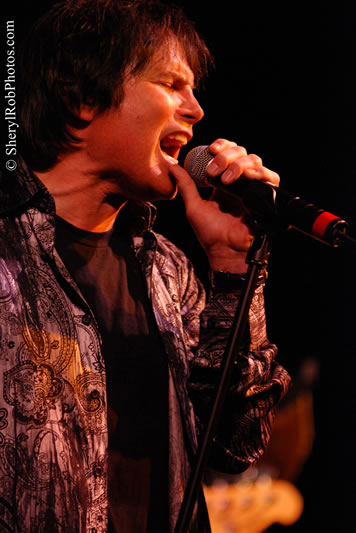
Photo Courtesy of: SherylRobPhotos.com

gJg: What was the story with “Fire Makes Steel”, the song from the “Reach” album that was rumored to be on the Rocky Balboa soundtrack a few years back (2006)?

FS: You know, I just think at certain times things are either meant to be or not meant to be. Looking back now, I think this was a case where it just wasn’t meant to be and I’m ok with that.

gJg:  Let’s talk a little bit about my favorite Survivor record: Vital Signs. The first album I ever bought and  subsequently wore out. That album has meant so much to me that I now have it framed and hanging on my wall.

FS: That’s really an intense album. Ron Nevison (producer) really was responsible for that record. In the beginning it came down to songwriting. Then it came down to Jim’s voice changing the whole landscape of Survivor. But in the end, Ron Nevison played such a huge part.

gJg: Yes, I read a lot of interviews where you were talking about his contributions to the success of it.

FS: Well, he’s really been underrated. I mean, I met this guy and he’s telling me that he had just finished up producing Physical Graffiti (Led Zeppelin) and was getting ready to go to work on The Baby’s new album. I mean, this guy is a MAJOR cat. He did Bad Company. I was like “Holy shit, the guys he’s produced are my idols!”

Unfortunately, the first time we got him on board it didn’t work out. But the second time we got him (for Vital Signs) he was really hungry and just wanted to work again. I mean, he always works hard but on ours, he worked so hard I can’t tell you.

gJg: It paid off for sure.

FS: It absolutely did. Nevison worked so hard at making us all do the best we could do. He was very demanding with us. Not difficult, but demanding. There’s a difference. Always demanding that we did our best. And it really did pay off.

We already had the songs but Ron helped us arrange them and helped us deal with this new voice that I loved. I remember when he first committed to do the record with us that he didn’t know what to expect.

I sent him over a cassette tape of our rehearsal  with some of the songs. I think “Broken Promises” was one of them. He said “That sounds great, I’ll do it”.

And the thing is, he’s very picky about what he does so we really got lucky. It’s like I said earlier, everything is always kind of either meant to be or not but at that point all of us were working together towards the same goal and that’s what mattered most.

What’s funny is that even though we worked really hard there was a lot of fun with it too. It’s true dude. People sometimes become jaded and forget that. They forget the one thing that makes it all worthwhile: It’s fun.

People sometimes ask me what I do it for and I tell them: “Because it’s fun as hell to get up there on stage and play the guitar, have people act crazy and have a good time and sing along with your songs. That’s really, really enjoying.

gJg: What do you think about those shows like “The X-factor” and “American Idol”? The ones where they get some unknown up there who wins a contest and then all of a sudden they’re famous. What are your thoughts on that?

FS: I’ve kind of been down on that ever since Tyler did it (current American Idol judge Steven Tyler).  I don’t know why. I guess I’m a Joe Perry kind of guy (guitarist from Aerosmith).

I think it’s all kind of manufactured in a way. I think it’s seen its day. I think Simon Cowell has something to say and I think he really wants to matter. I don’t know if you can find it in a TV show and giving some kid five million dollars though. If you would have given me five million dollars I probably wouldn’t even be around. (laughs)…

Seriously though, I really think that you can’t short-cut the process. What it’s really all about, at the end of the day, for any and every artist is paying your dues.

Shows like those sure as hell try to short-cut it. Sometimes they succeed but most times they fail. Most of the time when something is manufactured, especially where music’s concerned, you can tell its been short-cutted.

gJg: I read somewhere where Brittany Spears’ last album had something like 25 songwriters on it, 10 producers or something outrageous like that.

FS: (Laughs): They’re all great songwriters but still, TEN great producers?  I mean, at the end of the day, you really only want ONE….not one producer for each cut. (laughs)

I think that’s part of where things are really different now as opposed to the “old days”. It’s too manufactured. It’s like, “What is this stuff?”

Authenticity is obvious. It’s something you can’t always explain but you can feel it in your gut. That’s when I put on “Houses of The Holy”. You know what I mean? Jimmy Page and Robert Plant used to write from the heart and soul. Now that was real talent. Guys that just went in and jammed on the great tunes. Through their feel and relating to each other. Throwing down the best stuff they had to offer.

People, like Jimmy Page. I mean, the kids out there obviously know of his work but if they saw him play they would “get it” it one second .They’ll probably never get to see him play but if they did, they’d “get it” in one second.

I mean, here’s the guy who came up with “Whole Lotta Love”,”Black Dog” and all those riffs. We overlook that but man, there’s a GENIUS at work there. I mean just with guitar riffs.

gJg: It seems that contributions from artists like that are now just taken for granted.

FS: Well, I guess that’s human nature. But with music you just can’t take anything for granted.

I think you just close your eyes, put blinders on and then just go to the woodshed. You make an agreement with yourself that you’re just going to do the best you can do. You say, “I’m going to the write the best songs I can write. Put down on the table the best I have to offer.” If you do that, and really try hard you’re probably going to come close.

But if you sit around and you’re complacent and lazy and not really sure well then that’s how it’s going to come out. I really don’t have much of that in me. I really want to work.

It’s kind of a void now-a-days. I mean, except for the Chili Peppers and people like, say Dave Grohl (Foo Fighters). I really like him. They throw down. I just don’t have the stomach for a lot of this contrived new stuff.

gJg: Well I just hope you guys make it around to my neck of the woods this year.

FS: I’m sure we will man. If we get our way, both Jim and myself are gonna make it to every neck of the woods. That’s what we’d like to do.

gJg: I have to tell you the best show that I ever remember seeing was when you guys were with REO Speedwagon back in 1985 at Stabler Arena in Bethlehem, PA. Both of you were at the top of your game. You guys had “I Can’t Hold Back”, “High on You” and “The Search is Over” out and REO had just hit #1 with “Can’t Fight This Feeling”.

FS: That was THE tour man.

Photo Credit: Tim Hardgrove

gJg: That was the best show I ever saw. I say that only because the impact of it still sticks with me today. No other show has done that for me.

FS: That’s nice of you to say. We were really at our peak. We were just on the road having a good time. We realized that the harder we tried to make something happen it just wasn’t going to. So we just decided to have the best time we could. People still like spontaneity. People can tell.


gJg: How will you choose what songs you’re going to do this time around? I mean, aside from the hits.

FS: I think this time around we’ll look at around 45 or 50. I think we’ll actually look at the whole catalog. You can look at the fact that the keyboard player just doesn’t play keyboards but is also a killer guitar player. So now you say ok, now we can do “Love is On My Side”, “Take You On A Saturday” (from the “Premonition” album). You can go down the whole list.

Then you can think “Nothing Can Shake Me” and “Somewhere in America” from the first record and before you know it you’re saying “Hell, we’ve got 45 songs to learn!”

And then you can say, “Well, isn’t this fun? We don’t have to play the exact same set all the time. We can change it up every night.” And people can kind of be re inspired. It will be like playing a different show every night. I think that’s where both Jamo and my heads are at. It’s a good place to be, where we’re at right now.

gJg: I really appreciate you taking the time to talk to me Frankie.

FS: No problem James.

gJg: Back in the day, my guitar teacher thought I was crazy coming in there to learn songs from the Vital Signs record and me telling him that I wanted to learn “See You In Everyone” note for note… (laughs)

FS: (Laughs) Yeah, it’s kind of like me with “Black Dog” saying “Yeah, how do I play like this guy?” But I found it didn’t sound exactly the same. Then I realized it’s because Jimmy Page has got different fingers and a different soul.

gJg: I felt the same way playing your stuff.

FS: Well, that’s nice to hear. I’m glad you enjoyed it though. I really am. Thanks for your time. I really appreciate it.

gJg: No problem. It’s been great talking with you. Looking forward to what’s next with Survivor. Happy New Year to you.

FS: And the same you too.

Article first published as Survivor 2012: A Conversation With Frankie Sullivan (Part Two) on Technorati

Survivor 2012: A Conversation With Frankie Sullivan (Part One)

In November of 2011 guitarist Frankie Sullivan and vocalist Jimi Jamison together announced that after a five-year hiatus Jimi would be returning as lead vocalist of the band Survivor. The group, which has a plethora of hits including “Eye of The Tiger”, “The Search is Over” and “I Can’t Hold Back” among others, has been recording and touring sporadically the past few years with vocalist Robin McAuley.

The news of McAuley’s departure and Jamison’s return also coincides with the announcement that Survivor will embark on a new tour in the summer of 2012. In addition, the band also plans to start work on their first album of new material since 2006’s “Reach”.

The new lineup of Survivor includes Jimi Jamison (vocals), Frankie Sullivan (guitar), Marc Droubay (drums), Billy Ozzello (bass) and Walter Tolentino (keyboards/guitar).

I was fortunate to be able to speak with Frankie Sullivan and get the inside scoop on the reunion with Jamison and a lot more. In the interest of space I’ve divided this interview into two parts. In part one Frankie will discuss the decision to go back to the classic voice of Survivor and talk about the group’s plans for 2012 and beyond.

As you read this interview you may discover that at times it sounds as if I’m being a bit biased and for that I apologize. You must understand that this band’s music has had a huge influence on me as both a fellow musician and as a person. What follows surely reflects that. For me, the excitement of having both the classic voice of Survivor back and the opportunity to speak with Mr. Sullivan personally is a dream come true.

Photo by M. Hanley

A Conversation With Frankie Sullivan (Part One)

goJimmygo (gJg):Hey Frankie, how are you?

Frankie Sullivan (FS): I’m just fine, how are you?

gJg: I’m doing good. It’s great to be able talk to you.

FS: You too man. What’s shakin’?

gjg: Right now, pretty much everything is actually (laughs). When I heard you guys were coming back with Jimi (Jamison) I was stoked.

FS: Yeah, that was the call of the century (laughs). It was a decision that wasn’t that hard to make. It took me about two seconds. I was like (referring to Jamison): “Dude, what are we doing here? C’mon”.

gJg: When I was out seeing concerts last summer I noticed that all of the bands that I loved from the 80’s were teaming up together on hugely successful  tours. Packages like Journey, Foreigner & Night Ranger; REO Speedwagon and Styx. All of these groups out there and I’m there thinking to myself “Where’s Survivor? These are the only guys that are missing!”

FS: Yes and now we can finally team up with them.

gJg: What I thought was even cooler was that bands like Journey and Night Ranger, who both had released new albums, were mixing new songs into the set list instead of just playing all of the hits. It was nostalgic and it was new at the same time.

FS: Yes, it’s really cool because now they want us out there again.

gJg: Well, truth be told, I’ve been wanting you for years. (laughs)

FS: It actually took a while to get Jimi into it though. He was trying to do his own thing and sometimes you just have to try and give people space. Eventually, it all comes full circle and so now, here we are.

Jimi and I were actually talking on the phone a lot the past few years just keeping in touch. Then one day I just said to him “Dude, we should just do it again.” I know most of those players in those other bands and they all want to know what we’re doing because they want us to be on the dates with them. So I’m like,“Well, ok let’s go do it!”

So now we’re just waiting. You’ve just got to let things take their course. Jimi still has some obligations to fulfill and ours (Survivor) are done.

gJg: I noticed that Jimi seems to be playing a lot of dates in Europe and very select shows here in the states. Is there a reason for this?

FS:  Oh yeah, Europe is a huge market for us. For both Jimi and Survivor. It’s a huge market.

gJg: I have to be honest, I was really starting to miss not having you guys come around a lot.

FS: Well, we’re going to be doing that again. Jimi and I just want to play forever you know? Now we can go and do that again. We just haven’t done it as a band. I think the last time we did was around 2006.

gJg: The last time I saw you guys was at Hershey Park (Hershey, Pennsylvania)

FS: Oh did ya?

gJg: Yeah, that’s where I got my Vital Signs record signed by you and Marc (Droubay, drummer).

FS: Oh really, at Hershey Park? (laughs).  All the chocolate all over the place. That’s great. It will be great to get back out there again.

gJg: Oh man, I’m really excited for this.

FS: Right now we’re really having a lot of fun with just the idea of it. Once Jimi’s done with his obligations then we’ll really start picking things up. You have to finish all of your obligations otherwise it reflects on the whole rather than the individual you know?

He’s got about three or four weeks left and then we can get together, start rehearsing and go to work.

gJg: Do you have plans for a record after the tour? Have you been writing or anything like that?

FS: I’m always writing and Jimi’s actually become a good writer too. Plus he can sing anything. We’ll probably end up doing both. Spend the summer playing dates and getting on a tour package and then maybe recording during the fall/winter.

gJg: From the moment I first heard him back on the Vital Signs record right up until his newest album this year with Bobby Kimball he still sounds exactly the same. Not a sign of slowing down. He’s just unbelievable.

FS: He was actually the very first guy we tried out. (Survivor replaced original vocalist Dave Bickler following a vocal condition that would require extensive rest). I loved him from the start and everyone else in the band would say “Ok, that’s cool but let’s try out the next three or four singers”.

I was like, “Wh…wh…why?” (laughs)

So after the fourth guy I can remember saying “Man, I don’t want to do this anymore. Let’s just bring the first cat from Memphis back!” (Memphis, TN – Jimi Jamison’s hometown).

So I think it will work better in terms of new music with Jimi being more involved in the writing rather than just having to show him and say “Here, sing it this way.” He’s always better when left to his own devices.

gJg: It’s the singer not the song right?

FS: That’s what it is. That’s what it is man.

gJg: I’ve always loved the way yours and Jimi’s voices sounded. They blended so well together.

FS: We’ve always sang well together and had fun on stage. Again, it’s all just a matter of timing. People have to go off sometimes and do their own thing. Everyone at some point has to try something on their own. It only makes them bring more to the table when they do come back.

gJg: Do you have any plans to work with Jim Peterik or Stephan Ellis again this time around? (Peterik and Ellis were also part of the “classic “Survivor line-up in the 1980’s).

FS: Well you know, Marc (Droubay, drums) is still with us and Stephan doesn’t really play much anymore. I’ve seen him a few times over the past few months. He’s a really good guy. It looks like it’s going to be me, Marc and Jamo (nickname for Jimi Jamison, pronounced “jay-moe”).

Jim Peterik I’ll always call my partner. I call him that because we’ve written so many songs together over the years. But Jim’s always been trying to do his own thing. He really wants to do that.

gJg: Was it difficult letting Robin (McAuley) know of the decision to go back to the classic voice of Survivor?

I wanted to let Robin know right away of the situation with Jimi. I didn’t want to lead him on and have him possibly miss out on any opportunities that may be coming. But I’ve always loved working with Robin. He’s a real hard worker.

gJg: I see that he’s back with Michael Schenker now doing some tour dates.

FS: Yeah, he has some dates in February and March lined up. He always has a great time and I know he’ll do his best.

gJg: I remember reading on Survivor’s website not so long ago that you had a new single coming out called “How Do You Feel”. What’s the status of that?

FS: That’s a song we recorded with Robin. I told him not too long ago that I was thinking about releasing it on our website for New Year’s because people will flip when they hear it. It’s really good. But now with Jamo back I think it might get people confused.

gJg: Were plans ever made to record an entire album with Robin?

FS: Yeah, we actually had about six songs in the can and they’re all REALLY good. Robin is a great singer and a hard worker. He’s always been. I remember thinking that while working with him on his solo record back in the 90’s. I just think the real “voice” of the band has always been Jamison to give the fans what they really want.

They (the fans) kind of made it clear that’s what they wanted and this is exactly what I needed.

****
In Part Two:

I ask Frankie how he feels about the upcoming 30th Anniversary of “Eye of The Tiger”, the theme song from Rocky III which earned the band an Academy Award nomination, among other accolades, and still ranks as one of the biggest songs of all time.

I’ll also ask him about his approach to songwriting, the sessions for Vital Signs (one of the band’s biggest albums), his thoughts on current reality based music talent shows and why he believes paying your dues as a musician is so important. Good stuff.

Article first published as Survivor 2012: A Conversation With Frankie Sullivan (Part One) on Technorati