It’s hard to believe that it’s been 7 years since the release of my last book, “Neapolitan Sky,” but I’m happy to announce that my brand new novella, “Beyond What We Know,” is set for release this summer. I’ll be using my site to share updates along the way, including the cover reveal, a chapter or two, some behind the scenes stories, giveaways and more. I hope you’ll be along for the ride.
In the meantime, I’d like to share the trailer for the book and a synopsis of “Beyond What We Know.”
Beyond What We Know – Synopsis:
“Riddled with guilt over the death of his father, high school graduate Mike Collins spends his last summer at home disquieted by thoughts of leaving behind his mother and first love as he prepares to depart for college. Unbeknownst to him, Mike will soon meet his musical hero, Chris Steele, whose perspective of life will teach him to believe in the possibility of second chances.
Filled with rich imagery from the 1980s, “Beyond What We Know” is a coming-of-age story exploring life’s obstacles, the music and the machinery, while illuminating the power of friendship with the metaphysical transcendence of the unknown.”
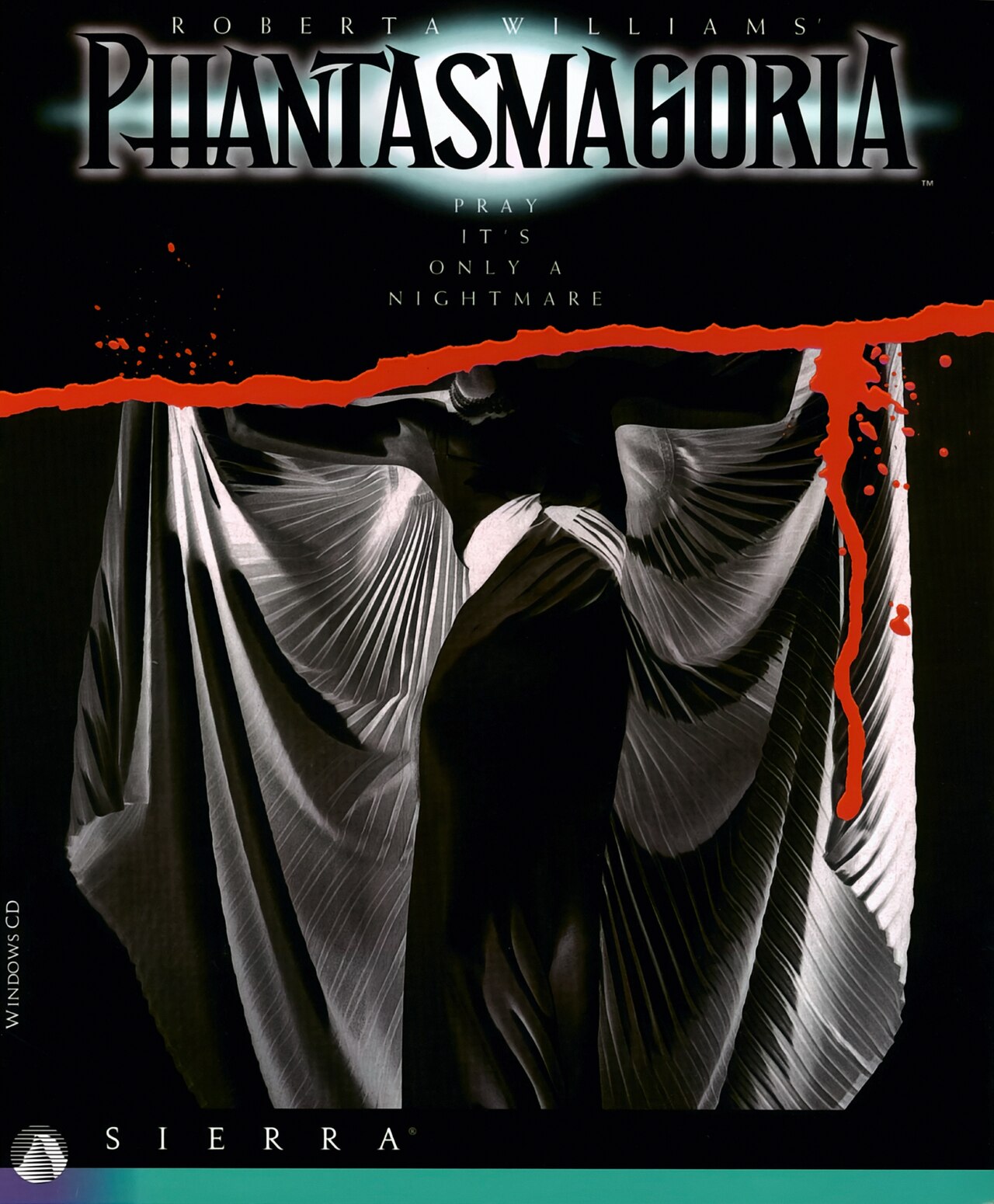
Widely regarded as one of the most successful and controversial computer video games of its time, Phantasmagoria wowed gamers when it was released in the summer of 1995.
The interactive point-and-click horror adventure created by Sierra Online, one of the first games for both MS-DOS and Windows, spanned seven discs and grossed more than $12 million dollars on its opening weekend, easily becoming one of the year’s best-selling games.
The hugely detailed 550-page script developed by Roberta Williams told the story of Adrienne Delaney (portrayed by actress Victoria Morsell Hemingson), a writer who moves into a remote mansion only to find herself terrorized by supernatural forces. The game featured both live action and cinematic footage mixed within a three-dimensionally rendered environment.
Despite the buzz and high demand it generated, Phantasmagoria was also considered controversial upon its release in 1995, with several major retailers refusing to even stock the game because of content they considered to contain “highly realistic violence.” Something that seems trivial in comparison to the games currently occupying store shelves three decades later.
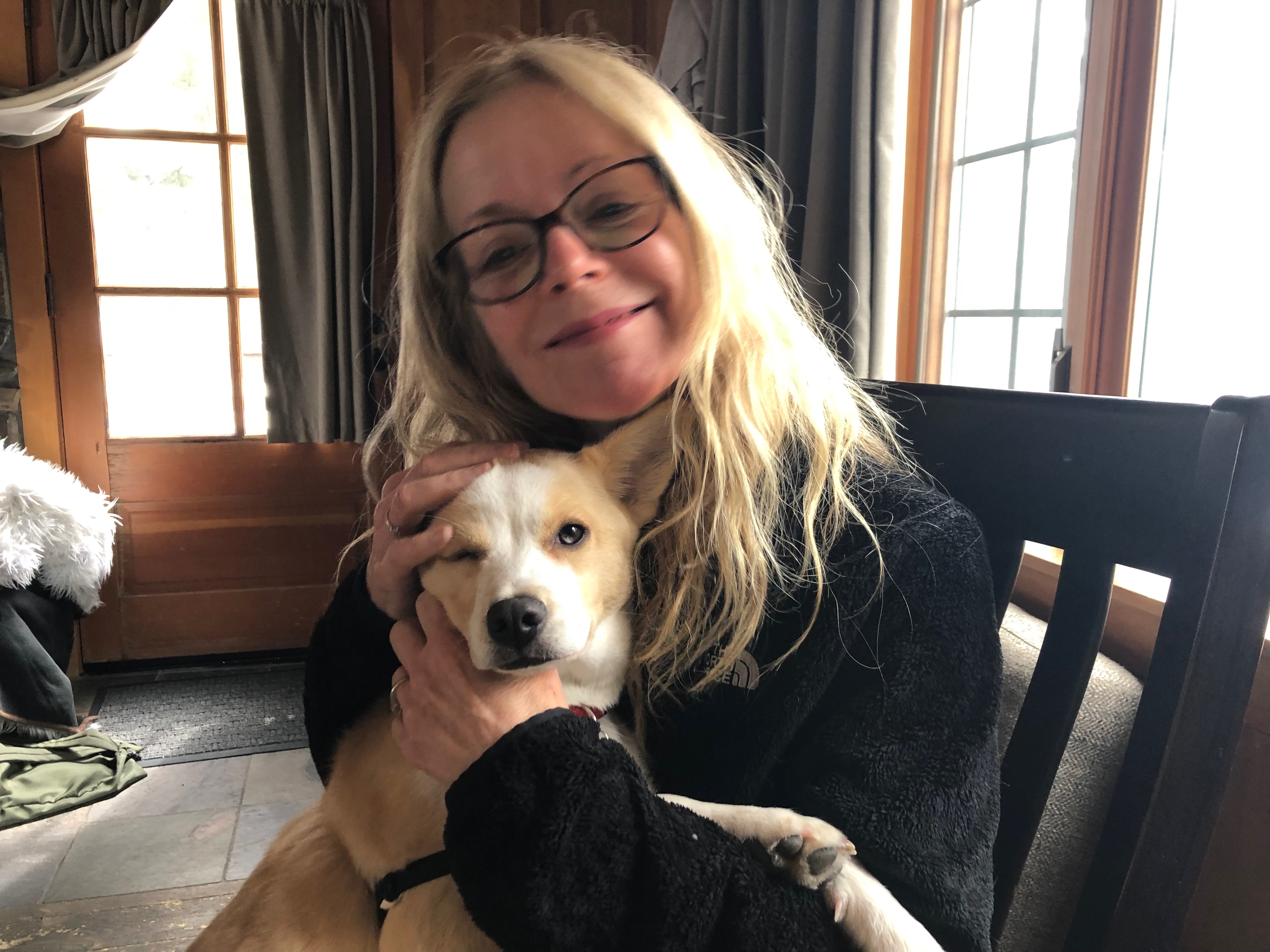
Although the game was hugely successful, Victoria Morsell Hemingson decided to switch gears from acting in order to pursue a career in writing shortly after the release of Phantasmagoria, as well as to concentrate on marriage and raising a family. In 2021 she was awarded the grand prize in the Mystery/Thriller category in Book Pipeline Unpublished for her novel, “Awful Necessary Things.”
Today, she’s concentrating on several different writing projects, including novels as well as a powerfully written and personal non-fiction piece about a difficult time in her life. She’s also had the opportunity to actually play Phantasmagoria herself for the very first time on the Conversations with Curtis YouTube channel.
I recently spoke with Hemingson about Phantasmagoria’s 30th anniversary and its impact, her writing and more in this new interview.
It’s been thirty years since the release of Phantasmagoria. When you look back now with so much perspective what thoughts come to mind?
Victoria Morsell Hemingson: I remember it was actually really fun to make. We had such a great time because it was like a dream job. They put us up in cabins and we all got to stay by a lake. We were a tight knit group and it was nice to have something steady for a few months. If you follow Conversations With Curtis on YouTube, that was the first time I ever actually played the game. I remember when I was hired I really didn’t know very much about computer video games but I was told it was a new kind of game that was cutting edge. I had originally auditioned for the director for another project. He had seen me act before and knew I’d be right for the part in Phantasmagoria.
Did you know what you were getting into with this game?
Hemingson: It was hard to envision exactly what it was going to look like at first. It was a gigantic script and there was a lot we didn’t understand going in. For example, the set was in front of a blue screen and was completely empty. There was no furniture; just boxes for steps, beds and chairs. I remember we had to stand facing a monitor and could see the animation that they already had done on the TV and where we were going to be in relation to the game while we were doing it. It took a while to get used to how to move and be in the right place on screen. As an actor it was a bit of a challenge not knowing how big or small to go. We were all figuring it out as we went along.
What was it like learning the story and what were some of the little nuances in the 500+ page script?
Hemingson: Roberta Williams told me the story. The script itself was all in order but it contained everything, like first I would have to open a drawer to find the matches. Then I would open the drawer to see the matches, then open the drawer and not see the matches. Each of those kinds of variations was part of the script. I remember when we filmed we were there for a few months and then brought back in a few months later to shoot for a final few weeks.
What made you decide to make the transition from acting to writing?
Hemingson: I always wrote when I was a kid and a lot of the acting I was starting to do wasn’t as satisfying or fulfilling. I wanted to do something I was really proud of. I still remember the exact moment I realized that I was done acting. I had gone on an audition for a play and they kept everyone waiting around for hours and hours. Then when it was finally my turn to audition it was like a split second. It just felt like it wasn’t worth it. So I decided to go back to school and got a master’s in writing. The writing was something I always wanted to do.
What’s your writing process like?
Hemingson: It can be difficult trying to get into the groove but I try to write in the morning and then later on in the afternoon, Of course, it’s different when I’m revising. When I was in school I was a little more efficient with my time working and writing.
What are some of the projects you’re currently working on?
Hemingson: I recently wrote a personal non-fiction piece for Hippocampus Magazine. I used to work as a receptionist when I was younger and had an eating disorder. It was during this time that I started seeing this actor, whose name I won’t reveal.
I’ve also written a fiction piece for South Carolina Review about a woman in Los Angeles who’s trying to get off a cycle of bad choices and am working on a new novel.
What are you most looking forward to about this next phase of your career?
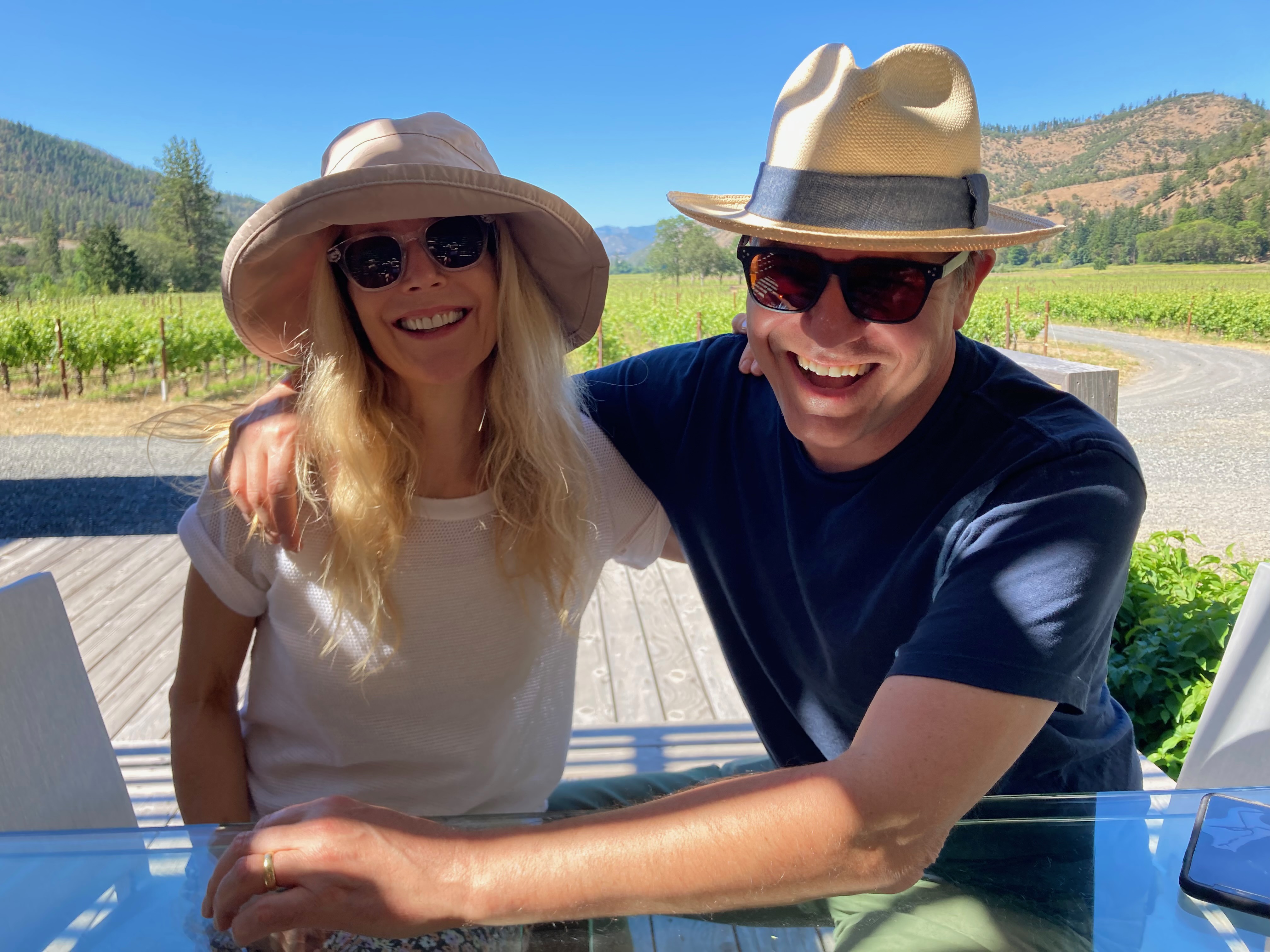
Hemingson: I guess it would have to be completing these new projects. I’m excited about working on them. I need to get them out of me. I may also be collaborating with my husband on something which will be fun. He’s a screenwriter who wrote the film, “The Holdovers.”
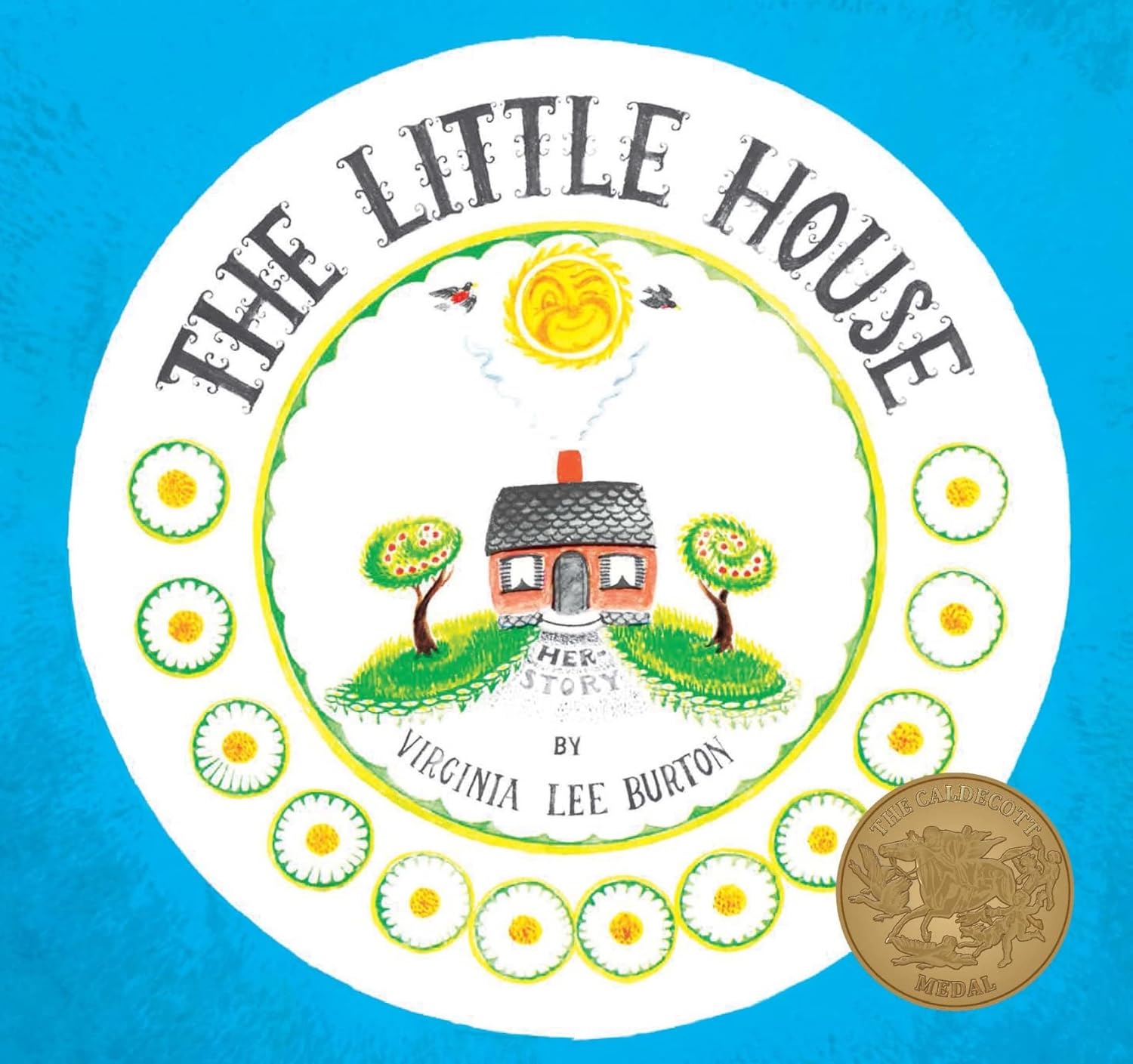
Author Virginia Lee Burton died in 1969, the same year I was born. I think I was in second grade when the librarian at my elementary school first read us her Caldecott Medal-winning book, “The Little House.” A story the author said was based on her family’s own little house which they moved from the street into a field of daises with apple trees growing around.
The story centers on a house that was built at the top of a small hill, far out in the country. Her builder decrees that she “may never be sold for gold or silver”, but is built sturdy enough to one day see generations of his heirs living in her. The house watches the seasons pass, and wonders about the lights of the city, which grow ever closer. The years slowly pass.
Then one day a road is built in front of the house. This is soon followed by gas stations and more houses, which are eventually replaced by apartment buildings, an elevated railroad and skyscrapers. Now rundown and finding herself standing in a large city, the house is sad because she misses being on the small hill in the countryside
One day one of the heirs of the builder sees the house and remembers stories that her grandmother told about living in it. She arranges to have the house moved out of the city and back to a hill in the country where she can live happily ever after.
I remembered being enthralled with the story. How roads, food stands, cool cars and trains would be right outside your front door! How naive I was.
Burton denied “The Little House” was a critique of urban sprawl and instead wished to convey the passage of time to younger readers. Personally, I think, perhaps prophetically, it was both. Hear me out:
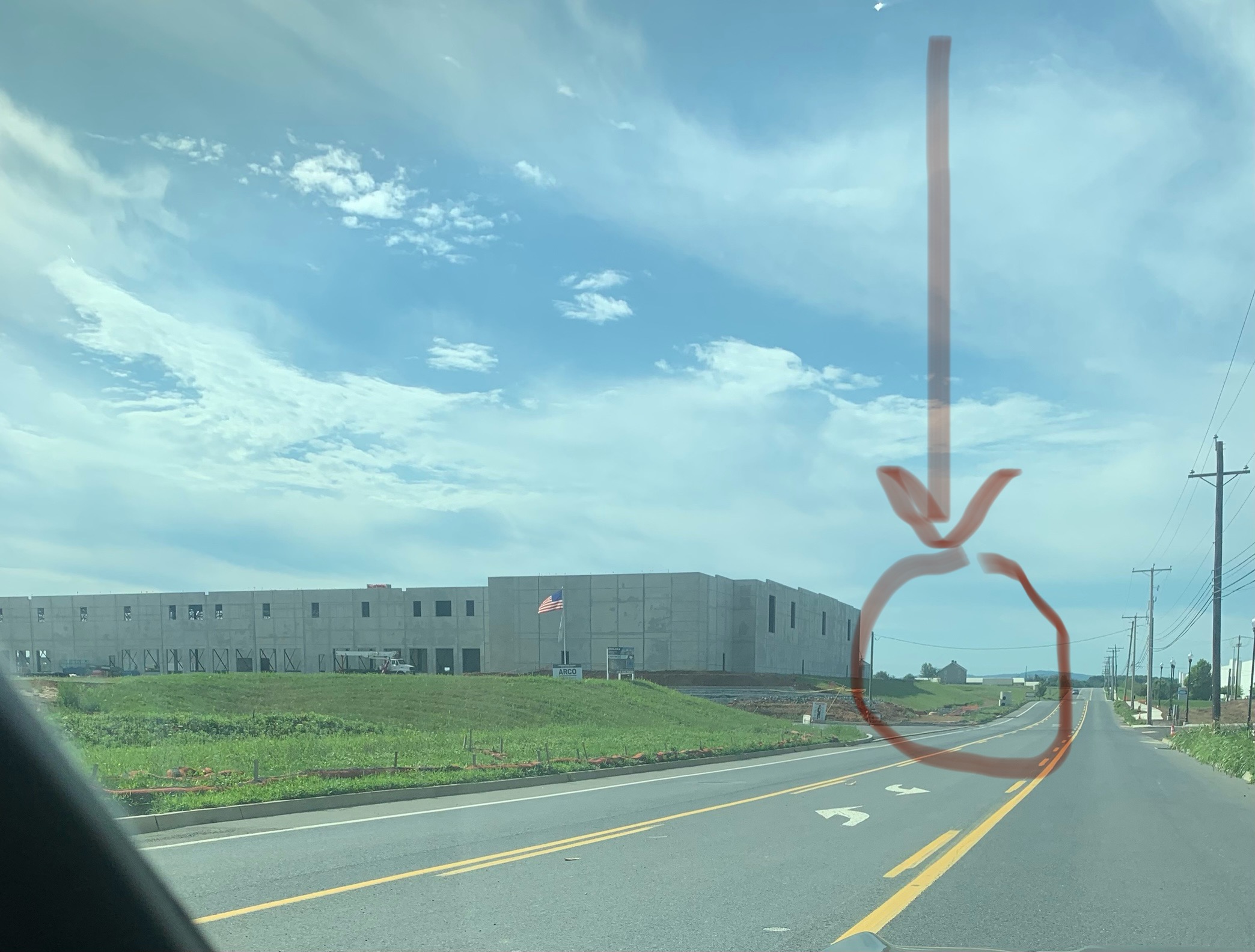
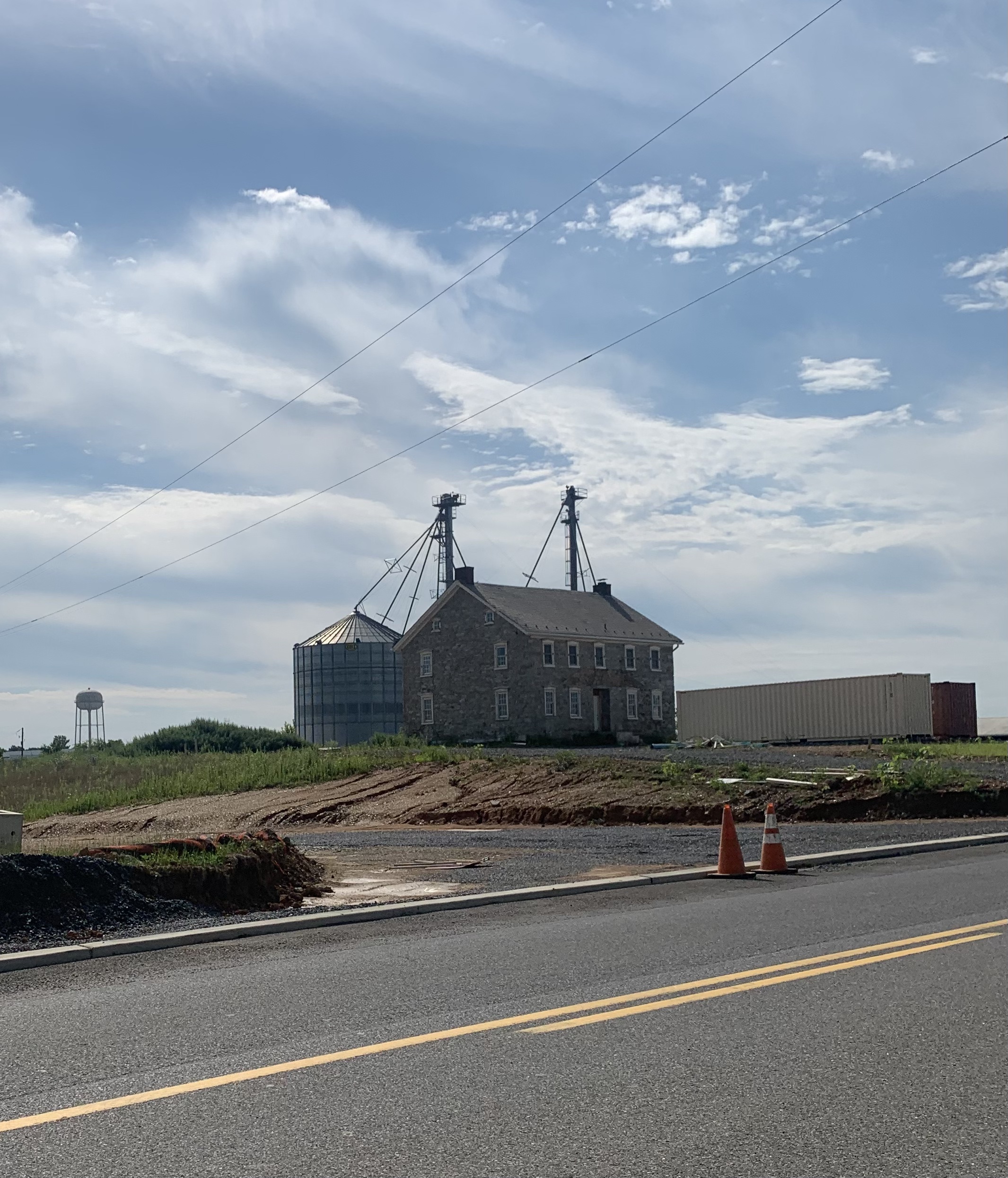
About a mile from my Pennsylvania home there once stood an eighteenth century farmhouse. A home with a deed dating back to William Penn. A home which stood on the exact same spot of land for more than 300 years where it overlooked acres upon acres of rich farmland.
One day a developer decided he wanted to build a massive industrial warehouse on the exact same land where the little house stood. But rather than demolish it, the developer decided to uproot the house and move her hundreds of yards away in order to build a warehouse next to it. A warehouse that is surrounded by other warehouses, including an Amazon fulfillment center. A warehouse that will most likely remain half occupied. This is what you call progress?
In her new book, “The True Tale of Mista Bone: A Rock and Roll Narrative,” Author K.L. Doty unveils the long-awaited story of the life of vocalist Jack Russell. From his early years as the original front man for American rock band Great White to the band’s subsequent success with its million-selling album, Once Bitten as well as thesubsequent follow-up, Twice Shy, and their infectious cover of the Ian Hunter song, “Once Bitten, Twice Shy,” Russell gives readers an inside look into the glory days and debauchery of eighties hard rock.
Doty’s book, which will be released this summer, also promises to reveal a deeper, more complex story of Russell’s life. One that offers readers a personal and eye-opening account of the singer’s rise, fall, and return to fame following the horrific events of The Station Nightclub fire in February of 2003. In it, Doty helps to uncover Russell’s creative and enduring spirit, one showcased both in and outside of the spotlight.
I recently spoke with K.L. Doty about Jack Russell’s upcoming autobiography and more in this new interview.
How did you and Jack Russell connect?
My husband, Chip Z’Nuff is in a band Enuff Z’Nuff. They’ve been around since the eighties and still actively tour. I helped sell merchandise on the road for Enuff Z’Nuff for a long time and Jack Russell’s Great White was one of the bands that Chip toured with. That’s how I met him.
How did this project come about?
I had been approached several times over the course of a few years by Robby Lochner, who is Jack’s guitarist. I said no every time because even then I knew how much work was going to be involved. Then In September of 2020 I was asked again. At the time, I had just finished almost two years of study to become a wardrobe stylist through the New York University of Art and Science. I still wasn’t interested in taking on so much work but went to bed and literally woke up in the middle of the night thinking, “I have to do this.” That’s how it all started.
What was the writing process like?
People often ask me what my biggest advice for writing a book is, and it’s always “Don’t do it!” [laughs]. You start off with stars in your eyes but the longer you go the stars can start to dim, because it’s a lot of information. And it’s not like I was writing some cute little fairy tale from my own brain. I was writing someone else’s story and it was all true. So if someone tells me something, even if it was just a single sentence that contained a few facts, I would have to go and fact check with multiple sources. It can be hard to corral the information and still create a cohesive story. I had to learn to be organized and do whatever I could to seek out the information I needed.
What were some of the other challenges you faced during?
I didn’t realize I would be giving up as much as I did, including spending time on the road with my husband. I was working with other people’s schedules and had to put personal relationships on hold because this book had to be first. The whole process took four years in total and I spent the first two years interviewing Jack a few times a week for about an hour and half. It was all recorded and there was so much to transcribe. My goal was to get the general idea of things and then make it sound the best that I could. I received the first copy recently. It didn’t become real until I actually held it in my hands. That’s when it sunk in that this heavy thing I was holding; something that you could open up and look through, actually existed!
Did Jack share any fun “rock and roll” stories with you?
Oh, he had a lot of those. Little anecdotes, like when he was on tour with Judas Priest and they trashed the hotel room and threw everything out into the pool. It was one of the first times the band had been on the road and they wound up having to pay out a lot of money.
K.L. Doty – Photo by Jamie Benjamin
Jack says “I’m sorry” quite a bit when discussing the events of The Station Nightclub fire. How did you approach talking to him about such a difficult subject?
It was a heavy thing to have myself go through as a writer and I was very cautious talking about certain things. Jack says “I’m sorry” in the book because, legally, he wasn’t allowed to say it during the trial, because doing so would be considered an admission of guilt. This is the first time he gets to speak out on that.
Can you tell me a little about your background and how it helped shape you into who you are today?
I come from a very whimsical family and grew up around a lot of influential people in rock and roll and Hollywood. Growing up, my grandmother would host these incredible parties where random celebrities would just show up. I knew one day I wanted to be just like that — to host parties with people like that. When I was sixteen, I’d lie to get out of going to school by telling them I was sick or on a family vacation, and then I’d tell my parents that I was going on a field trip. Then I’d go to venues with these rock bands where I would just be there and interview them. Times were different then, but I’d show up and say I was so and so and I was writing articles for this or that magazine. Being female, it was inevitable that I was going to be labeled a groupie, so people looked at it the wrong way. But my main goal was to learn more about the industry.
Are there any other projects you’re currently working on right now?
I have a record that should be coming out by the end of the year. If you ask me how I would describe it, I’d say it’s what would happen if Norah Jones were to do a record with Alice Cooper, Nine Inch Nails and Beethoven. I like to give the sound the imaginary title of phantasmagoric pop. I like very soft, ghostly elements but I don’t mind the industrial drive in the bass. I’m also focusing on boxing right now. It’s something I didn’t know was in me but I really don’t mind hitting hard. We’ll see where it takes me.
Is there a message you’d like people to take away from reading the book?
I want them to take away the beauty of words. The story aside, I wrote this book in such a way where, even under the most horrible of events or feelings, it makes you feel like you’re eating something delicious. Adjectives, synonyms and what have you, it’s a beautiful little puzzle piece. My goal was to take all of the best words and put them in the right order to make a true story taste as incredible as it sounds.
The True Tale of Mista Bone: A Rock + Roll Narrative will be released this summer.
Some may say that I’ve crossed over. That the torch had finally been passed along to me from my father, much the same way as his father and his father before him had passed it down to their sons. Yesterday, much like the way that guy in the comic books becomes The Incredible Hulk, I came very close to metamorphosizing into that dreaded three-letter word—old.
The truth is, I’ve never thought of myself as that three-letter word that I will no longer mention to describe me. That word is reserved for people who are much more advanced in age then I am. Those are the people who grew up having their milk delivered to them by a man in a horse drawn carriage, or someone who once wore saddle shoes while playing hopscotch with her friends. The same people who listened to Buddy Holly or Peter, Paul, and Mary on the radio and were forced to watch Lawrence Welk on Sunday evenings at their grandmother’s house. The same poor souls who claimed to walk two miles to school barefoot in ten feet of snow and had parents who gave them enemas at the slightest inclination of a stomachache. That word is reserved for them, not one for someone as cool, and young, as me.
Sure, I may have grown-up but I still do most of the same things I did as a child: I still play guitar, not very well but enough to amuse myself. I still enjoy reading the box while relishing bowls of Lucky Charms and Cap’n Crunch cereal. I still play video games, though not as often as I’d like, and am still a big fan of superhero and Godzilla movies. I even continue to do chores like mowing the grass and taking out the garbage. I’m still fourteen years old if you really want to know. All that’s missing is a little more hair on my head and the loss of the forty or so pounds I’ve gained over the years.
Ok, unlike when I was a child, I’m forced to do my own laundry and make my own meals. I have to go to work every day but I make my bed without being told and fix things around the house when they break instead of leaving it for someone else to do. I do all the things a grown-up should do, but that shouldn’t put me in the same league as those three-letter-word people, should it?
And I confess, when I look in the mirror, I do see a little bit of gray in the beard, but no one has ever said a word about it to me. Besides, I’ve done a pretty good job at covering it up. Just for Men is working just fine, thank you very much.
Anyway, where was I? Oh yes, the crossover to becoming that three-letter word.
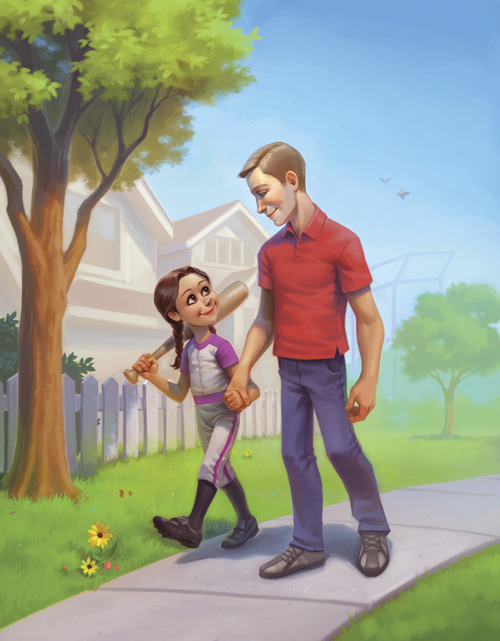
It happened yesterday when I was at my ten-year-old daughter’s softball league end of season celebration. It was a chance for a team of girls who had played hard all season to experience one final round of camaraderie together, along with some swimming and several slices of pizza. After dinner, the girls were even treated to a make your own ice cream stand supplied by their manager for a sugar rush farewell.
I’ve been conscious of watching what I eat, so I passed on the ice cream and sat down at one of the empty tables while my daughter and the others stood in line. I enjoyed watching the girls giggling with each other as trickles of soft vanilla ice cream from their waffle cones ran down their arms.
At one point, I recognized a woman who was standing in line for ice cream with her daughter. Someone I hadn’t seen in a very long time. It was a girl I’d gone to high school with, and I decided to go over to say hello.
It was a lot of fun catching up with my former classmate. We had a good time discussing what all of our classmates might be doing now, and the lives they all were leading.
“Wasn’t it just yesterday that we all were in Mr. Kasperkowski’s science class?” I asked.
“Oh, I didn’t have him,” she answered. “I had Mr. Opitz for science. I do remember both of us being in Mr. Siddons’ history class.”
“That’s right!” I said, feeling a bit ashamed for confusing science with history. Then I asked if she could believe that next year was going to be our 25th class reunion. Looking back now, I think that might have been the precursor to what happened next, because once our conversation was over and I sat back down at the table, my daughter made a public service announcement to all in attendance.
“All softball team members sit at this table,” she announced, pointing to the table where both she and I were sitting. A moment later, a stampede of ten-year old girls with half-eaten ice cream cones started sitting down at the table with us. It felt great to be enjoying a moment with my baby girl and her teammates.
Unfortunately, one of the girls who joined us at the table thought something was a little out-of-place. The little whipper snapper pointed to another table where all of the parents were sitting. She measured me with her beady eyes.
“This table is for the girls,” she proclaimed. “THAT table over there is for the OLD people.”
I quickly tried to think of something to say. You know, some sort of a witty comeback. Sadly, all I could muster was, “Hey, I’m not old, YOU’RE old!” But all that did was invite the rest of the girls on a sugar high to come to her defense. You’ve got to love the way teammates stick up for each other.
Realizing I was outmatched I finally conceded and slowly rose from the table to join the other men and women who were closer to my own height. But don’t think for a minute that me leaving their table is an admission that I actually am that three-letter-word, because I’m not. The truth is, I could have battled those girls all night with my grown-up rhetoric if I had more time. I just didn’t want to make them look bad in front of their parents. In my mind, I’m as young as I want to be, no matter what any ten-year-old girl thinks.
Later, on the drive home and while she was mindlessly looking out the window, I stuck the tip of my index finger into my mouth, moistened it with my tongue and then reached over and gently poked it into my daughter’s left ear.
“DAD!! KNOCK IT OFF!” she screamed, as I manically laughed out loud.
Chicago has always been my kind of town. I’ve been there several times, mostly on business, and did not regret a single minute of it. From the moment I enter the subway at O’Hare and take the Red Line south, there’s a familiarity about it that almost feels like home.
Here I am again, arriving alone for more training on a software application the hospital I work for uses. No one from work ever goes to conferences with me and, quite frankly, it doesn’t really bother me. I actually like flying solo on my business excursions, but never expected this visit to Chicago would change me in a way I never thought possible.
I had just finished eating my usual deep dish pizza at the original Uno restaurant when it happened. Yes, the Uno that started it all. Don’t even waste your time going to the chain ones you see. Those just aren’t the same. Corporate always has a way of ruining things. But I highly recommend the original Uno if you’re ever in town. For me, I like to sit at the bar and order the Chicago Classic. That and a Goose 312. The deep dish and beer is more than enough to put me into food coma for the rest of the night.
As I waddled outside into the evening twilight, I began to take in the whole Chicago vibe. The lights on the Harley Davidson store down the street caught my eye immediately, and although they don’t actually sell motorcycles there, it was a cool place to go to get some swag. A way to be biker even if you didn’t ride. I began to wonder how a store like that could stay in business in downtown Chicago. I surmised that just the presence of Harley Davidson in a big city is more than enough reason for a company to pump endless amounts of money into an unprofitable store.
I looked north and thought about the possibility of taking in a Cubs game this week if the software conference sessions got out at a reasonable time. That is, unless the sales guy decides at the last minute to take a bunch of attendees out to dinner. One look at my mid-section will tell you I’m not one to pass up a meal. I could easily find time to hob nob and chat with people from different hospitals all over the country, provided of course, that a free steak was involved.
And that’s when I really noticed it.
It was something all too familiar but something I hadn’t seen for a very long time in it’s natural habitat. I found myself standing next to what was probably the last phone booth on the face of the Earth. One that has the word “Telephone” prominently displayed across it. One that Clark Kent might use in order to change into Superman. The ones I thought had gone the way of the dinosaur ever since mobile phones became all the rage was right in front of me.
As a child, I always loved using the old school phones. Even when I was around eight or nine and would occasionally receive a call from the neighbor kid across the street, the whole “telephone” process fascinated me. I loved how you just could pick up a receiver, plug your index finger into one of the small plastic holes and begin rotary dialing (remember, we’re talking old school here) a combination of numbers until someone on the other end of the line would answer. My aunt even had one of the first new-fangled, push button versions. She was really living large.
I suddenly remembered some of the fun things I used to do during my phone touting experience while I was growing up, like dialing zero for the hell of it, just to reach this person called an operator. Of course, when she would answer, I’d always giggle and then hang up. After about the third or fourth time doing so, my father would soon receive a phone call from the frustrated woman scolding him for allowing his children to dial the operator. Let’s just say that it didn’t end well for me but, sure enough, a month or so later I’d be right back it. Just like Dad’s Playboys hidden in the nightstand next to his bedside, there was something taboo about dialing zero that was too good to pass up.
And don’t even get me started about those old “Dial a Joke” Jim Backus commercials I’d see on television. “Just call 976-JOKE for today’s joke… CALL NOW!” Mr Howell would plead, and who was I to say no when the guy who also played Mr. Magoo told me to call him? I think at one point my bottom was red for a week when the phone bill had an extra $25 on it from me half listening to the stupid, pre-recorded jokes at 99 cents a minute.
Funny now, not funny then.
Even before Dad had passed away three years ago, I still remember us having a good laugh about my phone adventures at his bedside. As the IV’s slowly pumped morphine into him and despite his pain, something about me telling him the red ass phone stories made us both laugh out loud. And for a moment, I wondered if laughter could possibly be the unknown cure for cancer. It sure seemed possible.
But yeah, me and the phone go way back.
This particular booth actually still had the tattered phone book dangling from a small metal chains. I imagined how many people had let their fingers do the walking through it over the years. I had a strange urge to see what year the phone book actually said. My guess was somewhere in the late nineties, but before I could verify and claim a mental victory, the phone abruptly started to ring. Ringing and no one standing there to answer it. No one but me.
Ring one.
Maybe it was my childish subconscious telling me that it was Jim Backus calling that made the deviant young kid who liked to have his phone fun start making his way forward. Here I was in a big city, with no possibility of receiving a red ass and with absolutely nothing better to do until my software conference starts tomorrow. As I trudged towards the booth, I began thinking of interesting ways I could answer the phone.
Would I say something like, “Dave’s Pizza – We Deliver?” Nah, too predictable. Maybe I could talk in a Chinese voice and pretend to be the dry cleaner down the street. That was a possibility, but I wasn’t sure I’d be able pull it off without laughing. Either way, if I grew tired of the game I could just hang up the phone and head back to my hotel.
Ring two.
Just to be sure I wouldn’t be caught, I quickly looked around to see if any legitimate phone answerer was there waiting for a call. I realized I was alone and slowly stepped into the booth. I could immedialtey feel the claustrophobia and could smell the old paper, cheap beer and stale cigarettes from years of calling and receiving calls.
Ring three.
I placed my hand on the black receiver and, as carefully lifted it up to my ear, decided I was now a gainful employee of Dave’s Pizza on the south side of Chicago.
“Dave’s Pizza – We Deliver. Can I take your order?” I said, confidentaly.
That’s when my heart lurched inside of my chest. It felt like a vacuum had sucked all of the air out of the booth. There was a rush of vertigo and it became hard for me to breathe. I quickly realized Dave’s Pizza was out of business.
“Jimmy? Jimmy it’s me,” a weak voice on the other end of the line said.
Chicago faded into darkness as the whole world turned dull shades of black and white. Of all the things I could say, only one word came to mind.
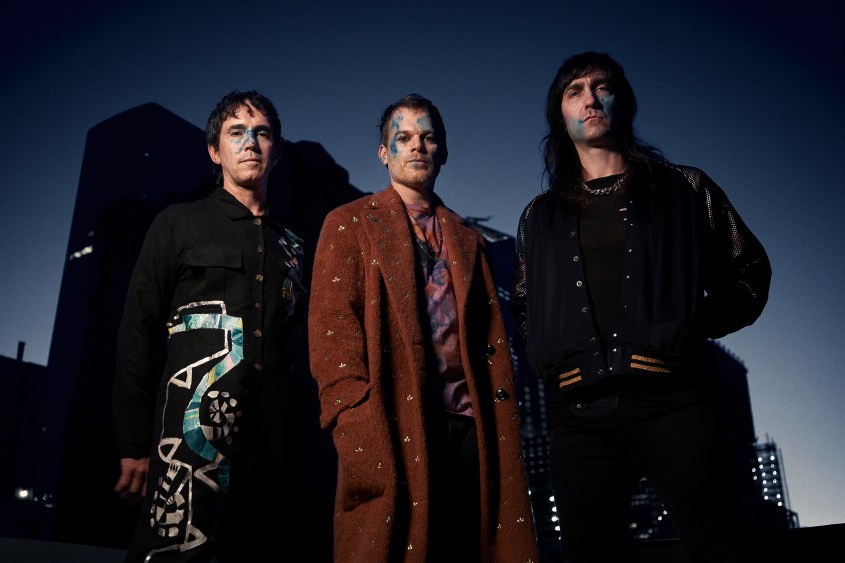
With disparate influences ranging from the glam, experimental music of David Bowie to the poetic sounds of The Velvet Underground and bands like 8 Eyed Spy and Sonic Youth, Thanks For Coming is the debut album by Princess Goes To The Butterfly Museum. The band features vocalist, lyricist, musician and actor Michael C. Hall (Dexter, Six Feet Under, Hedwig and the Angry Inch), drummer Peter Yanowitz (The Wallflowers, Morningwood) and keyboardist Matt Katz-Bohen (Blondie).
There’s a heightened senseof awareness and romanticism that exists in the band’s songwriting, as exhibited in tracks like “Armageddon Suite.” Then there’s the fun but deeply dark and disturbing undertone in songs like “Eat An Eraser.” There’s also material which began as subliminal inspiration on vintage instruments, as was the case in the groove-ridden “The Deeper Down.” Thanks For Coming also includes the band’s unique spin on Phantogram’s “Cruel World,” a song which has since become a staple of their live show.
While eschewing traditional rock instrumentation in favor of theatrical sensibility and a colorful, stripped-down synth/drum approach, Princess Goes To The Butterfly Museum combines the best elements of glam, pop, new wave and theater, as well as the noisy, art rock vibe of the New York City scene. The result is a welcomed debut that’s both ethereally melancholic and hauntingly brilliant.
I recently spoke with Michael C. Hall, Peter Yanowitz and Matt Katz-Bohen about Thanks For Coming and much more in this exclusive new interview:
How did Princess Goes To The Butterfly Museum come together?
Peter Yanowitz:The three of usmet in the most unlikely of places for a rock band — on Broadway doing Hedwig [and the Angry Inch]. Mike was Hedwig and Matt and I were also part of the show. It started with us just being in the band playing someone else’s music. After we’d finished the show Matt and I kept jamming and Mike heard some of the instrumental ideas we’d started and offered to sing on them. One thing led to another and three years later, here we are.
Who are some of your musical influences?
Matt Katz-Bohen:I think we would all agree that [David] Bowie is someone we can really get behind. Then there’s a lot of the noisy art rock of New York City, starting with The Velvet Underground, No Wave, 8 Eyed Spy and Sonic Youth. There’s a lineage there we can all appreciate, just getting into that vibe from hanging around the East Village.
What’s the band’s approach to songwriting?
Michael C. Hall: There’s no set formula.We’ve written songs in every way possible. There have been instrumentals that have been the beginning of things. Then there’s melody ideas and songs with structure but no musical accompaniment. Most of the lyrics on these songs were written in the past few years. It’s been a pleasant surprise and welcome exercise to find myself in a situation where I’m called upon to write words.
Read the rest of my Interview with the band by clicking here.
My customary ritual every January 1st is to start each year by sharing the very first blog article I ever wrote. Regular followers of this blog know the one I’m talking about. That wonderful day when I almost burned the house down making pierogies.
This year I decided to change that because of something I noticed the other day after posting my most recent interview. So, instead of posting something on the first of the year, I’m going to post something on the last day of the worst year ever.
Here’s the big announcement:
The post you are reading right now is my 1,000th article on WordPress! That’s right – one thousand. What makes this monumental achievement even more special is that tomorrow, January 1st, 2021, also marks the 10th anniversary of the following resolution I made to myself:
Who would’ve guessed that over the course of these last ten years I would have achieved such a mind-boggling statistic, and that number doesn’t even include the interviews I’ve done for sites like Yahoo! Examiner and Technorati.
In addition to the articles and interviews I’ve posted over the past decade, I’ve also co-authored three children’s books with a dear friend, traveled as far away as Los Angeles for interviews, wrote my very first novel and contributed four interviews to Guitar World magazine and several features for a major newspaper.
Among these one thousand articles are some pinch yourself moments, like the time I interviewed REO Speedwagon in the dressing room at The Greek Theatre in L.A. and was given a side-stage personal tour of Dave Amato’s guitar rig while Don Felder [formerly of The Eagles] stood thirty feet away performing “Hotel California” to a screaming, sold-out audience. Or the time filmmakers invited me to the Hollywood premiere of their horror film, and I actually got the chance to walk the red carpet with a legend of the genre.
I’ve interviewed Colonel Oliver North in his hotel room while he was nursing a bum foot. I chatted with Ozzy Osbourne on the phone and actually understood every word he said. I even talked to Ace Frehley of KISS and thanked him for being the one who inspired me to pick up the guitar. The truth of the matter is I will interview anyone – from artists about their new projects to porn stars about their unfortunate #MeToo experience – because everyone has a story that needs to be told.
But perhaps the greatest thing that’s happened to me during these last ten years of writing has been getting to meet so many amazingly talented people: independent artists, actors, musicians, filmmakers, photographers. All who’ve inspired me with their own creative works. People who’ve gone from being just another interview to lifelong friends.
Like many of you, 2020 was the absolute worst year of my life, but I’m optimistic about the future. Some of the things I’ve done recently include taking up watercolor painting as a form of mental therapy. I even sold one of them to a friend who generously donated the money to the local animal shelter [just like I did with my children’s books]. I’ve also begun the process of going back to college to finally finish my degree. Next year will be the release of my brand-new novel. One that’s been in the works for a very long time. There is something very cool, and music related with it that I hope I’ll be able to pull off. Will require some approval by the artist but fingers crossed.
I hope that by reading this blog, or any of the other 999 that have come before it, has inspired you to make a similar resolution to the one I made on January 1st, 2011, and that is to make a promise to yourself for 2021. A resolution to do something you’ve always dreamed about doing. Just take the first sentence of my resolution and change the word “writing” to something you’re passionate about. Then go out and make it happen.
Here’s wishing you peace, love, music, art, writing….and all the best for the New Year.
Writing has always been a natural outlet for Amy Jo Giovannone. The inspiring author grew up in Ohio, where she played a lot of sports and acted in local theater.
She eventually wound up joining the military to help put her through college and hone her talent. But it was the untimely and tragic death of her daughter, Sierra, that became the basis for Giovannone’s powerful book,“The World is Not Going to Stop for my Broken Heart.
In a world where everything has such a high price, Giovannone’sbook will inspire, educate, and help others to heal. She reminds us that faith is free and is ours for the taking. Through heartbreaking recollection and page-turning revelation, Giovannonerecounts Sierra’s final days and in doing so, teaches us that the best way to honor your child, or any lost loved one, is to live this life with no regrets.
Readers who dive inside this powerful book will learn much about Sierra’s incredible life, the grieving process, and find their own sense of faith and healing. Perhaps more importantly, they’ll also draw the inspiration to change their own perspective on life.
As an added incentive to those purchasing the book, 30% of all proceeds from sales will go directly to Sierra’s Sanctuary, a non-profit who’s primary focus is to renew the mind, body and spirit to show that with God all things are possible.
I recently spoke with Amy Jo Giovannone about her book and more in this exclusive new interview.
What made you decide to write a book?
AJG: The honest answer is, I felt like I didn’t have a choice. There was a strong, spiritual energy pulling at me and I wanted to try to explain it the best way I could. You can call it consciousness, a gut instinct, or Holy Spirit. Whatever it was, all I knew was that I couldn’t fight it or be at peace until I’d written the book. Then once the book was finished, I couldn’t be at peace until it was published. A lot of what I talk about is something I think people need to hear.
What was the writing process like?
AJG: It was a 2 ½ year timeline and was grueling at times. I had to tell Sierra’s story by re-living the whole process and her life all over again. In doing so, I re-broke my heart. I wasn’t numb like someone who is freshly grieving. Everything so much harder. Completing the book was a huge relief. It’s a life story with real experience, and how faith can help get a person through.
What are some of your best memories of Sierra?
AJG: The best memories of Sierra are all of them. Even the not so good days, just because of the magnitude of love that we shared and the character built within us during those times. My worst day spent with Sierra is better than any minute without her.
What made you decide to start a non-profit?
AJG: We created a non-profit, Sierra’s Sanctuary, as a way to help people anyway that we can. I’m proud to say that no one makes any personal profit from it. Even though I may have been hurt by experiences in the past, I never want to stop helping others.
Is there a message you’d like people to take away from reading your book?
AJG: It’s really a conglomeration, but if I had to put it into one sentence the purpose of the book is to inspire, educate, and to reach people’s inner spirit. I want hurting people to see that you don’t have to be miserable. I have more than one sad moment each day because of my loss, but I have so many more moments of fun and enjoying my life. My child wouldn’t want me to miserable. The best way we can honor our loved ones who’ve passed is to live our lives without regret and to believe in something higher. Faith is free and is right there waiting for us to lean on. It’s just up to us to take it.
I’m sitting here in a daze, trying to comprehend what I’ve just written. It can’t be true, can it? A whole f#cking half century? WOW!
I liken it to the same feeling I had twenty years ago, when the calendar was getting ready to change over to the year 2000 and the eventual dawning of a new millenium. I vividly remember, when I was growing up, that year seemed like it was a lifetime away. I’m talking futuristic, meet George Jetson style distance. And yet, not only have we reached that year, but we’ve now gone almost twenty years beyond it.
The past 365 days have been some of the best and absolute worst days of my entire life. It started in January when my very first interview, with Dan Donegan from Disturbed, was posted in the pages of Guitar World magazine. I will NEVER forget the day I walked into the shopping center on a misty gray afternoon and saw the new issue sitting on the shelves. It was like when Indiana Jones first saw the golden idol in “Raiders of The Lost Ark.” Or the feeling I had when I opened it up and fumbled through its crisp white pages and saw that my name had been printed under “Contributing Writers.” Knowing that this magazine would be in stores all over the world was surreal. Thinking about it now still gives me chills. I went on to do three more interviews this year – one with Jim Heath (Reverand Horton Heat), one with Vivian Campbell (Def Leppard, Dio) and another with Alan Parsons.
Another monumental event that took place this year was my daughter’s high school graduation this past June. One that, when I think about it now, really puts the big FIVE-OH into perspective. I still remember putting her on the school bus for her very first day back in 2006. Back then, I was on the cusp of turning 37 and thought to myself, “Wow! She will graduate the same year I turn 50. That’s so far away.”
And now here we are.
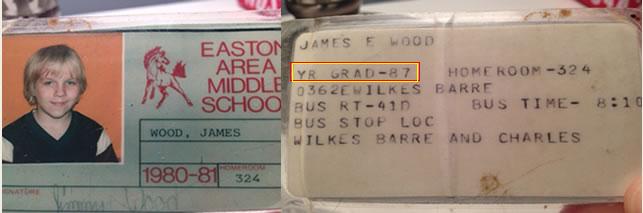
Still makes me think about my own tenure in the hallowed halls of education and the day I received my first student ID card. This was wayyyy back in 1980. I looked at the reverse side of that card and saw “Year Grad – 1987” printed and thought THAT was a lifetime away. Realizing that by this time next year the card will be 40 years old is simply unbelievable to me.
This past year was also the one where I had to say goodbye to the best dog I’ve ever had — just three days before this monumental birthday. To say that I was devastated is an understatement, but a wonderful tribe of family and friends have made the burden a little bit easier.
So, what’s in store for this next journey around the sun? Well, I’m hard at work on two new books. The first is a prequel to “Neapolitan Sky,” which takes place thirty years before the events of that story. The other is another thriller based on the whole ancestry concept. There is a lot of life left to live, art to create, books to write, interviews to be done and most importantly, love to give freely.
This song always makes me stop in my tracks whenever I hear it. Does it do the same for you?
There’s an odd sense of immortality you have when you’re young that makes you believe time will always stand still, and that you’ll never be as old as your parents (my father died at the age of 51)… but then you take a nap and wake up to find yourself in that role.
But if there’s one thing I’ve learned over the last few days of my 40’s is that it’s no longer about the years left in your life. It’s about the life left in your years.



 Interview with the band by clicking
  My customary ritual every January 1st is to start each year by sharing the very first blog article I ever wrote. Regular followers of this blog know the one I’m talking about. That wonderful day when I almost burned the house down making pierogies.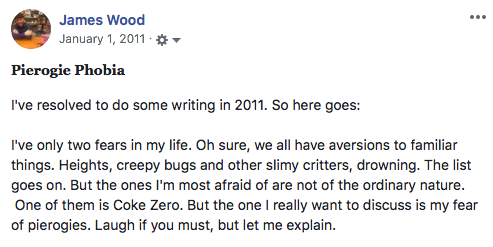

 Writing has always been a natural outlet for Amy Jo Giovannone. The inspiring author grew up in Ohio, where she played a lot of sports and acted in local theater.
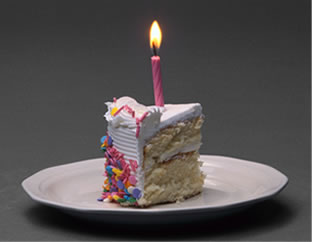 October 5th, 2019 – My 50th Birthday.
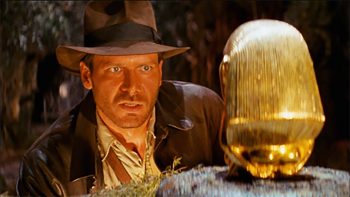 The past 365 days have been some of the best and absolute worst days of my entire life. It started in January when my very first interview, with Dan Donegan from Disturbed, was posted in the pages of Guitar World magazine. I will NEVER forget the day I walked into the shopping center on a misty gray afternoon and saw the new issue sitting on the shelves. It was like when Indiana Jones first saw the golden idol in “Raiders of The Lost Ark.” Or the feeling I had when I opened it up and fumbled through its crisp white pages and saw that my name had been printed under “Contributing Writers.” Knowing that this magazine would be in stores all over the world was surreal. Thinking about it now still gives me chills. I went on to do three more interviews this year – one with Jim Heath (Reverand Horton Heat), one with Vivian Campbell (Def Leppard, Dio) and another with Alan Parsons.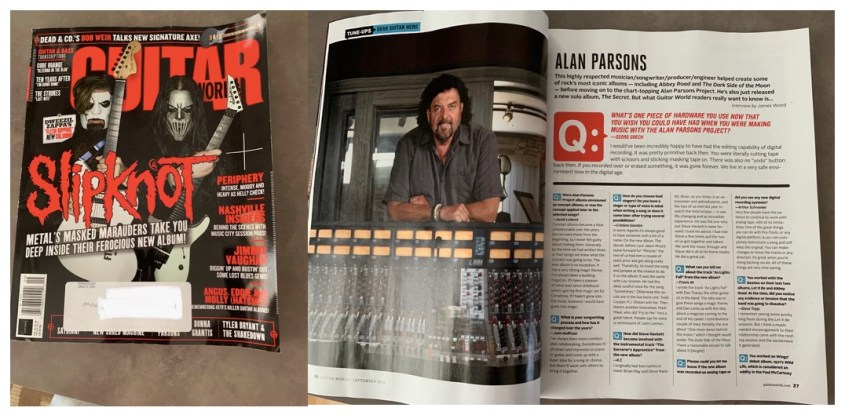
 go.Jimmy.go