The Afghan Whigs‘ spellbinding new album, In Spades, which will be released May 5, is the long-awaited followup to their internationally acclaimed Do to the Beast (2014).
The album, which was written and produced by Greg Dulli, features the tastefully eclectic singles “Demon in Profile” and “Oriole”—both of which you can hear below—plus the guitar-centric “Arabian Heights.”
In addition to an already-planned European tour, the Whigs will perform a sold-out show at New York City’s Apollo Theater on May 23.
Unfortunately, the new album and tour happen to coincide with Dave Rosser’s recent cancer diagnosis. Although Rosser is unable to tour for extended periods, the guitarist promises to perform at the Apollo show—and maybe even a few other dates.
The Afghan Whigs are Greg Dulli (vocals/guitar), Dave Rosser (guitar), Jon Skibic (guitar), John Curley (bass), Patrick Keeler (drums) and multi-instrumentalist Rick Nelson.
I recently spoke with Dulli, Rosser and Skibic about In Spades, touring, gear and more.
How would you describe In Spades, and how does it relate to the band’s previous work?
DULLI: Honestly, it’s the next evolution. This is the first record we’ve done live in the studio together in 20 years.
ROSSER: It’s pretty guitar-centric and there’s lot of riffing, but it’s still very cinematic. With Rick Nelson in there, we’ve got the multi-instrumentalist who plays violin, cello, piano and guitar.
What was the songwriting process like?
DULLI: I write songs based on the feeling of the riff. The riff and its subsequent arrangement then tells me what it wants to be. I’ve written that way since I was 13. But I’ll never tell anyone what my songs are about, because I feel songs are personal to the listener—and the interpretation is up to them.
SKIBIC: It was a pretty organic process. Out first session was about two weeks long, and at times it seemed we were writing a song a day.
ROSSER: A lot of times during sound checks we’ll jam out to ideas and record them. The time in between albums and touring is spent collecting ammo and then after that, it becomes a matter of finding targets to fire that ammo at.
Read the rest of my Interview with The Afghan Whigs by Clicking Here!
After suffering a shoulder injury in 2006 and being unable to play, former Metallica bassist Jason Newsted decided to put down his instrument and pick up a brush. It was during this time that he began to express himself through painting. Since then, he’s become an accomplished modern artist.
Newsted’s trademark style includes mixing soil—from wherever he happens to be painting—into his acrylics, creating a highly dramatic effect.
Although he’s kept a fairly low profile following Metallica’s 2009 induction into the Rock and Roll Hall of Fame and his successful Newsted project, nearly a dozen of Newsted’s uniquely inspired works will be on exhibit as part of this year’s Art New York.
Art Miami, the leading producer of international contemporary and modern art fairs, will present the third edition of Art New York and the second edition of CONTEXT New York at Pier 94 May 3 through May 7. The two highly anticipated fairs will showcase more than 120 international contemporary and modern galleries from 50 countries.
I recently spoke with Newsted about his upcoming exhibit, Metallica and more.
How did you become involved in this year’s Art New York?
I had the chance to meet with the owner of Art Miami. He loves metal, and after we hung out he saw some of the pictures I had and invited me. So I’ve been traveling around to different parts of the country these last few weeks getting canvases together from the past seven to eight years. It’s my first time in an international exhibit, and I’m very excited about it.
Was art something you were always interested in as a child?
I grew up in a rural area and took some classes when I was younger. That was where I was first introduced to acrylics and mixing colors together. Then about three years later, I got hit by music and everything else went on the back burner for 30 solid years.
When did you get back into painting?
Once I got in Metallica and started working on other projects, I was always keeping myself super-busy doing a lot of things and moving around a lot of gear. I wound up injuring my shoulders and needing surgery. During my recovery, I was disabled from playing my instrument in any way I had been used to, and I had to learn to use both of my hands out of necessity. For me, music was a full-time thing, and when I wasn’t able to release that way, I started using my hands to get out all of the creative energy I had usually put into the music.
I was in Montana at our ranch with only one arm going and felt the need to go out in the barn and paint. I found these old drum heads and whatever paint was lying around—Rust-Oleum and John Deere green and yellow. I turned the drum head over and oozed the paint in. Then I soaked a snow brush in the color and splattered the paint onto whatever I was painting on.
I got to the point to where I wouldn’t even have to touch the canvas to make circles, faces and figures. That was the introduction. Then as my arms got better, I started touching the canvas more. That’s how the transference of the energy went from the fucking metal monster to putting it on canvas. The consensus from people who have the works is that the paintings look like the music sounds.
You can read the rest of my Interview with Jason Newsted by Clicking Here!
“The Animal Inside” is the groove-driven, debut song from We Start Wars, a new, all-female band led by Alice Cooper guitarist Nita Strauss.
The band—which also features Nicole Papastavrou (eight-string guitar), Alicia Vigil (bass), Seana—a.k.a. Shauna Lisse (vocals), Katt Scarlett (keyboards) and Lindsay Martin (drums)—prides itself on being a “chick band” that breaks down stereotypes while combining virtuoso playing with multi-layered songwriting and high-energy performance.
Strauss has always been fascinated by the idea of the female warrior, and admits We Start Wars is the band she’s been wanting to build ever since she first picked up the guitar.
We Start Wars will make their live debut May 25 at the Whisky A Go Go in Hollywood.
I recently spoke with Strauss and Papastavrou about We Start Wars, their debut single, gear and more.
How did We Start Wars come together?
STRAUSS: I’ve been trying to put this band together since I started playing guitar. I’ve always felt that female musicians were under-represented in the music scene. It’s not that they weren’t out there, it’s just that there wasn’t a lot of all-female bands getting notoriety, especially ones with good technique and musicianship. I started out looking for great musicians and great performers that cold elevate the status of the female musician. I met Nicole at a NAMM show a few years ago and after we started talking we realized we had very similar views. It was an instant connection and it’s cool that we’ve finally gotten a chance to work together.
How would you describe the band’s sound?
PAPASTAVROU: I’d say it’s super melodic metal but also has a little bit of something for everyone. We wanted to broaden our audience not do anything too aggressive, but there’s still a little bit of heaviness in there.
STRAUSS: There’s a lot of crossover appeal. Nicole and I probably have the heaviest influences in the band, but when it comes down to it we make music a lot of people can enjoy.
Why the name, We Start Wars?
STRAUSS: I’ve had that phrase stuck in my head for at least 10 years. I remember being in school when one of the teachers said to us, “The greatest wars in history were fought over a beautiful woman.” I just remember thinking how badass that was. The concept of how the love and honor of a woman was worth putting everything on the line for. I also love the aesthetic and idea of the female warrior and someone who can fight her own battles and not have to depend on anyone for anything. That’s a lot of what this band is all about.
Read the rest of my Interview with Nita Strauss and Nicole Papastavrou Here!
While continuing to pay homage to their Thin Lizzy legacy, Black Star Riders’ third album, Heavy Fire, also represents a major turning point for the band.
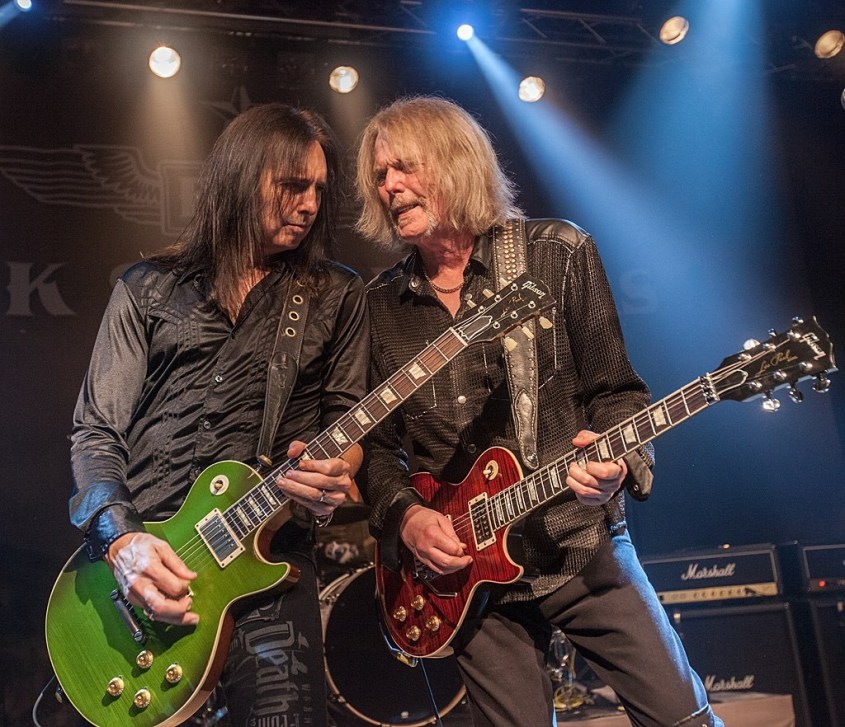
From the immediate riffs of “When the Night Comes In” to the dirty bass groove of “Thinking About You Could Get Me Killed” and the familiar, trademark dual guitars of Scott Gorham and Damon Johnson on “Testify Or Say Goodbye,” Heavy Fire takes the band out of the past and further cements Black Star Riders as one of the world’s premiere rock acts.
Black Star Riders are Ricky Warwick (vocals/guitar), Scott Gorham (guitars), Damon Johnson (guitars) and Robert Crane (bass).
I recently caught up with Johnson and asked him about Heavy Fire, his gear and more.
How would you describe Heavy Fire in terms of its sound and how it relates to some of the band’s previous work?
I would describe Heavy Fire as the album where we feel we’ve musically made a statement. It’s the final chapter in our trying to find a way to stand on our own. We’ll always be grateful and respectful to our past history—certainly Scott’s history—and without a doubt, the Thin Lizzy fan base and the support they’ve given us to even try something like this.
We’ve been touring, writing and recording over the course of the last four years and this was our opportunity to show we’ve made real progress. We’ve been energized and rejuvenated as a band at how great this album turned out. It’s very special to us.
What led to the transition from Thin Lizzy to Black Star Riders?
Ricky had joined Thin Lizzy in 2010 and I joined in 2011. Over the course of the dates we did together right after I joined, it was the first time Scott had brought up the subject of possibly making some new music and maybe even recording. For Ricky and me as fans, it was a dream come true to even consider having our contributions on a Thin Lizzy album, but we all quickly realized that to give the music a chance and for people to evaluate it on an even scale, it would be impossible to call it Thin Lizzy.
There were multiple guitar players and periods of music the band captured and recorded and went out and played live over the years, but everyone knows the common thread in that band besides Brian Downey was Phil Lynott. So the idea that anyone would give thought to recording new music without Phil in the band seemed ridiculous. That’s when we said let’s not bail out on the idea of recording but instead call it something else.
It’s been very gratifying to get the feedback from fans, the media and even fellow musicians that respect that we would step away from an established name and record it under a different one, and that’s really what Heavy Fire represents to us. This is the one that pushed us up to the next level to where we can see ourselves as Black Star Riders.
How does the writing process work for Black Star Riders?
It comes from a multitude of things. Generally, it starts with a musical idea that’s quickly followed by a vocal melody. Sometimes Ricky will come to me with his guitar and will sing what might be a verse or chorus and we’ll throw it back and forth. Other times, Scott or I will have a riff and bring it to Ricky who will then look in his lyric notebook and, 19 out of 20 times, he’ll already have a cool lyric to go with it.
Read the rest of my Interview with Damon Johnson by Clicking Here!
Following the success of their self-titled 1977 debut album, Foreigner went on to record some of rock’s most enduring anthems, including “Hot Blooded,” “Juke Box Hero” and “Urgent,” not to mention the Number 1 hit, “I Want to Know What Love Is.”
Since then, they’ve become one of the best-selling bands of all time, with 10 multi-platinum albums and worldwide sales exceeding 75 million.
On May 19, Foreigner will celebrate their 40th anniversary with a new career-spanning compilation, 40, which features 40 hits from 40 years. The band also will embark on an extensive U.S. tour with Cheap Trick and Jason Bonham’s Led Zeppelin Experience.
These days, Foreigner is Mick Jones (lead guitar), Kelly Hansen (lead vocals), Jeff Pilson (bass), Tom Gimbel (rhythm guitar/flute/saxophone), Michael Bluestein (keyboards), Bruce Watson (lead guitar) and Chris Frazier (drums).
I recently spoke with Jones about the band’s 40th-anniversary plans, his upcoming autobiography, gear and more.
This year marks the 40th anniversary of Foreigner. When you look back now—with so much perspective—what thoughts come to mind?
It’s a real gift and has basically been two-thirds of my life. It’s been a passion for me and I’ve stuck with it through thick or thin. I’m very grateful for having the opportunity to have an experience like this and to be doing something that I really love. It’s outlasted any expectations.
What does the band have planned to celebrate the occasion?
It’s the 40th anniversary, so we have the Foreigner 40 album that’s coming May 19. We’ve also got my book coming out, which is my first autobiography where you’ll find out a bit more about me. Then we’ve got a huge American tour where we’re bringing along Cheap Trick and Jason Bonham’s Led Zeppelin Experience. We have a couple of the guys coming out to play with the band, including Rick Wills and Dennis Elliot. There’s also plans for Lou Gramm to come out and do a few shows. We hope to make it a celebration.
Kelly Hansen has been with the band on lead vocals for more than a decade. What’s it like having him with the band?
Kelly was the reason I felt confident to go ahead with this in the first place. Obviously, those were big shoes to fill, but Kelly is a go-getting front man and performer who carries the songs incredibly well and gives 150 percent every night. But that’s really the thing about the whole band—everyone is totally dedicated to what we’re doing. It’s a rare thing to find something where everyone is on the same page. There’s good feeling all around.
Read the rest of my Interview with Mick Jones by Clicking Here!
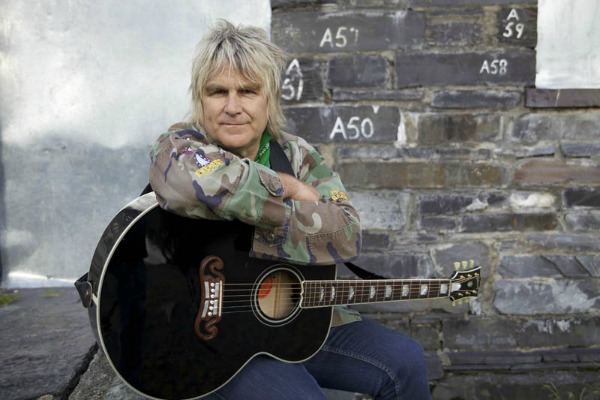
The story behind Mike Peters’ inspiring new documentary, Man in the Camo Jacket, actually begins with the music of the Alarm.
Peters’ will to live also comes through his charity, the Love Hope Strength Foundation, which raises funds and awareness for cancer centers around the world through music-related events and promotions. To date, LHS has added more than 129,000 music fans to the bone marrow registry, helping to find more than 2,400 potential lifesaving matches.
Man in the Camo Jacket will have its U.S. premiere in Los Angeles on April 22 and in New York on April 29. This will be followed by the Alarm’s run of live dates as part of the Vans Warped Tour.
I recently spoke to Peters about Man in the Camo Jacket, the Alarm’s upcoming tour, new music and more.
What inspired Man in the Camo Jacket?
The genesis of the film happened when I was approached by Russ Kendall from Kaleidoscope Pictures. He had been commissioned to make a series of programs for a film called A Song That Changed My Life. Russ and his crew came to Wales to film my portion. While he was there, I told him the story about our work with the charity and the bone marrow drive and he became enthralled with the whole Love, Strength, Hope story. That’s when he said, “Mike, this is more than a TV show. This has to become a film.”
He started the drive with the other producers [James Chippendale, Stash Slionski and Alex Coletti] and put the story together. The film is the coming together of a lot of people who had faith in the band and me as an individual and stood behind me through my cancer struggles, and also about the people who got on board and volunteered to give their love, hope, strength back to the world.
What’s the story behind the camouflage jacket?
When I was first diagnosed in 1995, I was due to have a bone marrow transplant. But I told the doctors I had an American tour in a few days and couldn’t cancel it. A friend of mine gave me a book about self-healing to read on the way over, and there was a chapter about a girl who had a brain tumor and created a Pac-Man game in her mind to eat it.
She wound up going into spontaneous remission and cured herself through the power of her mind. It really connected with me and made me realize I needed a defense mechanism of my own. I thought that if I was going to war with the cancer, I was going to buy an army jacket and wouldn’t take it off until I was cured.
One of the interesting parts of your musical journey was when one of your early bands, Seventeen, dissolved. It was the day you were told by the band’s manager that you’d never amount to anything musically.
That was the bottom and a terrible day, because it was also the day John Lennon died. But I saw something in myself that day. Up to that point, all I was trying to do through the band was get a record deal. I realized it shouldn’t just be about that. I thought we’ve got to put our ideals across and give something tangible to our audience through our music. Something where they can say, “Wow! Those guys mean it. Let’s apply that to our lives as well.”
I remember walking away from that moment with no anger or bitterness and later telling him, “You’re wrong. I’ll prove you wrong.” It was a wakeup call and a turning point that shocked me into real action instead of just going for a ride.
Read the rest of my Interview with Mike Peters by Clicking Here!
For more than forty years, the Peter Rodgers Organization has been a top name in film and TV distribution, and with the recent launch of PROClassicTV.com they’ve now given fans access to the classic television shows they love from the comfort of their own home.
Fans can now purchase individual episodes or get a monthly, unlimited membership that allows them to watch complete seasons of iconic series like “The Rifleman,” “I Spy,” “My Favorite Martian” and “The Saint” as well as the cartoon classic “Courageous Cat and Minute Mouse”, the truck driving drama “Movin’ On” and the campy “Celebrity Bowling.” Every episode is uncut, commercial free and ready to take a new generation of TV fanatics and those who remember these shows fondly well into the 21st century.
I recently spoke with Stephen Rodgers, Chief Executive Officer of The Peter Rodgers Organization (PRO) about PROClassicTV.com and more in this exclusive new interview.
Can you give me a little background on the Peter Rodgers Organization?
My father [Peter Rodgers] was vice president of a company called National Telefilm Associates (NTA). They were the syndication arm for Republic Pictures and NBC. This was back in the day when studios like Republic had NTA and Columbia had Screen Gems. It was also a time when studios were being pressured a lot by theatrical companies. They shunned on selling features to television because back then, movie theaters thought they’d go out of business if films were available on TV. My father was there from 1957 until 1976 and left to go out on his own to start his own company, The Peter Rodgers Organization. That’s how the company started.
How did you become involved in the business?
I was working as an engineer for a heating and air conditioning company when my father passed away in 1988. So I’d go to work at my construction job and afterwards would go into his office for the estate. My father knew a lot of influential people in the business who welcomed me and took me under their wing. They encouraged me to stay in it and that’s what I ended up doing. I didn’t envision going into the business, but keeping this company going was (in a way) my way of making sure my dad was still around.
Where did the idea for PROClassicTV.com originate?
It was something that was created out of necessity after watching the decline of physical DVD’s and startup cable networks. Seeing those areas go dormant really pushed us into the online medium and PROClassicTV. Rather than chase existing models and suffer the consequences of their learning experience, we realized the strength was in keeping all the content together as a library. It gave us the ability to get more attention. ProclassicTV.com gives consumers a way to transactionally watch content without commercials. It was also an opportunity for us to digitize our content and present it directly to consumers. In the past, we had always dealt with network and traditional syndication platforms on a company by company level, so this is new for us. But it allows us to see what kind of climate is out there and what the next moves will be for the future.
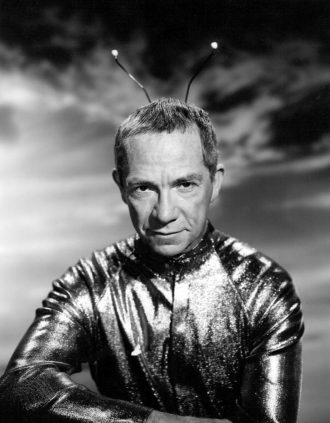
My Favorite Martian
What would you say is the most challenging part of your job?
It’s always a learning experience. We’ve seen the evolution of a lot of things over the years: the VHS tape came in and went out, then we had the cable channel boom of the 1990’s. Now we’re in this online medium which is ever changing. As things evolve, you’re always second guessing yourself and making sure that you’re doing things that will be of mutual benefit. Representing producers is a challenge because many of them are no longer around. It’s typically the estates and families that have a video asset they don’t know what to do with. It’s my job to make sure that we maximize the benefits for them them but at the same time, making sure the broadcasters are happy with the deal that they have. Then we have to hope that there’s some happiness left over for us. Those are the challenges. Making sure the crystal ball is working the best that it can.
How do you acquire content?
We really don’t acquire things. It finds us. The content comes from families, estates and agencies and even some international companies that don’t have distribution domestically. We represent shows that are branded and sell themselves. Shows like “I-Spy,” “My Favorite Martian” and “The Rifleman” are brands that have been cultivated over decades and don’t require any promotion. People recognize them and tune just by virtue of them being on the schedule. Wherever these shows go a few million dedicated fans and followers who grew up or enjoyed watching them will gravitate towards that channel or network. That’s the criteria – looking for shows that already have an established brand and ones that have universal recognition.
I’ve already asked you what’s the most challenging part of your job. What’s the most satisfying?
The thing that satisfies me the most is making a deal that works. Whether it’s a deal with a TV station in Bangor, Maine or a deal like the one we have with AMC and “The Rifleman”. Being able to get all the parts together to make the broadcaster or exhibitor happy, makes the producer/owner happy and then any happiness left over for us. Those are three things that factor into every transaction we do.
In the book, which will hit shelves April 11 via Lesser Gods, Eglinton uses exclusive, firsthand interviews with artists and celebrities who have crossed paths with the guitarist, including other members of Metallica, Testament’s Chuck Billy (who wrote the book’s foreword), Charlie Benante (Anthrax), Jerry Cantrell (Alice In Chains) and Rex Brown (Pantera), to construct the definitive account of Hetfield—at least up to this point.
Before becoming one of metal’s biggest personalities, Hetfield overcame several barriers throughout his adolescence, including his parents’ divorce, his mother’s death and severe alcoholism. Eglinton’s book provides the ultimate insider’s look at the man who turned it all around and became a metal god.
I recently spoke to Eglinton about So Let It Be Written, and you can check out our interview below. For more about Eglinton, visit mark-eglinton.com.
What made you decide to write a biography about Hetfield?
I’ve been a fan of the band my whole life, and this idea probably goes back to when I met James for the first time in 1986. I met James and Cliff Burton when Metallica played in my hometown, Edinburgh, Scotland. This was the week before Cliff died, so in retrospect, it was a pretty significant meeting.
James struck me as someone who had a lot of thinking going on but maybe didn’t know how to express it. As time went on, it became an interesting idea to see how he had evolved. On a basic level, it also surprised me that no biography had ever been written about him. Those two things in combination made it a pretty easy decision.
What made the music of Metallica so special for you back then?
I was into a lot of the bands that were around at that time—1984 to ’86—but was looking for something a bit heavier. When I heard Metallica for the first time, it was like inventing the wheel. It was a sound that was so different, so new and so aggressive. It wasn’t radically different from heavy metal but it was being done in a way that no one had ever done before. They’ve always maintained that interest for me.
Read the rest of my Interview with Mark Eglinton by Clicking Here!
When working on Salting Earth, his 21st solo effort, triple-threat songwriter, guitarist and vocalist Richie Kotzen tossed convention on its ear by taking one step back in order to move two steps forward.
“It’s something I really needed to do in order to reset myself,” he says.
His “charge to recharge” was put into play following the success of the 2015–’16 tour behind the Winery Dogs’ sophomore effort, Hot Streak. And the guitarist’s reset manifesto wound up hitting all the right buttons; the proof is on display on Salting Earth.
I recently chatted with Kotzen about his writing process, gear and, of course, Salting Earth, which will be released April 14.
How would you describe Salting Earth in terms of its sound?
One of the things I love about this record is that the song selection really encompasses what I do as far as the pendulum swing. You have songs like “This is Life” and “My Rock,” which are centered more around the piano, but at the same time you have heavier things, like “Thunder” and “End of Earth.” Then you have songs like “I’ve Got You” and “Meds” that have a slinky, sexy kind of vibe. This new record of all-new material really shows me in the realm of what I do as far as being a recording artist.
What’s your song writing process like?
I approach my writing in a way that’s not held by any boundaries. I don’t think about when or where I’m going to write or record. It just happens. If I have an idea for a song and I’m nowhere near a studio, I’ll document it on the recorder app of my iPhone. Then at some point, I’ll go back and listen to these ideas and record them. If I’m at home with an idea, then I’ll go straight to the studio and start working on it. What ends up happening is that over the course of the year I may end up with 10 to 20 songs and ideas recorded, and at that point I start looking at what material works well together and what songs I can picture myself playing live. Then I can compile a record.
Is there a particular way you approach writing lyrics for a song?
Everything happens differently. It just depends on the situation. It’s interesting because there’s a song on the record, “Make It Easy,” that was sitting on my hard drive for a very long time. I knew it could be a cool song but I could never finish the lyrics. Somewhere along the line last year, I pulled it up again and as I was listening to it the lyrics just came to me. Sometimes the lyrics and melody can come simultaneously, like the song “I’ve Got You.” That was a song where the melody and lyrics came together all at once.
Other times you’ll have a song with just a riff. “End of Earth” is a good example of that. I originally went in and just sang the melody and made things up for that one. Then I went back and listened to what I had recorded and was able to take the sounds I created and turn them into words, lines and phrases. Then I could just fill in the blanks.
Read the rest of my Interview with Richie Kotzen by Clicking Here!
After recording several albums with ‘Til Tuesday, Aimee Mann began a successful solo career that spawned a string of eclectic but seriously engaging albums, from 1993’s Whatever to 2012’s Charmer.
Mann also has lent her talents to several film soundtracks, most notably the score for Paul Thomas Anderson’s Magnolia; her song from that film, “Save Me,” landed her an Academy Award nomination in 2000. And then there’s The Both, her 2014 collaboration with guitarist Ted Leo, which received critical acclaim.
Her new album, Mental Illness, which is out today (March 31), once again showcases her incisive and wry melancholia in a nearly all-acoustic format, with a style inspired by some of Mann’s favorite folk-rock records from the Sixties and Seventies. With string arrangements by Mann’s longtime producer, Paul Bryan, the 11-song album also features contributions by Leo (backing vocals), Jonathan Coulton (guitar), Jay Bellerose (drums) and Jamie Edwards (piano).
I recently spoke to Mann about Mental Illness and her time working with Rush on “Time Stand Still” 30 years ago.
Mental Illness is a departure from Charmer and The Both. How did it come about?
Charmer was more of a pop and R&B record in a modern sense and was a little more produced and fleshed out, and my project with Ted [The Both] was fairly stripped down but was a real rock band. After that, I felt like it was time to write a bunch of real acoustic songs and make a record that’s really stripped down and melancholy without worrying about up-tempo songs and trying to offset my natural strength for wistful, downbeat songs.
What’s your songwriting process like?
I usually start by having some kind of melody idea or chord progression. If there’s something interesting that stands out, I’ll say to myself, “OK, what does this music sound like? What’s its emotional center and what kind of story would suit that center?” Then I’ll figure out where I intersect with that kind of narrative.
Let’s discuss a few tracks from Mental Illness, starting with “Goose Snow Cone.”
That was a song I started when I was on tour in Ireland. I remember it was very snowy outside and I was feeling kind of homesick. I was looking on Instagram and saw a picture of one of my “cat friends” whose name is Goose. She was looking up at the camera and she reminded me of a snow cone and I started writing about her. Then it started weaving, with feelings of a snowy day and feeling homesick and lonely. People asked me to change the “snow cone” part to something else, but I couldn’t think of anything I liked better [laughs]!
Read the rest of my Interview with Aimee Mann by Clicking Here.

 Interview with The Afghan Whigs by Clicking Here!
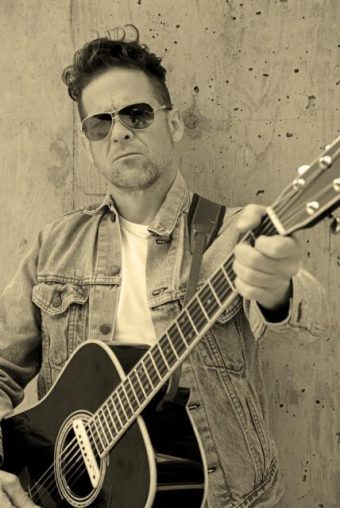 After suffering a shoulder injury in 2006 and being unable to play, former Metallica bassist Jason Newsted decided to put down his instrument and pick up a brush. It was during this time that he began to express himself through painting. Since then, he’s become an accomplished modern artist.


 Mark Eglinton’s

 go.Jimmy.go