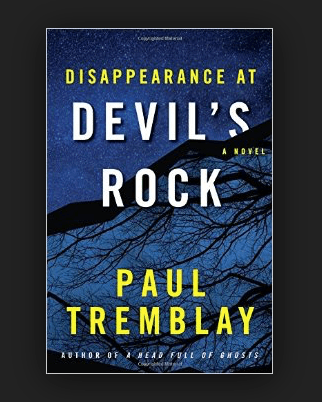
‘Disappearance At Devil’s Rock’: Author Paul Tremblay Discusses His New Emotional Thrill Ride

DrockFollowing the success of his psychological thriller, “A Head Full of Ghosts”, author Paul Tremblay spent most of the summer of 2014 trying to figure out what his next book would be about. He began by asking himself the same question most horror writers do – “What scares me?”

Tremblay eventually found the answer to his question while spending time in the woods near his home. The result would become his page-turning thrill ride, “Disappearance at Devil’s Rock”.

Although its title may conjure up images of 1970’s Hardy Boys mysteries, this is a 21st century tale of fear and intrigue. Elizabeth Sanderson gets the call in the middle of the night that all parent’s dread. Her son, Tommy is at a sleep over at a park when Tommy suddenly wanders off and disappears.

The supernatural element and emotional struggles of the family and neighbors in their desperate attempt to find Tommy make “Disappearance at Devil’s Rock” one of the highlight reads of summer.

Tremblay is no stranger to accolades. His previous book, “A Head Full of Ghosts” was recently awarded The Bram Stoker Award for Superior Achievement in a Novel. It was also optioned for the big screen by Focus Features and has even received praise by the master of horror himself, Stephen King. A U.K. version of “A Head Full of Ghosts” will be available in late September.

I recently spoke with Paul Tremblay about the new book and more in this exclusive interview.

Where did the idea for “Disappearance at Devil’s Rock” begin?

I started by asking myself the question, “Of all the things that scare me now, which one scares me the most?” As a parent myself, the obvious answer would have to be to have one of your children go missing. Then I started thinking about Borderland State Park. It features prominently in the book and is a real place I used to hike in all the time. I decided to put those two things together, and make one of my favorite places kind of creepy.

Can you tell me a little about your writing process? Are you a plotter or a pantser?

I’ve done both. With “A Head Full of Ghosts” I did a lot of plotting and pantsing. For this one, I started by doing a sixteen-page summary that took quite a bit of time to complete. I learned a lot about structural work as I prepared for the story; right from the beginning and through the whole process of writing. The first draft took about eleven months to complete. When I first finished, it was by far the longest thing I had ever written.

Did you have to do much research in preparation to write?

My son was actually my Minecraft expert. Both he and my daughter grew up playing the game. I didn’t know a whole lot about Snapchat, and most of that research was done online and figuring out what police would be able to get from it. There’s this idea of how using social media makes us safe and closer than we actually are. I decided to use it to make it harder to find Tommy.

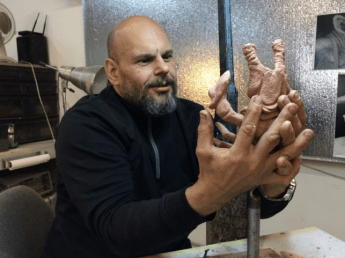
PaulTremblay

Do you have a set daily goal of time or words in mind when you sit down to write?

I usually don’t set a time when I’m working a project but I do try to set a goal of 500 words a day—and that could be in the morning, afternoon or night. I always try to fit it in but also give myself permission to miss that mark. More times than not, I’ll make those 500 and some days will even surpass that.

Did you encounter any challenges while writing “Disappearance at Devil’s Rock”?

This book took me out of my comfort zone a little bit. All of my previous novels were done in first person point of view. This one was third person jumping around to different characters. It’s good to push yourself as a writer and continue to get better.

What’s the best bit of advice you can give to aspiring writers?

For someone starting out the biggest thing is read…read… read! If you want to be a writer, you can’t sacrifice anything else for reading. Also, give yourself a reason to be patient. If the first book doesn’t sell, use that process to stick with it. You’ll learn a lot as a writer from being rejected and from listening to what editors say. Take their comments about your work and use it to get better!

You’ve recently won The Bram Stoker award and Stephen King has even mentioned how much he loves your work. As a writer, when comes to mind when you think about those things?

 It’s very affirming and humbling. I actually started writing because of Stephen King. So getting accolades from one of my heroes tells me that the work has paid off. Winning an award by a horror association is also one of the highlights of my professional life and something I’ll never take for granted.

What would you like people to take away from reading “Disappearance at Devil’s Rock”?

I don’t want to add to the culture of fear and have people be freaked out and afraid for their children. But I’d really like for people to come away feeling empathy for all of the characters –even the ones that don’t do good things. As a writer, that’s important to me. Readers don’t always have to feel sympathy for the characters but they should understand the decisions that they make and why they do what they do.

‘Fight Valley’: Writer/Director Rob Hawk Discusses Action Packed Film

robredcamWriter and director Rob Hawk spent much of his early childhood as a skateboarder and break-dancer before transitioning his time into the studio creating and editing rap music videos. Eventually, his creativity got the best of him and he found himself having to write and create more. He quickly moved from doing three-minute music videos to the world of film and hasn’t looked back since.
Now Hawk has unveiled his first feature length release –the appropriately titled, “Fight Valley”. A film loosely based on his love of “The Outsiders” and growing up in a tough neighborhood, Hawk tells the story of one woman’s journey to find vengeance and closure in a dark, underground fighting ring.

The action-packed thrill ride also features three of the fiercest women in the hardcore UFC: Miesha Tate, Holly Holm and Cris Cyborg.

I recently spoke with Hawk about Fight Valley, working with Miesha Tate, Holly Holm and Cris Cyborg, his career and more in this exclusive interview.

Where did the idea for “Fight Valley” begin?

I grew up in a gang-populated neighborhood where I forced to run around with one of them, just to stay safe. I’ve always loved the movie, “The Outsiders” and wanted to mix my love for it with a little bit of my own personal life but wanted create it with females. The original idea was to involve real fighting sequences and get people who could really take a hit. But it was hard to find an actor and say to them, “Ok, this girl is going to punch you in the face!” [laughs]. So I decided to get some trained fighters who do it for a living. That’s how it came about.

Was the idea always to include UFC fighters like Miesha Tate, Holly Holm and Cris Cyborg?

It really just evolved into it. I hadn’t really followed the UFC much but started doing some research. I originally spoke with Ronda Rousey’s team about doing the film but she wasn’t going to be available. But while I was doing research on Ronda, these three other women’s names kept coming up. With more research, I found out that they all had some real friction against each other. It was perfect timing!

Jabs Gym 1.Still001

What was the writing process like?

Even before I sat down to write, I had been planning this film in my head for about eight months. I always try to play it over in my head and then visualize it on screen. When I finally sat down, it just came right out and took me about nine days to write.

How would describe the story of “Fight Valley”?

As I was writing, I tried putting myself in a real life situation by asking myself, what would you do if someone came to you and said that they found your brother dead in the woods? Naturally, the first thing you’d think about is who did this to my brother. You would want revenge.

 In Windsor’s case [Susie Celek], she hears her sister died in Fight Valley and she decides to go there. Then she discovers that Fight Valley isn’t really a place; it’s all of Camden, and there’s an underground scene where girls who have no jobs or money could fight and get paid for it. She eventually finds out her sister was killed in a street fight and decides to fight the girl who did it and make her pay. The problem is, Windsor is a rich girl who’s never broken anything other than a broken nail in her entire life. So Miesha takes her under her wing to train her. She already knows there’s no way Windsor’s going to win, but she decides to train her anyway because she wants her to have closure. 

What do you think makes the UFC style of fighting so popular with people?

The human race is very completive and one where everyone is so busy and on the edge trying to get ahead. So it’s cool to come home the end of a hard day and watch people beat the crap out of each other—and know that it’s not you! [laughs]. The other cool thing about it is that instead of rooting for a whole team, you get attached to and root for a single person.

What was the filming process like?

It was very challenging, especially with scheduling. It was nine days of crunch time in the heat and fighting. It was my first, full feature movie and I really learned a lot.

Did you always know that you wanted to have a career in entertainment?

I did. I had played instruments when I was younger and even entered talent shows in school. I remember being upset at the possibility of losing but once I got on stage and the spotlight came on and I saw my mom looking at me I said, “I want to do this forever!” I started doing rap music and it eventually evolved into making films.

What do you enjoy most about the filmmaking process?

I like the idea of how you can take something from your mind and put it on screen. It’s an awesome process being able to create characters and locations. Then there’s calling “action” and seeing it all come to life. It’s a feeling you can’t really describe.

As an artist and filmmaker, what lessons did you take away from working on “Fight Valley”?

There were a lot of lessons learned ,but I think the most important one is to take your time creating and getting what you want. Because you could work for years and not get distribution, but you never know when that one film will get away from you and go into the mainstream. I love this movie and it’s very dear to me. I’m also very excited about showing everyone what the next step will be.

Fight Valley is available now on multiple streaming services.

Chris Robinson and Neal Casal Talk New Chris Robinson Brotherhood Album

To create their new album, Anyway You Love, We Know How You Feel, the Chris Robinson Brotherhood relocated to a remote recording studio in the hills of northern California. The result? One of the band’s finest musical moments to date.

The disc also represents several “firsts” for the former Black Crowes frontman and his bandmates; it’s first album the band produced without any outside help, and it marks the first release featuring new bassist Jeff Hill and new drummer Tony Leone.

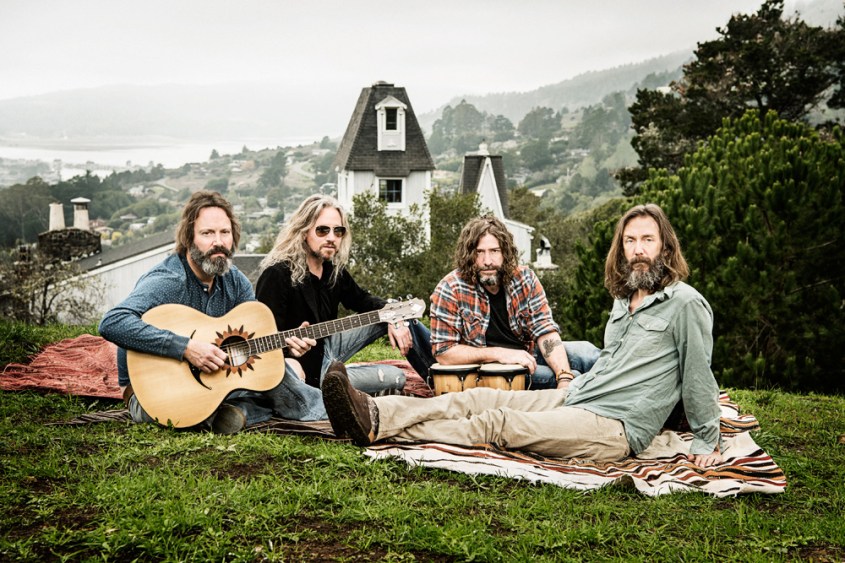
ChrisRobinsonBrotherhood - Photo by jay-blakesberg

The tunes, including the infectiously psychedelic “Narcissus Soaking Wet,” seem to channel everything from Bob Dylan to Parliament Funkadlelic, while tracks like “Ain’t It Hard But Fair” and “Forever As the Moon” showcase a deep level of maturity in the band’s songwriting and kaleidoscopic sound.

The Chris Robinson Brotherhood is Chris Robinson (vocals/guitar), Neal Casal (guitars), Adam MacDougall (keyboards), Jeff Hill (bass) and Tony Leone (drums). I recently spoke with Robinson and Casal about the new album, songwriting, their gear and more.

How much of an influence did recording in northern California have on the sessions for Any Way You Love, We Know How You Feel?

Neal Casal: It was very inspiring. We made the record in a house with a big window overlooking the hillside and the Pacific. It was a very comfortable and quiet environment where there were no distractions or social situations to pull us away. There was something about the energy on that hillside that was very creative. And once we got inside, Chris’ notebook opened up, the words started flowing and the songs just wrote themselves.

Chris Robinson: We might not all be Californian, but this band was born in California. The California concert culture and counter culture is embedded deep within us. Living communally in this amazing house and studio changed our perspective. We were a lot closer to the source of what influenced us and it was unique on so many levels.

How would you describe Anyway You Love, We Know How You Feel?

Robinson: In a weird way, it’s kind of like it’s our first record. Our actual first record was a band that had worked all year long and then went into the studio and recorded our live show. For the second album we had more time on the road and pushed ourselves a little more in the songwriting. Now that we’ve spent four solid years on the road and have been writing and working, it was all about getting to this session and letting these songs flower. We’re really happy about the bounty our art has given us after tending it for so long.

Casal: I think it’s the natural maturation of the band after being together for five years making records and doing hundreds of shows. The songwriting partnerships have developed further and broadened our palletes. The music, our commitment to the band and our mission is deeper than ever. It’s also a more direct sounding record with a closer connection to our live show.

Read the rest of my
gw_logoInterview with Chris Robinson & Neal Casal
By Clicking Here!

Jane Wiedlin Talks Final Go-Go’s Tour, Gear and Career Highlights

Photo by: Carl Timpone.
Photo by: Carl Timpone

Rising out of the Hollywood punk scene, the Go-Go’s helped lay the foundation for early Eighties pop/rock. But what’s even more impressive than their hook-laden songs and tight musicianship was that these ladies did it all on their own without having to compromise their creativity by bringing in outside writers or session players.

Fueled by the hits “Our Lips Are Sealed and “We Got the Beat,” the Go-Go’s’ debut album, Beauty and the Beat, rose to Number 1 on the Billboard album charts. Subsequent albums Vacation and Talk Show yielded similar hits and helped cement their reign as the most successful all-female rock band of all time.

After an impressive 38-year run, the Go-Go’s—which includes Belinda Carlisle (vocals), Jane Wiedlin (guitars), Charlotte Caffey (guitars) and Gina Schock (drums)—will embark on a farewell tour that will celebrate the band’s legacy as well as say goodbye to their legions of fans.

I recently spoke with Wiedlin about the Go-Go’s’ final tour, her gear and some of her most memorable moments.

When you consider the fact that this is the final Go-Go’s tour, what comes to mind?

I’ve had a lot of different emotions going on as I go through my day. I’ll admit I was sad when we first started talking about retiring as a touring band, because there’s nothing like getting out on stage and having people cheering for you. But we’ve also been doing it for a long time, and it gets harder as you get older. So now that we’ve decided it’s time to let the touring go, my plan is to appreciate every second and everyone in the audience and just have the best time I’ve ever had in my life.

What can fans expect from this farewell tour?

We are pulling out all the stops. In addition to the hits, we’ll be playing songs that we haven’t played live for decades as well as some new cover songs. You’ll see that there will be a lot of emotion with these shows. It’s going to be bittersweet, but the plan is to have the time of our lives.

What was the biggest challenge during those early years of the Go Go’s?

The first few years weren’t challenging at all because we were in a community that had accepted and embraced us. But once we started trying to get a record deal, it became extremely challenging. We were one of the most popular bands in California but no record company would touch us. Eventually, we gave up on the idea of signing with a big label and ended up with I.R.S. Records. Miles Copeland took a chance on us and it paid off for everyone. It turned out that people were willing to accept an all-female band.

How did the song “Our Lips Are Sealed” come about?

I was having a thing with Terry Hall, the singer from the Specials and Fun Boy Three. He sent me the lyrics in the mail and I wrote the music and melody. Since I wasn’t a trained musician, I didn’t realize that the chord progression I chose was considered “impossible”—and anyone who knows a lot about music would tell you you can’t put those chords together [laughs]. But there’s something to be said for being naïve. It makes you do things differently.

You can read the rest of my
gw_logoInterview with Jane Wiedlin by Clicking Here!

Doobie Brothers Pat Simmons and Tom Johnston Talk Gear and Classic Tracks

Photo by: Kelly Swift

Over the course of their 40-plus-year history, the Doobie Brothers have been delivering their distinct brand of roots-based, harmony-laden, guitar-driven rock to eager fans old and new.

As a whole, the band has amassed more than 48 million in album sales to go along with a pair of Number 1 songs and four Grammys. Classic rock guitar aficionados have long known—and no doubt played—many of the riffs from the band’s arsenal of hits, including “China Grove,” “Black Water,” “Long Train Runnin’” and “Listen to the Music.”

The Doobies took a five-year hiatus in the early Eighties, only to return with a reunion album, Cycles, in 1989. They’ve been touring and making music ever since.

The Doobie Brothers’ touring lineup—which is on the road with Journey this summer—includes Pat Simmons (guitar/vocals), Tom Johnston (guitar/vocals), John McFee (guitars/fiddle/vocals), Bill Payne (keyboards), Marc Russo (saxophone), Ed Toth (drums), John Cowan (bass/vocals) and Tony Pia (drums). I recently caught up with Simmons and Johnston to talk about the music, guitars and more.

This is actually the first time the Doobie Brothers have toured with Journey. How has it been going?

Simmons: Really good. When you get out on the road, you never know what it’s going to be like, but they’re all such great guys. It’s been just like family.

Johnston: There have been full houses and the crowds have been very receptive. It’s been a great tour all around.

Bill Payne of Little Feat contributed keyboards on nearly every Doobie Brothers album and is now touring with the band. How did your relationship with him begin?

Simmons: Our producer at Warner Brothers, Ted Templeman, had done a Little Feat album and was working on ours [Toulouse Street]. I remember we were in cutting songs and Ted wanted to try some keyboards on a few tracks. He said he had this great keyboard player and when he brought in Bill, we all just flipped. He was so amazing. Bill came out occasionally to play in the early days and I tried several times over the years to get him to join the band, but he was always busy with Little Feat. Finally last year, he was substituting for our old keyboard player who had left for another gig. As usual, I said, “God I wish you could stick around”—and this time he said, “Well, as a matter of fact…” [laughs]. That was it!

What makes the music of the Doobies so timeless and special?

Johnston: It really depends on what your age range is. At some point in your life, the tunes may have meant something to you. In other cases, they’re songs you can sing along with and make you feel good. We’ve been lucky to have written tunes that have lasted and are still getting played today.

Simmons: For sure, it’s the songs. More than anything else in our culture, music is one of those things that brings back recall from your past. You don’t get to relive every minute but when you hear a song, you think about where you were or what you were doing when you first heard it. It’s a continual process and really keeps artists alive in people’s memories. It’s an all around association that’s not just about the music or the artist. It’s about people lives and how they all intermingle.

You can read the rest of my
gw_logoInterview with Pat Simmons & Tom Johnston Here!

‘Orange is the New Black’: Actress Julie Lake Talks Emotional New Season, Career

Julie Lake
Julie Lake

Filming Season 4 of the Netflix original series, “Orange is the New Black” was a bit of a blur for Julie Lake. The beautiful actress—who plays the role of the lovable Angie Rice on the show, was preparing to get married during filming and had found herself traveling back and forth from L.A. to New York.

The show that began as a comedic struggle for Piper Chapman (Taylor Schilling) to adjust to prison life has now evolved into an emotional dichotomy. The serious exploration of issues like racial tension, death and corporate greed have left us no doubt that Jenji Kohan’s series has finally hit its stride.

Although Rice’s personal story isn’t touched upon too deeply this season, Lake—much like everyone involved, deserves credit for giving viewers the series’ best one to date.

I recently spoke with Julie Lake about the new season of “Orange is the New Black” and more in this exclusive interview.

Warning: If you haven’t watched Season 4, this interview contains spoilers.

How would you describe this season of “Orange is the New Black” and Angie’s transition after the prison became a privately owned facility?

We all felt at the end of shooting that this was a heartbreaking season. Angie is dealing with it the same way she always has—by finding humor, fun and more trouble to get into to keep things interesting for her. In a way, she’s a class clown who deals with things through humor. We’ll see what happens in Season Five when the s#it really hits the fan how she’s going to cope!

The writing on the show has really developed into something special over these four seasons. What do you think makes it so special?

The great thing about the writers is that they’re given a huge amount of freedom. Sometimes on a network show the executives might poke their heads in and ask to have things changed. The beauty of this show is that no one is telling the writers what to do. They’re just going. Sometimes we’ll even get the scripts at the last minute and they’re still changing things up and doing re-writes. These writers are really unleashed and are just going for it and as a result, they’re making incredible art.

There’s a lot of racial tension within Litchfield this season. Were there any reservations with having to deal with such a sensitive topic?

I remember Emma [Myles] and I were nervous at first about being placed into a particular group and saying racist things. I want people to love Angie and was a little worried about what people might think. But the fans have really seen it for what it is. It’s been very powerful and I’m happy with how everything turned out.

When a main character dies on a series, there’s always a roller coaster ride of emotion for the audience. What was the feeling like on set filming that episode?

I remember reading the script and was like, “Wait…She dies? Is this real? Are they going to bring her back?” I really couldn’t believe it was actually happening. It was a sad day when we shot that episode. Everyone loves Samira [Wiley]. She’s part of the heart and soul of the show. It was a very emotional day and I remember everyone was upset. It was like we had just lost our friend.

At the end of Season Four, a major event occurs and things are about to become extremely violent. What do you think is going through Angle’s mind at the end of that episode?

You know, I don’t think it’s sunk in for her yet. Life outside of the prison was so real and dark and hard for her. Now she’s here in this place where she has friends so to her, it’s still fun.

Are there any other projects you’re currently working on?

I have been doing a lot of writing and creating. I’ve written a pilot with some friends from my sketch comedy troupe that we’re in the process of producing. Through pitching, we’ve actually begun work on another project, and are developing that into a pilot as well. I’m also in the middle of filming a series with my friend, Shirin Najafi, called “Mental”. We’ve filmed four episodes so far and have two more to go. I’m also acting and directing a web series two of my other friends wrote called “Tinderellas”. I’ve got a lot going on right now and am super busy, but it’s really been fun. It’s an exciting time and I have a lot to look forward to.

Joe Perry Talks Hollywood Vampires Tour, Gear and Aerosmith’s Future

Photo: Ross Halfin
Photo: Ross Halfin

When Alice Cooper decided to pay tribute to his Seventies drinking buddies—a group of late-night partiers dubbed the “Hollywood Vampires”—he used the nickname for a new band featuring an impressive batch of artists and released an album of classic covers and a handful of original tunes.

Following the band’s TV debut on this year’s Grammy awards, not to mention a string of European shows, the Hollywood Vampires–whose core members include Cooper, Johnny Depp and Aerosmith guitarist Joe Perry—are about to begin one of summer’s most anticipated tours.

I recently spoke with Perry about the band’s North American tour, new music, the future of Aerosmith and more.

What can fans expect from the Hollywood Vampires Tour?

The album is a pretty good indication. But once you make the record, the goal is to out-do it when you play it live—and that’s what we’re doing. Although there are a lot of guests on the album who won’t be with us on stage, the core band is the one I’d pick if I was going to go out and tour by myself. Everyone is a great player and we’re all friends as well as fans of the music we’re playing. We’ll probably change the set a little bit as the tour goes on, but only because there are so many great songs we want to play. The guys we’re paying tribute to were all pioneers at what they were doing. They all passed way too soon, but we’re showing that their music lives on. Those guys are alive when we play these songs, and that’s why this is going to be a really special tour.

How did the Hollywood Vampires come together?

Alice was thinking of doing a covers record and the idea came up a to do something that was more of a tribute to the guys he used to drink with at The Rainbow as well as a celebration of their music. We’ve all known each other for years and can certainly say we’ve all paid our dues entertaining people one way or another. So this is a tip of the hat to the great talent and songs these guys have left behind, but it’s also about the vibe of being friends and never thinking it was ever going to happen—and here we ar

How did you become involved in the band?

The original stuff on the record was pretty much done by the time I showed up. I came in while they were laying down tracks and was literally working right down from the studio they were in. I remember they kept calling me up and asking me to come over and sit in and play. One time they said, “Hey, tomorrow we’re going to be cutting a track with Paul McCartney. Do you want to come over?”—and I was like, “Um, yeah! OK!” [laughs].

Do you see the Hollywood Vampires as more of a long-term project?

I’m hoping we’ll be able to write some more stuff and continue the vibe. It’s a dream come true for all of us to play together. But right now, we’re focusing on getting out there and seeing how it goes down. It’s a great lineup and the reason we’re doing it is to put some energy into the crowd and pay tribute to some of these great guys who are no longer around.

Read the rest of my
gw_logoInterview with Joe Perry by Clicking Here

Susanna Hoffs and Vicki Peterson Talk New Album, ‘Ladies and Gentlemen… The Bangles’

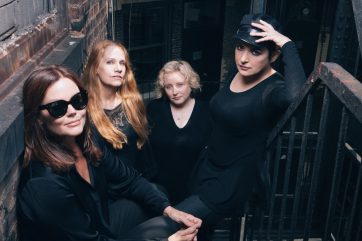
TheBanglesHand-selected from their personal archives, the Bangles’ new album, Ladies and Gentlemen . . . The Bangles!, is a 16-track collection of re-mastered Eighties-era rarities, demos and live recordings from the band that would burst out of the Paisley Underground music scene and into pop/rock super-stardom.

Unavailable for nearly 35 years, this “new” album, which is set for a June 24 release, includes their debut single, “Getting Out of Hand” (when they were called the Bangs), as well as all of the tracks from their self-titled EP, which was produced by Craig Leon (Ramones/Blondie).

With elements of Motown and punk-inspired beats as well as their trademark, jangly guitar sound and deep harmonies, Ladies and Gentlemen… The Bangles is as real and raw as it gets. Reminding us all just how connected Susanna Hoffs (vocals/guitar), Vicki Peterson (guitar/vocals) and Debbi Peterson (drums/vocals) still are to the music that inspired them.

I recently spoke with Hoffs and Peterson about the project, their careers, gear and more.

What made you decide to revisit your first EP?

Hoffs: It was the right time and we really wanted to make the music available to people. We had originally released the music digitally a few years ago but never got around to putting it into any other format. So when Omnivore Recordings approached us about revisiting it, we knew it was a cool idea.

Peterson: Part of the charm of this record is the distance of looking back and the perspective of what it sounds like. A lot of these songs were covers that we actually played in our live set at the time, and some of them like “Outside Chance” and “Steppin’ Out” pre-date The Bangs. I wanted to get the EP back out into the world again because I’m really proud of it. This album is very reflective of the things we love musically and why we became a band in the first place.

Hoffs: Whenever we do those songs in our set they take us full circle, but they’re just as fresh to us now as they were then. It’s the most core Bangles material that exists.

Let’s discuss a few of those tracks. What can you tell me about “Bitchen Summer/Speedway”?

Hoffs: That song actually pre-dates the Bangs. David Roback (Rain Parade/Mazzy Star) and I were really into surf stuff and started my very first band. David took that sound and “Mazzy Starred” it into a song we called “Speedway.” It was one that I brought in during the early period of the Bangs and we crafted it more.

“I’m in Line”

Hoffs: That was one of the first songs that we all wrote together as a band. It had Mamas and the Papas harmony but with a Motown feel underneath in the rhythm section.

How much influence did being part of the Paisley Underground have on you?

Peterson: It was a huge influence. Part of it was because it was a community of friends who were all inspired by the same kind of music. There was a musical aspect where I’d just get blown away by the anarchy and freedom that I heard on stage. It definitely influenced the way I approach guitar.

Hoffs: All of the work that we did to form the band and create our sound stemmed from our influences, and that’s what we shared with many of the bands we found ourselves working with. The fact that we found other like-minded musicians and that it caught on as a scene was an acknowledgement that things were going our way. It really developed a big following and there was this great feeling of community and camaraderie.

Read the rest of my
gw_logoInterview with Susanna Hoffs & Vicki Peterson By Clicking Here!

The Dead Daisies’ Doug Aldrich and David Lowy Talk New Album, Touring with KISS

DeadDaisiesAussie/American rockers the Dead Daisies’ new studio album, Make Some Noise, is a celebration of the ferocious arena sound of the Seventies. The album, which was produced by Marti Frederiksen (Aerosmith, Def Leppard), is set for an August 5 release and boasts an array of intense riffs, huge hooks and tasty melodies.

The current Dead Daisies lineup features an impressive arsenal of notable musicians, including David Lowy (Red Phoenix, Mink), John Corabi (Mötley Crüe, Ratt), Doug Aldrich (Whitesnake, Dio), Marco Mendoza (Whitesnake, Thin Lizzy) and Brian Tichy (Ozzy, Foreigner).

From the self-confident, rousing statement of the album’s title track to the infectiousness of songs like “Long Way to Go,” “Song and a Prayer” and “How Does It Feel,” Make Some Noise is the perfect soundtrack for summer driving—and pretty much everything else. The disc also features the Daisies’ spin on two classic cover songs—Creedence Clearwater Revival’s “Fortunate Son” and the Who’s “Join Together.”

And speaking of summer, the Dead Daisies recently announced they’ll be the opening act for Kiss for a month’s worth of dates on this year’s Freedom to Rock Tour.

I recently spoke to guitarists Lowy and Aldrich about Make Some Noise, the band’s upcoming summer tour, gear and more.

The-Dead-Daisies-2016---Groupshot-HiRes

How did The Dead Daisies come together?

David Lowy: I started the band in Australia with Jon Stevens—a great singer/songwriter and performer who took over the lead singer role in INXS after Michael Hutchence died. Jon and I originally decided to get together to write and wound up hammering out 25 song ideas that we later recorded in LA. The nature of the Dead Daisies is that it’s not the only thing the band members do. So when Jon left the band a year ago, John Corabi joined us. John’s been with a few bands, including Mötley Crüe. The lineup’s changed over time due to the nature of the band, but it’s a band for guys who love rock and roll to get together, record, tour and have a good time.

How would describe the sound of Make Some Noise?

Aldrich: For me, it’s straight-ahead, classic, Seventies-influenced riff rock. David and I each took one track (David on the right hand side and me on the left). We did a few overdubs for solos, but a lot of what you hear is taken from the original tracking. We really wanted to capture the initial vibe.

You can read the rest of my
gw_logoInterview with Doug Aldrich & David Lowy Here

Seth Avett Talks Signature Martin Guitar and New Avett Brothers Album, ‘True Sadness’

TheAvettBrothersIt’s going to another big year for the Grammy-nominated, alternative folk collective the Avett Brothers. Not only did they perform for the first time at New York’s legendary Madison Square Garden, but they’re also about to unveil their new album, True Sadness, which will coincide with another summer of touring.

True Sadness, which is set for a June 24 release, was produced by longtime collaborator Rick Rubin. The album represents the next chapter in North Carolina brothers Scott and Seth Avett’s ever-evolving career. In a letter to fans, Seth described True Sadness as “a patchwork quilt of styles” where “a myriad of contrasting fabrics makes perfect sense.”

I recently spoke to Seth about the new album and his signature Martin D-35 guitar.

How does True Sadness relate to some of the Avett Brothers’ previous albums?

I feel this record is probably the most dynamic one we’ve ever made. If you look at our previous records, you’ll find whispers an hints of our influences behind some of the music, but you only hear them in passing or small portions or perhaps. On this record, it’s more pronounced. When you apply that with our love for rhythm and gentle pieces of folk and rock, this record goes a lot of different places.

What was the writing process like?

We always try to be open-ended and without formula as much as possible. Generally, I lean toward musicality and am often led by a melody, where Scott is led more by a story or narrative. Eventually, we always find ourselves back wholly autobiographical viewpoint in a song. We draw just as much from our daily lives as we do from sitting around trying to write. When it comes to writing we stay open to all the sources, because there are an infinite number of them.

Let’s discuss a few tracks from True Sadness. What can you tell me about “Ain’t No Man”?

I jumped in after Scott had already planted the seed years before. I remember we were already in the studio working on demos when Scott came bursting through the door describing the idea. He came in bounding with so much inspiration that he could hardly contain himself. He started to reach for the guitar, but instead I told him not to and just sing the bass line to me and I’d transcribe it. We had never written a song like the before, so it was cool. So Scott sang me the bass line and it sprang out for there. It was a weird gestation of lightning in in a bottle.

Read the rest of my
gw_logoInterview with Seth Avett by Clicking Here!