Tag: Music

Stryper’s Michael Sweet and Oz Fox Talk 30th Anniversary of ‘To Hell with the Devil’

StryperBandIt’s hard to believe it’s been 30 years since Christian rock giants Stryper released To Hell with the Devil. The monster album, which features the dual-guitar attack of Michael Sweet and Oz Fox, spawned several classic tunes, including “Calling on You,” “Free,” “Honestly” and, of course, the title track.

These days, you’ll still find Stryper doing what they do best—delivering their uniquely infectious music and message to a fan base that’s hungry for both. Stryper’s latest release, Fallen, continues that trend and is considered by many to be their heaviest album to date.

Stryper is Michael Sweet (lead vocals/guitars), Oz Fox (guitars/vocals), Timothy Gaines (bass/vocals) and Robert Sweet (drums).

I recently caught up with Sweet and Fox before Stryper’s sold-out show at the Whisky A Go Go in Hollywood to discuss the 30th anniversary of To Hell with the Devil, new music, gear and more.

Stryper are about to play another sold-out show at the Whisky A Go Go. You guys have played there quite a bit over the years and even recorded a live album here. What do you like most about the venue?

MICHAEL SWEET: The Whisky is a legendary place. I remember the first time I played there; it was with Kevin Dubrow and Dubrow (they weren’t called Quiet Riot at the time). We’ve all been playing there on and off over the years with Stryper and with our solo projects. There’s a lot of history there and something special about it. It’s really small and there’s no place to put your gear. It’s a bit of a zoo—but it’s still the Whisky!

Stryper04.621

You’ve called Stryper’s new album, Fallen, as the band’s heaviest album to date. How have the new songs blended in with the classic Stryper hits?

SWEET: Perfectly. Our albums are all a little different, but when we play those new songs live, they all blend well together. It’s the same energy and there’s no trickery with the live production. We open with “Yahweh” and have also added “Fallen” and “King of Kings” to the set.

OZ FOX: “Yahweh” is such an epic song.

SWEET: It’s a larger-than-life song that’s got everything. It’s got a little bit of an [Iron] Maiden, [Judas] Priest and Metallica vibe and is also Stryper-ized. It’s a really cool tune.

Let’s talk a little about the 30th anniversary of To Hell with the Devil. What goes through your mind when you look back on that album with so much perspective?

FOX: I still can’t believe 30 years have passed. It’s a memory that just keeps going. I was actually just looking at the picture of us from Japan in the suits on our way over here today and was blown away.

You can read the rest of my

gw_logoInterview with Michael Sweet and Oz Fox by Clicking Here.

‘I Can Destroy’: Paul Gilbert Talks New Album, Gear and Great Guitar Escape

Paul-GilbertIt’s a question every artist has to grapple with: If you’re not pushing yourself creatively, how can you grow?
That’s exactly what Paul Gilbert tackles—with fervor—on his new solo album, I Can Destroy, which will be released May 27.

On the album, which was produced by Kevin Shirley (whose credits include Mr. Big’s 2011 album, “What If”), Gilbert cuts a wide swath of styles and textures. There’s the full-frontal assault of  “Everybody Use Your Goddamn Turn Signal,” the jazz-blues lament of “One Woman Too Many” (which also features Gilbert’s patented Makita drill-bit riffery) and the gut/heart punch of “I Am Not the One (Who Wants to Be with You).” Its playful title references the ubiquitous Number 1 hit Gilbert enjoyed as lead guitarist for Mr. Big.

I recently spoke with Gilbert about I Can Destroy, this year’s Great Guitar Escape, his current setup and more.

How would describe I Can Destroy in terms of its sound—and maybe even how it relates to some of your previous solo albums?

The album sounds like an electric brontosaurus, dropped from a 40-story building, landing on a giant sheet of aluminum foil, plugged into a 200-watt Marshall, in the key of F#! [laughs]. Seriously, there are three guitar players on the album—Tony Spinner, Freddie Nelson and myself. So we could do lots of three-part guitar harmonies. It was great to have a big band so I didn’t need to do overdubs. Tony and Freddie are also great singers, so we included lots of vocal harmonies, and whenever the bridge was too high for me, Tony would save the day.

How did you approach writing for this album?

I turn complaining into music! I’m thinking I might have invented a new style. I call it “cantankerous rock.” If you look at songs from my last few albums, you can see how I’ve been building up to this. “Get Out of My Yard” is certainly a cantankerous title. “Atmosphere on the Moon” [from Vibrato] was about being so misanthropic that I ask today’s young scientists to fabricate an atmosphere on the moon so I can escape their dreadful auto-tuned music here on Earth. “Everybody Use Your Goddamn Turn Signal” from the new album certainly sends a cantankerous message. But these are all lyrics, and guitar players usually care more about the guitar. Actually, I do too, but it’s a lot easier for me to write a meaningful guitar riff if I have a lyric to give the song some structure.

What was it like working with Kevin Shirley on this project?

It was very similar to when I worked with Kevin with Mr. Big. Only with this record, we recorded about twice as fast. We recorded my songs so quickly that I started to run out of them. That gave me the chance to do one cover—Ted Nugent’s “Great White Buffalo.” Overall, when I work with Kevin I know he’s going to steer me in the best direction to make the album sound great and rock.

I’d like to ask you about a few songs from I Can Destroy. Maybe you can tell me what inspired them, how they were written—or whatever comes to mind. Let’s start with “Everybody Use Your Goddam Turn Signal.”

I lived in Los Angeles for around 20 years. I love the place, but the driving can wear thin. I recently moved to Portland, Oregon, where I can walk and ride my bicycle everywhere. I’m hoping my misanthropic tendencies will relax a bit from being a pedestrian. Musically, I like that the riff swings. I love that the word “goddamn” is sung with big, beautiful harmonies. And I like making the turn signal sound with my guitar by picking muted high strings. The solo is a trade-off with me first, then Freddie and then Tony. The original performance had a much longer solo, but I cut it shorter for the album. Live, I’ll probably make it long again.

You can read the rest of my
gw_logoInterview with Paul Gilbert by Clicking Here.

‘Change of Fortune’: David Pirner Talks New Soul Asylum Album, Gear and Grave Dancers Union

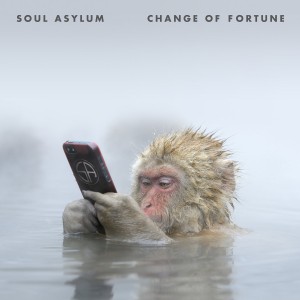
SoulAsylumChange of Fortune, the new album by Soul Asylum, is a record that’s nearly four years in the making.

It was recorded at a time when the band had been touring non-stop—not to mention going through lineup changes that included the departure of founding member Dan Murphy.

But the wait was worth it. Soul Asylum loyalists will be happy to know the group’s sound—and Pirner’s knack for storytelling—are front and center on Change of Fortune. Pirner and company have delivered a refreshingly honest album that happens to be a (welcome) sonic punch in the nose.

Soul Asylum is David Pirner (guitar/vocals), Michael Bland (drums), Winston Roye (bass) and Justin Sharbono (guitar).

We recently spoke to Pirner about the new album, his gear and more.

How would you describe the sound of Change of Fortune and how it relates to some of Soul Asylum’s previous albums?

Over the years, you really start to understand how the sound spectrum spreads itself out between the high end and low. I specifically remember sitting in a restaurant in Germany in the mid-Eighties. They put on our record “While You Were Out” and we all just looked at each other and were like, “There’s no fucking bass drum on this record! What the fuck?” [laughs]. There’s more low-end on this record than any other Soul Asylum record. I can really feel the power of Michael Bland and Winston Roye. I’m a low-end junkie and that was a goal worth achieving.

You’ve mentioned that this record is also one of your most honest. How so?

I’ve always liked the idea of having fewer people looking over my shoulder and being left to my own devices. It’s something I’ve always been chasing down. To that effect, the players in this band can play anything and are so open-minded and up for a challenge. I think that was a big part of it. To push the envelope about what the band can do.

How did you approach songwriting for Change of Fortune?

It was pretty much the same way I always do it. A seed usually happens: either a phrase or a melody or a chord progression. I’m looking at a piano and acoustic guitar right now and I also have a Pro Tools studio in the basement. Between those three things is where the seed comes from, and I’ll start recording and see where it goes. But it’s still fun sometimes to just walk into a practice space with an acoustic guitar, start playing something and having everyone else join in.

Read the rest of my
gw_logoInterview with Dave Pirner by Clicking Here!

Ana Popovic Previews Her New Three-Album Project and the Experience Hendrix Tour

AnaPOn May 20, guitarist Ana Popovic—who, as we know by now, can play the hell out of the blues—will unleash Trilogy, an epic new three-album set.
The new package is unique because it will highlight Popovic’s tasteful shredding and soulful voice in three different elements: blues, jazz and funk.

Growing up in Serbia under the Milosovic regime, Popovic had to fight for her right to be blue. A battle in which she has obviously triumphed. She’s performed at blues and jazz festivals worldwide, sharing the stage with a veritable who’s who of blues legends.

We recently caught up with Popovic to discuss the Trilogy project—which includes guest appearances by Joe Bonamassa, Robert Randolph and more—plus her role on the Experience Hendrix tour, her gear and more.

How did the idea for Trilogy begin?

I’ve actually had this idea for a few years. There’s always been a little bit of everything on my records: blues, jazz and funk. Fans had always been coming up and telling me how much they loved my sound. They’d tell me they would often make compilation playlists from all of my records. One would say, “I made a set of blues songs for me and another set of jazz songs for my wife.” I thought that was an interesting idea.

Then last year, we had a big incident where our touring van was stolen with all of our gear in it. We were in the middle of a tour and it was through the tremendous support of the fans that we were able to get back on the road. I was so touched by how much they had helped us that I wanted to do something in return. I wanted everyone to have a lot of music but not have to buy three records. I wanted to approach the music from different sides. I’m giving three different sounds of my music to them: three different producers, three different bands and three different recording studios. As a guitar player, that was the biggest goal.

How did you approach writing for this project?

The first official demos for the project began in March of last year. Some of ideas for this album are from a long time ago, because I never give up on the song. I bring ideas to every session, and if it doesn’t match with the band that’s recording it, I’ll leave it. But I’ll never give up on it. I’m always planning and figuring out how they should be done and would always make notes to go with them—Is this jazz? Is it blues? What drummers or producers can I use? Everything was well thought out, and I gave myself a lot of time.

Read my complete
gw_logoInterview with Ana Popovic by Clicking Here!

Lita Ford Talks New Memoir, ‘Living Like a Runaway’

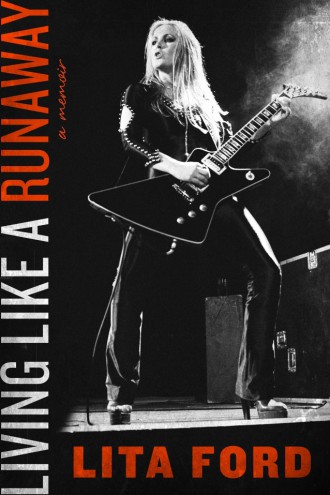
LitaBookLita Ford’s new memoir, Living Like a Runaway, is jam packed with stories of a truly eventful—and impressive—rock and roll life.
In the autobiography, Ford details her years as a teenager with the Runaways, getting caught with a young Eddie Van Halen in a bathroom, her battles with management and trysts with guys like Nikki Sixx, Tony Iommi, Ritchie Blackmore and Glenn Tipton.

She even devotes ample space to her turbulent marriage and how she subsequently lost access to her sons through parental alienation. Simply put, Living Like a Runaway is a story of life and love from the reigning Queen of Metal.

I recently spoke with Ford about the book and her new album, Time Capsule, which is a collection of previouly unreleased material from the Eighties. You can check out our full interview below.

What made you decide to write a book at this stage of your career?

I really wanted to tell my story. As a female in the music industry—a man’s world—trying to become successful, I wanted to document it, and I wanted to be able to leave something behind so people would know what was going on inside of my life. The hurdles I had to jump and the things I had to do to be where I’m at today and to hopefully carve a path for others.

What was the writing process like?

At first, it was difficult trying to get a co-writer who could follow me. Because there’s so much crammed into my life, it was sometimes hard for me to get the point across. But I didn’t want the book to come out in any other shape or form. It had to be true and it had to be real…and we did it.

You can read the rest of my
gw_logoInterview with Lita Ford by Clicking Here!

‘We Are Twisted F***ing Sister’: Jay Jay French Talks New Documentary and Final Tour

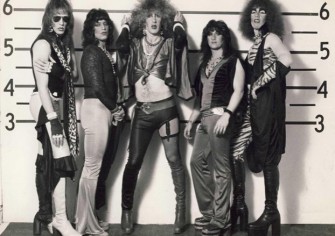
TwistedSister621The New York club scene in the Seventies was unlike any that had ever existed before.
First of all, the drinking age was only 18, which meant that kids as young as 15 were getting served with fake ID’s.

More to the point, it also was a time when thousands of loyal fans routinely went out to see one of the greatest live rock bands of all time, Twisted Sister.

Directed by Andrew Horn, We Are Twisted F***ing Sister is a new documentary that captures Twisted Sister’s rise from bar band to international super-stardom. Recounted directly with rare concert footage and photographs, as well as interviews with the band, management and some of their biggest fans, the film is the never-before-told story of the 10 grueling years leading up to Twisted Sister’s breakout success.

The film, the first-ever documentary of the band, opened in Los Angeles February 15. It will open in New York this Friday, February 19, and there’s a one-night-only event scheduled for Chicago’s Music Box Theatre February 22.

On February 23, the film will be released on DVD, Blu-ray, VOD and digital formats with two hours of bonus material and director commentary.

Twisted Sister consists of Dee Snider, Jay Jay French, Eddie Ojeda and Mark “The Animal” Mendoza. Drummer A.J. Pero died in 2015.

I recently spoke with French about the new documentary as well as Twisted Sister’s plans for 2016.

I’d like to start off by asking you about the recent passing of David Bowie, who played a big role in your early years. How influential was he to you and your music?

He was a huge influence. Hunky Dory and Ziggy Stardust changed my life. They altered my world and changed me from a Grateful Dead hippie into a glitter guy. Where the Beatles gave me my dream, Bowie gave me direction and took me to the stars. I cut my hair off and dyed it blonde because I wanted to be Mick Ronson.

Everything just sort of hit at the same time after that. I used to see the New York Dolls every Sunday at the Mercer Arts Center. One night, Bowie was there. Then Bowie played Carnegie Hall on September 28, 1972, and I said, “That’s it, I’m sold!” That’s when word went out and I soon got a call from someone who told me some guy he knew had told him I wanted to be in a glitter band. That band was Silver Star, which changed its name in February 1973 and started performing under the name Twisted Sister.

How did the idea for the Twisted Sister documentary originate?

It came about through a consonance of coincidences. I was being interviewed by the director, Andy Horn, for another documentary on the life of a German-born performance artist named Klaus Nomi. It just so happened that Klaus and Twisted Sister had crossed paths one night in the early Eighties when Klaus opened up for us at a nightclub in New Jersey. The reaction of the crowd to his performance was very negative and a complete disaster. So they wanted to discuss that night with me.

When Andy came over, I asked him how much he knew about Twisted Sister. He admitted he didn’t know much, so over the next few hours of talking I overwhelmed him with the story about Klaus and other historical facts. That’s when he said, “Whoa! This is another story that needs to be told!” That’s how it evolved.

You can read the rest of mygw_logoInterview with Jay Jay French by Clicking Here!

Bangles Guitarist Vicki Peterson Discusses the 30th Anniversary of ‘Different Light’

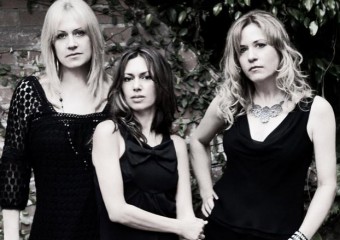
BanglesWhen the Bangles released their sophomore album, Different Light, in 1986, it represented something of a departure from the guitar-driven, Sixties-oriented sound the band had been known for.

With its eclectic mix of radio-friendly pop, dance and Motown groove, Different Light would go on to become one of the year’s biggest albums, yielding the hits “Walking Down Your Street” and “If She Knew What She Wants,” plus the Prince-penned “Manic Monday.”

The album also gave the Bangles their first Number 1 song, the quirky yet strangely infectious “Walk Like an Egyptian.”

Below, Bangles guitarist Vicki Peterson recalls the making of Different Light and the tidal wave of success that followed. We also discuss her current work with the Bangles, the Psycho Sisters and Continental Drifters, gear and more.

When you look back at Different Light with 30 years of perspective, what comes to mind?

Different Light was a really important record for us and transitional in some ways. We had started out as a very raw garage band, and the first full record that we did with Columbia had more of that Sixties, guitar-rock sound. Different Light has some songs that kind of veered away from that. In some ways, it was a little uncomfortable, but new things always are.

What prompted that change in direction?

We were trying to feel our way through growing up as a band, and that started happening with that record. It was a band decision. Instead of staying in one spot musically and working directly from that Sixties, guitar-based platform, we launched into other things. David Kahne (producer) did a lot to take any ideas we had and was musically creative as an arranger. He was actually the one who brought us “Walk Like an Egyptian.”

You can read the rest of my
gw_logoInterview with Vicki Peterson by Clicking Here!

Rival Sons Guitarist Scott Holiday Talks New Music and Black Sabbath Tour

RivalSons-ScottHolidayLegendary rockers Black Sabbath kicked off their final tour earlier this month. And the band that was handpicked by Ozzy to join Sabbath on the road for this momentous trek? Long Beach, California, rockers Rival Sons.

Rival Sons–Jay Buchanan (vocals), Scott Holiday (guitar), Michael Miley (drums) and Dave Beste (bass)—are part of Sabbath’s North American, Australian and European dates; they’re also headlining a few shows of their own along the way.

The band is still riding high on its latest release, Great Western Valkyrie: Tour Edition, which includes an extra disc of bonus tracks and rarities. Rival Sons also plan to release a new album later this spring.

I recently spoke with guitarist Scott Holiday about Rival Sons’ upcoming tour with Sabbath and more.

GUITAR WORLD: What goes through your mind when you think about opening for Black Sabbath on their last-ever tour? 

We’ve been touring for years now and have had a chance to tour with many of our heroes and other great acts, and it’s been an honor. But a tour like this is something you really hope comes around if you’re a band. ANY band. It’s surreal. And the way we got it was probably the best thing.

How did it all come about?

Usually, tours like this happen in the back office between agents and managers. But Ozzy, Sharon [Osbourne] and the Sabbath establishment didn’t do it that way. We had been nominated for Album of the Year by Classic Rock magazine and were asked if we’d like to perform at the awards show. We’ve done it a few times before and it’s such a great gig. The room is filled with your heroes and fans, and we jumped at the opportunity. So we played a few songs and had a really great response. Then as we were leaving the stage, I could hear Sammy Hagar, who was hosting and is a good friend of the band, say, “I hope Sharon and Ozzy saw that!”

Turns out, they did see it. They had been in the front row and ended up coming back and meeting us a little bit later. It was an amazing feeling. They gave us huge accolades and were very excitingly telling us how much they had enjoyed the show and pretty much proposed the tour to us on the spot. Our manager was there and people began talking immediately. That’s really how it happened.

You can read the rest of my
gw_logoInterview with Scott Holiday by Clicking Here!

3 Doors Down Guitarist Chris Henderson Talks Gear and New Album, ‘Us and the Night’

3DDIt’s hard to believe it’s been nearly five years since Grammy-nominated, multi-platinum rockers 3 Doors Down released their last album, Time of My Life.

But fans who’ve been clamoring for new music from the Mississippi rockers are about to get their wish granted—in true guitar-driven fashion.

3 Doors Down recently announced their sixth album, Us and the Night, which will be unleashed March 11. The album’s first single, “In the Dark,” was released January 15, and you can hear it below.

Us and the Night, which was produced by Matt Wallace (Maroon 5, Train, Faith No More), showcases the robust riffs and hooks that’ve helped make 3 Doors Down one of rock’s most instantly recognizable bands. That said, it also emphasizes a new groove and swagger.

3 Doors Down—Brad Arnold (vocals), Chris Henderson (lead guitar), Greg Upchurch (drums), Chet Roberts (guitar) and Justin Biltonen (bass)—are planning a huge summer tour in support of the album.

We recently caught up with Henderson to ask him about the new music, his gear and more.

Did the band try to go in any particular direction when recording Us and the Night?

Every time we’ve recorded a record as a band we’ve always made some sort of conscious decision of where we wanted to go or not wanted it to go. Instead of doing that, this time the strategy we took in the pre-production phase of writing the songs was to push left really far until it started to become a little bit uncomfortable.

Then once we got to that point, we’d let it organically fall back into a rock song. Although it’s not the same, this record is more like Seventeen Days and The Better Life than any of the records we’ve made after those two, in my opinion. It’s got modern elements along with some of those rock elements, and I think we kind of molded both of those together. At the end of the day, it’s got all of the elements of a 3 Doors Down record.

You can read the rest of my
gw_logoInterview with Chris Henderson by Clicking Here!

Steve Vai Talks Tony MacAlpine Benefit Show, Upcoming ‘Passion and Warfare’ Remaster and Next Vai Academy

vaiAs recently reported, guitar greats Steve Vai, Zakk Wylde and John 5, along with drummer Mike Portnoy, bassist Billy Sheehan and keyboardist Derek Sherinian, are joining forces to play a benefit concert for guitar and keyboard virtuoso Tony MacAlpine, who was diagnosed with colon cancer earlier this year.

The show will take place December 12 at the Wiltern Theatre in Los Angeles.

In addition to this extraordinary musical event, Vai, John 5, Joe Bonamassa, Steve Stevens, Paul Gilbert, Steve Lukather and Joe Satriani have all graciously donated a few of the their personal guitars to be auctioned during the event. MacAlpine’s gear manufacturers—Ibanez, Hughes & Kettner, EMG Pickups, Ernie Ball, Source Audio and Voodoo Lab—also have donated equipment to be raffled.

All proceeds will assist MacAlpine and his family.

Tickets for the show are available here.

For fans who are unable to make the show but still want to contribute, a GoFundMe campaign has been set up for MacAlpine. You can contribute to the fund here.

I recently spoke to Vai about the event—dubbed the Benefit Concert for Tony MacAlpine—and a lot more in this exclusive interview.

GUITAR WORLD: Tell me about your relationship with Tony MacAlpine and how you guys met.

Back in the Eighties when there was this emergence of virtuoso-style guitar players, there was this handful of guys that had extraordinary chops and were always raising the bar. Tony was a part of that movement in a big way. He made some excellent records that really showcased his tremendous guitar finesse and virtuosity.

So I had always known of him, but it wasn’t until years later that we actually met. I was putting a band together and needed a guitar player who could also play keyboards, and I had heard that Tony could play some keyboards. I also knew having someone like Tony in the band would bring everything to a whole different level. It worked out great and we had so much fun. Tony’s a lovely guy and it was such a pleasure to tour with him. Some people are just naturally gifted, and Tony’s one of them.

So when Mike Mesker [Tony’s manager] called me about the benefit, I was completely on board. It’s since snowballed into what’s going to be an absolutely incredible event to raise money to help Tony. There’s a tragedy in it, but there’s also the divine shining through from all the love and support he’s getting from everyone he’s worked with and who’s supported him.

Was there anything you didn’t already know about Tony that surprised you?

When we were on tour, we were at a venue where they had a piano set up in the back room, and I remember hearing this piano playing from around the corner. At first, I thought it was a concert pianist that had somehow been left over from the night before. But when I go around the corner there’s Tony playing this Chopin etude absolutely flawlessly. Just like an accomplished concert pianist with tremendous accuracy and emotional investment. It was something I never expected. After he had finished, I said, “What the heck was that?” He told me it was a Chopin etude. I asked him if he could play some more and that’s when he said, “Which one? I know them all.” [laughs].

Read the rest of my
gw_logoInterview with Steve Vai by Clicking Here!