Although it’s been more than 20 years since Starship’s last album of all-new material [1989’s Love Among the Cannibals], the band’s latest release, Loveless Fascination, was certainly worth the wait.
Not only has vocalist Mickey Thomas been able to maintain his unique sound and range over the decades, but he’s added more of a thickness and growl to his vocals, allowing him to scream better than ever.
Produced by Jeff Pilson [Foreigner, T&N, Dokken], Loveless Fascination stays true to the band’s signature classic-rock sound, providing a much harder edge while taking Starship into the 21st century. I recently spoke with Thomas about working with Pilson on Loveless Fascination and a lot more.
GUITAR WORLD: It’s been nearly 25 years since your last studio album, Love Among the Cannibals, was released. Why the long wait?
I’ve started several projects during that time period, but for various reasons they never came to fruition. In order to make a really great record, you need to have a great team, and that means great songs, production, management and label. All of those elements never seemed to come together at the same time for us, but when this album came along everything just fell into place. I teamed up with Jeff Pilson, who’s not only a great producer, but also a great musician and songwriter. We instantly had this great chemistry and I realized this was the kind of Starship album we needed to make.
You can read the rest of my Guitar World interview with Mickey Thomas
by Clicking Here!
I’ve read quite a few mixed reviews of Rob Zombie’s latest release, “The Lords of Salem”; most of which have either applauded the director for taking a chance on a story about the Salem witches, or berating him for a weak script, uninspired character development and a theatrical plot that seems to go no where.
Having now seen it for myself, I can concur with the latter’s assessment.
The Lords of Salem is Zombie’s third horror film [OK, actually it’s his fifth, but I refuse to count any attempt at remaking the two original Halloween movies]. And whereas Zombie used “House of 1000 Corpses” and “The Devil’s Rejects” to showcase more of the carnage and body count, he takes a more methodical, artistic approach with “The Lords of Salem”.
Local D.J and recovering addict Heidi Hawthorne (Zombie’s real wife, Sherri Moon Zombie) receives a mysterious package at the radio station from a band calling themselves..(wait for it).. “The Lords.” When played on air, the record’s atonal melody evokes a strange response from Heidi and a certain female segment of the listening audience; summoning long-slumbering witches of Salem and drawing them to the only living descendent of their eternal enemy, the Reverend John Hawthorne. Someone who just happens to be…. Yep, you’re right again! Heidi Hawthorne!
Meanwhile, local historian and author Francis Matthias (Bruce Davison) makes a guest appearance on Heidi’s radio show and begins to notice an odd connection between Heidi, the “Lords” record and the history of the town. His investigation leads him to visit Heidi at her apartment building where he encounters a trio of strange women (Judy Geeson, Dee Wallace and Patricia Quinn) who have taken an interest in protecting Heidi. It’s then when things really start to get out of the frying pan and into the fire.
If you’re into a witch coven returning from the 17th century to raise the prince of darkness, you’ve certainly come to the right place. The Lords of Salem is filled with shocking imagery; including some nudity that should not be seen by the human eye. Thankfully (as seems to be the case in every one of his movies) we do get the gratuitous shot of Zombie’s wife’s bare backside to balance things out.
Zombie has described “The Lords of Salem” as what it would be like if Ken Russell directed “The Shining” and indeed, there are elements of this scattered throughout the film, along with a haunting orchestral score.
Although I do have to join the chorus and poo poo him for a weak, cliché script and blase characters, I applaud Zombie for taking the mindless hack and slash out of horror and replacing it with elements of art. I wasn’t so much scared watching “The Lords of Salem” as I was disturbed. And perhaps that’s what the director really had in mind in the first place.
Little River Band is showing no signs of slowing down. The band continues to perform up to ninety shows a year, bringing along its arsenal of radio hits that include “Take It Easy On Me”, “Cool Change” and “Reminiscing”. To date, Little River Band has scored 13 Top 30 Hits and has sold more than 30 million records.
“Cuts Like A Diamond” is the first disc of new original Little River Band material since 2003’s Test Of Time. For this project, the band went for a more west coast 80’s sound, while still embracing the harmony guitars, big vocals and contemporary feel they’re known for. The result is a well-produced album that’s easily on par with the rest of its classic catalog.
I spoke with bassist Wayne Nelson and guitarist Richard Herring about the new album and more.
What type of sound were you trying to go for with “Cuts Like A Diamond”?
Nelson: The record label (Frontiers) approached us with a sound they had in mind. They wanted an 80’s AOR Little River Band album. There’s a wide range of material that the band has already done, and Rich gets a lot of credit for creating the landscape of this record. He’s a great producer and was in charge of the guitar parts and overdubs.
Herring: We strove to satisfy the label’s request for an 80’s production, but preserved the signature sound of LRB like big vocals and guitar harmonies. That’s what people think about when they think of Little River Band; the big vocals and high harmonies. That’s the key, and the guitars play a supporting role in that.
What was the writing process like?
Nelson: All of the songs came to me first, and the ones that moved the meter I sent to the record company’s ears. The road map was already in place so I knew where to aim for, but there were certainly some things about the 80’s that I wanted to leave behind, like reverbs that never end and the bad keyboard sounds [laughs].
Let’s talk about a few tracks from the album: Lost and The Lonely
Nelson: You can stack that song up against “Lonesome Loser” or some of the others, but that’s a Little River Band chorus. The interesting story was the original arrangement of the song had the uplifting chorus, but the verses were kind of dark and followed a different path. I remember asking the writers to change the verses to match the inspiration of the chorus and they came back the very next day with what you hear on the album. The video for the song is also powerful, especially considering the times we live in now. Those guys are defending people who are lost and lonely and can’t standup for themselves, and I couldn’t be prouder.
Who Speaks For Me
Nelson: The record label was concerned about the song’s subject nature at first, but I insisted we do it. It’s been a passion mine for years to try and do something to shed light on domestic abuse. When I started writing, I immediately thought of the kid alone in the dark and scared to death. The story just unfolded from there. A lot of people have asked if the message in the song was from personal experience. I tell them that it didn’t happen to me, but it’s happened to plenty of others and it was something I felt needed to be said.
Wayne, let’s discuss ‘Time Exposure’, which was the album right after you joined Little River Band.
Nelson: So much of the success and impact of that record came from George Martin (producer). When I joined the band, they were about ready to come apart at the seams. Four different people each wanted to take the band in four very distinctly different directions. No one was really getting along, and the band was literally being held together by its success. We all knew we had to do a record and suddenly, here comes the producer for the Beatles. George literally smoothed out the waters and got us through those six weeks to get the record out. We wound up getting three top tens out of it: Night Owls, Man On Your Mind and Take It Easy On Me.
Little River Band(l to r: Wayne Nelson, Ryan Ricks, Chris Marion, Rich Herring, Greg Hind)
Rich, what’s your current set up like?
Herring: I’m using two class-a amps in stereo. They’re called New Vintage and were built in Minnesota by a guy named Nick Patullo. We were on a fly date using rented gear and they had some of Nick’s amps there. I remember playing through it and couldn’t believe how great it sounded. I bought one and started using it in stereo with my Matchless C-30. Later, I called Nick to see if he had a head version of the same thing. He told me that he didn’t have one, but he could build it! The one that he built me one sounded exactly the way I wanted it to. He didn’t have a name for it, so he decided to call it the RH-36. So I now have my own amp [laughs].
Now that the album is finished, what satisfies you the most?
Herring: It’s put new life into the show. It’s also an honor for me personally to play the old hits and deliver them night after night. I like to tell people that I get to play “Cool Change” every night, and I never get tired of it.
Firehouse guitarist Bill Leverty’s latest project, Flood The Engine is classic, melodic hard rock at its finest. Together with Keith Horne (bass), Andre LaBelle (drums) and Jimmy Kunes (vocals), Leverty’s managed to channel elements from many of his favorite guitarists while also adding his own personal flair, giving the album a much broader appeal.
In addition to the killer vibe this combination of players brings to their own original compositions, the eight track opus also includes two tasty renditions of mid-70’s gold: “All The Girls Are Crazy” (Back Street Crawler) and “Love Is Alive” (Gary Wright).
I sat down with Leverty to talk Flood The Engine and more.
What started the Flood The Engine project?
Keith Horne called me up one day and asked if I’d be interested in putting together a recording project. I knew that he had recently moved back to the area and doing anything that Keith’s involved with is a huge honor. I asked him who he had lined up for a drummer and he said Andre (LaBelle); who I’ve known since the early 80’s. Andre and I had always wanted to work together, but were both in different bands.
How did you hook up with Jimmy Kunes?
When we were looking for singers, I suggested him. Jimmy has elements of all of the great classic rock singers all rolled into one. When his vocal cords rub together, it sounds so good. Once we had all of the pieces in place, Jimmy came down on a train from New York City and we wrote and recorded the album.
How was writing for this album different from writing with Firehouse?
It’s kind of similar in some ways and different in others. Generally, I’d come up with a guitar riff and then send it off to Jimmy; or Andre, Keith and I would assemble a song instrumentally together and send it to Jimmy. Sometimes we’d give him an idea of what we had in mind, but we always gave Jimmy the freedom to do what he wanted to with his voice and lyrics. We wanted to make sure that everybody could put their own individual style into the project and then we’d showcase it all as a group.
Let’s talk about some songs on the album: “Lay It All On Me”.
That was the first song we wrote for this record. I had sent Jimmy a demo of some music with just a basic beat and a guitar riff. He immediately got some lyrics and a melody together. He also had an idea of what to use chord wise. In addition to being a phenomenal singer, he’s also a very accomplished guitarist.
“All Your Trouble”.
That one started with a guitar riff as well. I remember we had worked out the music and then Jimmy [with his creative mind] came in and just started scribbling down lyrics. To watch him work is amazing. He just has a pad of paper and a pen and scribbles like there’s a typewriter going off inside of his head and he’s just trying to keep up with it [laughs].
“Open And Undone”.
That song started out with Andre’s drum beat. He and I sat in a room together for a few hours and put together the music for it. The song has a simplistic rhythm, but a very unique beat. It creates such a perfect mood. I remember Jimmy listened to it for a while and then had another scribble session where he got very spontaneous. It was another one of those things where we gave him a skeleton of a song and he just went to town on it.
In addition to six originals, you also have two covers on the album. [“All The Girls Are Crazy” & “Love Is Alive”]. Was there a reason why you chose those particular songs?
Jimmy and I had recorded a version of “All The Girls Are Crazy” together a few years ago. He and I have a common ground appreciation of Paul Kossoff, and that song in particular was one of our favorites. What Andre and Keith added to it was awesome.
Keith was the one who mentioned that he had always wanted to do a version of “Love Is Alive” and it was the perfect suggestion. I remember hearing that song when it first came out and thinking what a great tune it was. People who hear it today can still identify with it lyrically and the melody works so well with Jimmy’s voice and soulful delivery. It’s such a unique song and it also gives Keith a chance to shine as well.
What gear are you using for your live rig now a days?
I’m using a Fractal Audio Axe Fx II. I go from that direct into a monitor console and straight into the front house PA. It’s a two rack space unit that you plug into. It has over a hundred different amp and speaker cabinet combinations along with every rack effect you can imagine. So it can be used to sound like any amp you want. I’ve actually sold nine of my amps since I’ve gotten it. It’s the greatest thing that’s happened to the electric guitar since the pickup.
What satisfies you the most about Flood The Engine?
The goal of this project was to put together an album that we all felt good about. For me, being able to get together with these guys was an honor, and I’ve enjoyed every minute of the process.
Since the mid 1980’s, John Elefante has been forging his own path as a multi-award winning vocalist, producer and member of the band Mastedon. Elefante and his brother, Dino also founded the popular Sound Kitchen studio which became a hot spot for artists like Buddy Guy and Bruce Springsteen.
But Elefante is perhaps best known for his tenure as lead vocalist for the band Kansas in the early 80’s, contributing (among other things) the guitar driven song “Fight Fire With Fire” while performing alongside guitarists Richard Williams and Kerry Livgren.
Fans of the Kansas sound will be delighted to discover that Elefante’s new solo album, “On My Way to the Sun” showcases Williams’ guitar work (along with Kansas violinist David Ragsdale) on the roller coaster track “This Is How The Story Goes.” The album also features the song, “This Time” which Elefante wrote about his adopted daughter who was nearly aborted. The video for the song has since gone viral on You Tube.
I spoke with Elefante about his latest album and video. We also discuss how he joined Kansas and his most memorable moment with the band.
Tell me a little about the making of On My Way To The Sun.
The record industry has changed so much over the past few years that for this project I decided to hook up with Kickstarter. The cool thing about it is, your fans don’t give you money apprehensively. They’re glad to be a part of the project and that really inspired me. It was a team effort and I really wanted to deliver the best record I could.
You have Dave Cleveland doing a brunt of the guitar work on this record. What’s it like working with him?
Dave Cleveland is one of the most underrated guitar players in the world. He’s carved out a niche in the Christian market and is the go to guitar player for any style of music. I can’t say enough about him. He’s the most imaginative guy I’ve ever worked with.
Tell me how you recruited Kansas members Rich Williams and Dave Ragsdale for the song “This is How The Story Goes”.
Originally, I had sent the song to Phil Ehart (drums) and asked him if he’d like to play on it. Phil loved the song, but couldn’t commit because of a scheduling conflict. That’s when I decided to send it to Rich. He loved the song and then sent it to Dave, who also wanted to be a part of it. You have to admit, for a song that sounds a lot like Kansas by nature it becomes even more validated when you have a few of the guys in the band playing on it [laughs]. I really wanted one roller-coaster ride of a song that takes you on a journey, and this one was it.
What was the inspiration behind the song, “This Time”?
I wrote that song from a very honest point of view. It’s based on the true story of how my daughter came into the world. She was almost aborted and thank God she wasn’t. I was literally writing two lines at a time and singing it when I wrote it. The song just flowed line by line.
Were you aware of the controversial nature of the song as you wrote it?
When I sat down to write, there was never any intention of me writing a pro-life or anti-abortion song. But in telling the story, I had to write about how she almost didn’t come into the world. When you put the visual to it from the video, all of that stuff suddenly comes into play. The first week we had over 100,000 views. Comments on it were both good and bad, but that’s to be expected. People are passionate on both sides. But I believe in the sanctity of life, and this is my side of the story.
Tell me how you got into Kansas.
I was out in California trying to score a record deal when I heard that the singer in Kansas had left the band. So I called up my attorney and asked him what he thought about trying to get my demo to those guys. He says “Done”. I said “What do you mean, ‘done’?” Apparently, the attorney for Kansas was literally right in the next office. So my attorney walked my demo over to their attorney [laughs]. Next thing you know, I’m hearing from their manager. Everything all came together.
Kansas was one of the biggest bands back then. What was it like going to the “big time”?
Everything was happening so fast that I didn’t really have much time to think about it. I was concentrating on getting songs on the new record and putting my best vocal performances forward. Then, we immediately started rehearsing for a tour.
Can you tell me the origin and meaning behind the song “Fight Fire With Fire”?
My parents had converted their garage into a studio and my brother and I used to spend hours and hours there. That’s where we wrote it. I think the whole song came together in about 45 minutes. The message behind it is “I’m not going to be a wimp about what I believe. I’m going to stand up and fight fire with fire”. It’s kind of the world we live in. Whenever the band plays it live now, they dedicate to the military, which is awesome. Everyone’s fighting for some kind of cause.
What’s your best memory of being in Kansas?
I remember we played this all day event in Hershey, Pennsylvania. It was in a big stadium and there were probably around 50,000 people there. It was us and bands like Journey and REO Speedwagon. We were going on right as the sun was going down; the perfect time. I remember feeling like there was a competition going on, and I wanted to show everyone that Kansas was the best band there. Everything was perfect and the band was so on. I’ll never forget that day.
For more on John Elefante, check out his official website by clicking here!
This December, BOSTON’s latest studio album, Life, Love & Hope will be released on Frontiers Records. More than a decade in the making, Life, Love & Hope features 11 tracks replete with the classic and beloved BOSTON sound, as well as the latest in the evolution of Tom Scholz’ musical artistry.
Diverse yet cohesive, this long-awaited album has something for everyone and will fulfill the expectations of existing fans, while exposing a new generation to one of rock and roll’s great acts. Scholz says, “These are songs from the heart, each of them taking many months of effort to write, arrange, perform and record, always up to the demands of BOSTON’s harshest critic, me. They have all been meticulously recorded to analog tape on the same machines and equipment used for BOSTON’s hits for the past 35 years.”
BOSTON burst onto the music scene with their eponymous best-selling debut album in 1976, and never looked back. With over 17 million copies sold, Boston generated hits such as “More Than a Feeling,” “Peace of Mind,” and “Smokin’,” rock staples that are still in heavy rotation today. Their second effort, Don’t Look Back was another chart-topper that confirmed their place in rock history, followed by Third Stage, which hit #1 on the charts, with the top single of 1986, “Amanda.” With over 31 million albums sold to date, BOSTON’s music has stood the test of time, as evidenced by live BOSTON audiences that spans generations.
Life, Love & Hope includes lead vocals from Brad Delp and prodigy Tommy DeCarlo, as well as Kimberley Dahme, David Victor, and songwriter Scholz himself. This release features tracks that have the characteristic BOSTON trademark guitars, harmonies, and immaculately-crafted sound. “I intentionally stayed close to the early BOSTON style on some of the songs, even using the same amps and instruments; on others I let my imagination run wild,” says Scholz.
A beautiful full-color booklet with notes from Scholz and detailed song credits accompanies Life, Love & Hope, available now for pre-order on Amazon national shops in UK, Germany, Spain, France and Italy and all other fine retailers across Europe.
Life, Love & Hope tracklisting includes: Heaven on Earth; Didn’t Mean to Fall in Love; Last Day of School; Sail Away; Life, Love & Hope; If You Were in Love; Someday; Love Got Away; Someone (2.0); You Gave Up on Love (2.0); The Way You Look Tonight.
Actress Jena Sims is a star on the rise. The beautiful Winder, Georgia native and 2007 Georgia Miss Teen USA has already racked up some impressive credits, having worked alongside Hollywood legends Roger Corman and John Landis.
On November 1st, Sims is set to share the big screen with Oscar winners Morgan Freeman, Robert DeNiro, Michael Douglas and Kevin Kline in “Last Vegas”, a film which tells the story of four life long friends in their late 60’s who decide to have a soiree in Las Vegas to celebrate the last of them to get married.
Sims is perhaps best known for her performance as Cassie Stratford in the 2012 summer’s hit “Attack of the 50 Foot Cheerleader”, a role she was personally selected for by producer Roger Corman.
I had the pleasure of speaking with Sims about her film career and charitable work in this exclusive interview.
How would you describe the story of “Last Vegas”?
I like to think of it as kind of a geriatric version of “The Hangover” [laughs]. It’s a story about four older guys who go to Vegas for one last hoorah. Craziness ensues, but in the end, everyone comes together and has a great time. For me personally, it was amazing to be involved in a movie with so many Oscar winners. It’s a dream come true.
What can you tell me about your role as Abby in the film?
Abby is Jerry Ferrara’s (Entourage) love interest. Jerry has a side story in the film and Morgan Freeman’s character teaches him how to pick up a girl and flirt with her properly. I play the role of the girl that he courts.
Let’s discuss your role in “Attack of The 50 Foot Cheerleader”. What attracted you to that story?
The character had “me” written all over it. I was a huge nerd in high school and graduated near the top of my class. I was also involved in cheering and dance and joined a sorority when I went to college. So it was pretty much my life story, minus the whole growing thing of course [laughs]. It’s comedy, but In a way it’s an ugly duckling turns into a beautiful swan kind of story. It’s about finding yourself and where you belong and about being true to yourself.
What was the filming process like?
We shot for about two months in and around LA. It was a great experience and one of my favorite sets to be on. The younger members of the cast were all close in age so we all got along great and really bonded. We all still keep in touch with each other.
Was acting something you always wanted to do?
Growing up, I always knew I wanted to be an actress. I used to watch soap operas on TV with my mom and remember thinking how beautiful the actresses were and wanting to be just like one of them. When I was around 15, I started competing in pageants and in 2007 was crowned Miss Georgia Teen USA which was televised nationally. It was my first taste of entertainment.
What other projects have you been working on?
Over the summer, I filmed “American Beach House”, which also stars Mischa Barton and Lorenzo Lamas. I’ve also finished a crime drama called “Kill The Messenger” which is based on a true story. It’s about cocaine smuggling in Nicaragua and the CIA’s role in it.
Currently, I’m working on a comedy with Jamie Kennedy called “Angel Investors” and in January, I’ll be heading to New York to film a horror project called “House of the Blood Sisters”.
Tell me a little about your charity work.
In 2006, I started my own charity called Pageant of Hope. It’s for kids who are facing challenges and ones who normally wouldn’t compete in pageants. We’ve been to Cuba, South Africa, Australia and all over the U.S with it as well. We crown every participant (both boy and girl) with different titles; like “Most Confidence” or “Most Vivacious”. The best part of all is that regardless of what title they receive, every kid leaves that day as a prince or a princess. It’s wonderful to be able to give something back.
For more on Jena Sims check out her website by clicking here!
Forty years is a monumental amount of time for any band to be together, but for Kansas guitarist Richard Williams, the milestone event seems almost normal.
In addition to being an integral part of the success of Kansas — a band with record sales in excess of 15 million — Williams’ legacy includes being one of only two members of the band (drummer Phil Ehart being the other) to play on every Kansas album.
Even after four decades, Kansas shows no signs of slowing down. They plan to release a documentary in 2014 and continue to perform as many as 80 shows per year.
I recently spoke to Williams about the band’s milestone anniversary, their hits and his time working with guitarist Steve Morse.
GUITAR WORLD: What can you attribute to the longevity of Kansas?
I think one of the key elements was being fortunate to have songs that have stood the test of time, like “Carry On Wayward Son” and “Dust in the Wind.” We have a catalog of songs that have become the fabric of American life for a lot of people. They’re solidified in history.
Read the rest of my interview with Richard Williams by Clicking Here!
Lucky Numbers, guitarist Dave Stewart’s third solo album in as many years, is a well-crafted collection of songs adorned with key elements of blues, country and rock.
Recorded on a boat in the South Pacific with a core group of seasoned Nashville musicians, Lucky Numbers offers a window into the mind of a true modern-day storyteller.
Songs like “Every Single Night,” the album’s first single and music video, delve deep into the circuslike success Stewart achieved with singer Annie Lennox in Eurythmics. Tracks like “Satellite,” “Drugs Taught Me a Lesson” and “How to Ruin a Romance” provide an interesting perspective into Stewart’s personal pain.
I recently spoke with Stewart about the new album, his guitar work and some memorable moments he’s shared with Lennox.
GUITAR WORLD: What was the recording process like for Lucky Numbers?
In the past, I had recorded with players from Nashville at this great studio called Blackbird. This time, I decided to get them a bit shocked and like a fish out of water. So I pulled them out of Nashville and flew them to the South Pacific, where we went on a trip around Polynesia on a boat and recorded the whole album. We would literally all just be standing there in a circle looking at each other while we were recording. It was a very live experience.
You can read the rest of my Guitar World interview with
Dave Stewart by Clicking Here.
…“Club Hideout, Pleasure Seekers and Cradle, the Motor City mad mothers of rock!”…
Often times the Runaways are credited as being one of the first all-female rock acts, but those from the Motor City know differently.
Detroit guitarist Patti Quatro formed the all-female rock group, the Pleasure Seekers back in 1964, and the band played its first gig at the popular Detroit teen night club, the Hideout.
By 1968, the band was recognized as one of the earliest female rock groups to be signed to a major label, [Mercury Records]. Along with Patti, the original band included Suzi Quatro (bass), Nancy Ball (drums), Mary Lou Ball (guitar), and Diane Baker (keys).
In 1969, The Pleasure Seekers morphed into Cradle and in 1974, Patti Quatro joined another all-female rock group, Fanny.
“Patti was my inspiration as a guitar player,” says guitarist Maxine Petrucci. “It was actually Fanny and Cradle and then when I did my own study, I found out about the Pleasure Seekers. I am where I am today because of them.”
In 2012, Patti Quatro announced that she would be performing at the Detroit Music Awards as part of a tribute to the Quatro sisters. “I was so thrilled to hear about it,” says Petrucci. “I pretty much lost sleep over it. I couldn’t believe it was all resurfacing.”
Petrucci says their DMA performance was incredible and was the inspiration behind her new song ‘Lost Girls’.
“I wanted to give Detroit a big plug and acknowledge Cradle, Pleasure Seekers and the Quatro sisters for their work.” she says.
“Detroit rock city is still alive and well and this is our way of keeping the heart beating.”
For more on Maxine Petrucci check out her Facebook page by Clicking Here!
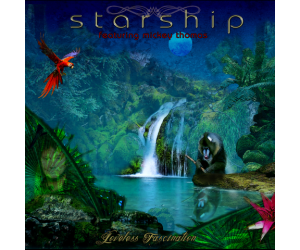 Although it’s been more than 20 years since Starship’s last album of all-new material [1989’s Love Among the Cannibals], the band’s latest release, Loveless Fascination, was certainly worth the wait.
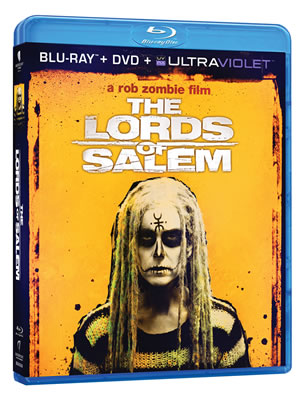 I’ve read quite a few mixed reviews of Rob Zombie’s latest release, “The Lords of Salem”; most of which have either applauded the director for taking a chance on a story about the Salem witches, or berating him for a weak script, uninspired character development and a theatrical plot that seems to go no where.
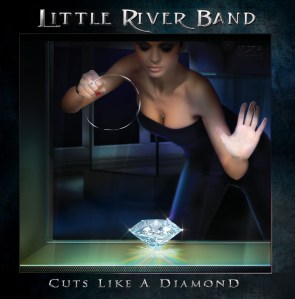 Little River Band is showing no signs of slowing down. The band continues to perform up to ninety shows a year, bringing along its arsenal of radio hits that include “Take It Easy On Me”, “Cool Change” and “Reminiscing”. To date, Little River Band has scored 13 Top 30 Hits and has sold more than 30 million records.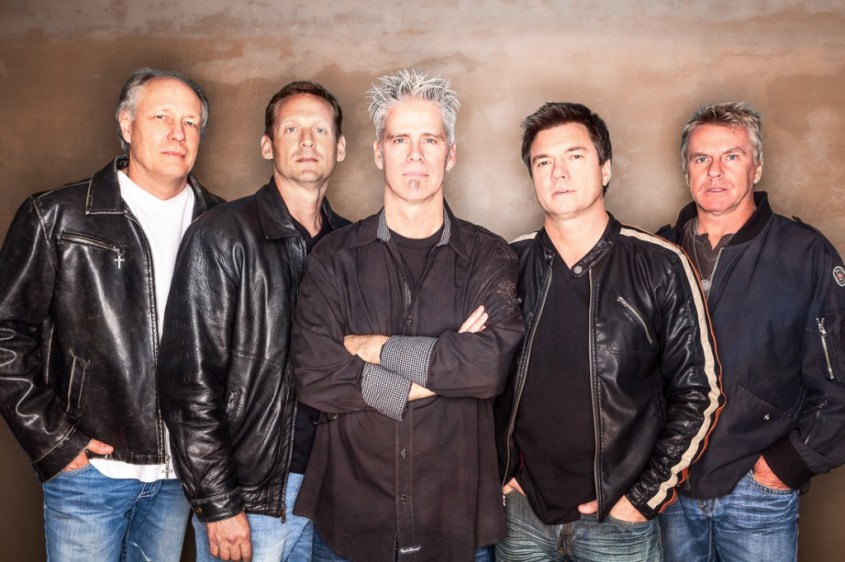
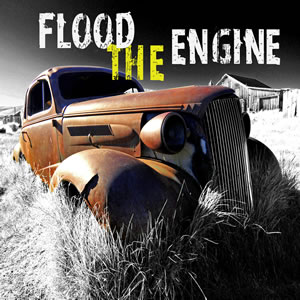 Firehouse guitarist Bill Leverty’s latest project, Flood The Engine is classic, melodic hard rock at its finest. Together with Keith Horne (bass), Andre LaBelle (drums) and Jimmy Kunes (vocals), Leverty’s managed to channel elements from many of his favorite guitarists while also adding his own personal flair, giving the album a much broader appeal.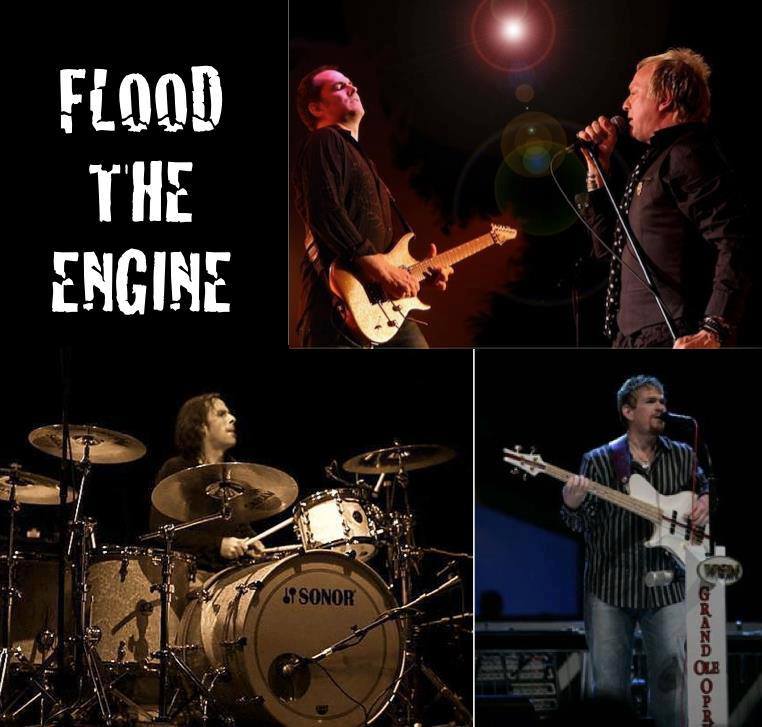
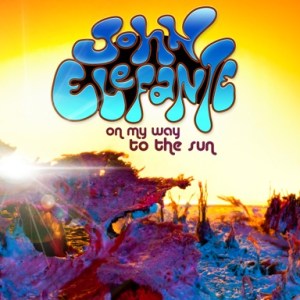 Since the mid 1980’s, John Elefante has been forging his own path as a multi-award winning vocalist, producer and member of the band Mastedon. Elefante and his brother, Dino also founded the popular Sound Kitchen studio which became a hot spot for artists like Buddy Guy and Bruce Springsteen.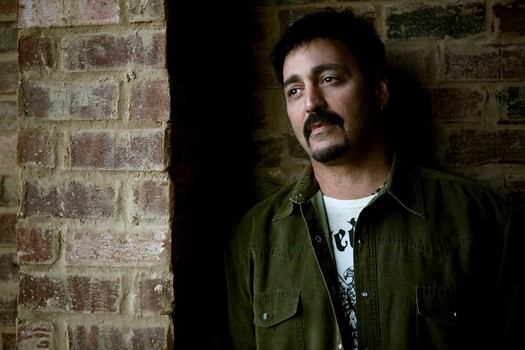
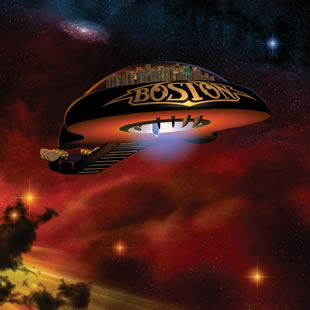 This December, BOSTON’s latest studio album, Life, Love & Hope will be released on Frontiers Records. More than a decade in the making, Life, Love & Hope features 11 tracks replete with the classic and beloved BOSTON sound, as well as the latest in the evolution of Tom Scholz’ musical artistry.
 Actress Jena Sims is a star on the rise. The beautiful Winder, Georgia native and 2007 Georgia Miss Teen USA has already racked up some impressive credits, having worked alongside Hollywood legends Roger Corman and John Landis.
 Forty years is a monumental amount of time for any band to be together, but for Kansas guitarist Richard Williams, the milestone event seems almost normal.
 Lucky Numbers, guitarist Dave Stewart’s third solo album in as many years, is a well-crafted collection of songs adorned with key elements of blues, country and rock.
 …“Club Hideout, Pleasure Seekers and Cradle, the Motor City mad mothers of rock!”…
 go.Jimmy.go