For Something Beautiful, the first Oleander album in eight years, guitarist Rich Mouser wanted an aggressive combination of hard-edged guitars and layered vocals.
Judging by the evidence presented, his idea of a dense production meets both requirements — and more.
Mouser has worked on the production end of Oleander projects from the very beginning. But it wasn’t until the band returned from an extended hiatus that Mouser was asked to become a full-time member. Together with guitarist and founding member Ric Ivanisevich, Oleander now possesses a powerful one-two guitar attack.
The band is gearing up for a Midwestern tour with Three Doors Down and Daughtry before returning to the West Coast to do some shows of their own. I spoke with Ivanisevich and Mouser about the new album.
Read The Rest of My Guitar World Interview By Clicking Here
Circa Zero — a new band featuring guitarist Andy Summers (the Police), singer/bassist/guitarist Rob Giles (the Rescues) and Canadian drummer Emmanuelle Caplette — got together after a mutual friend invited Summers to Giles’ shows with the Rescues.
Summers was immediately impressed by Giles’ vocals and instrumental skills. After getting together to jam and kick around song ideas, it quickly became apparent the duo needed to work together. They began creating edgy, lyrical rock tunes that manage to capture a sound that’s both modern and classic.
While their debut album, Circus Hero, isn’t expected until later this year, their debut performance takes place this very week — Thursday, July 25, at the El Rey Theatre in Los Angeles.
I recently spoke with Summers about Circa Zero — and also got his thoughts on the 30th anniversary of the Police’s monster album, Synchronicity.
(l to r): Andy Summers, Emmanuelle Caplette and Rob Giles – Circa Zero
Read the rest of my interview with Andy Summers by Clicking Here
With guitarist Richie Kotzen (Mr. Big, Poison), bassist Billy Sheehan (Mr. Big, Talas, Niacin) and drummer Mike Portnoy (Dream Theater, Adrenaline Mob) in the mix, how could they be considered anything else?
Just don’t use that moniker around the guys in the band.
“Most supergroups are short-lived and usually have internal problems,” Sheehan said during my recent conversation with all three Winery Dogs. “We didn’t get together to try to capitalize on what we’ve done before. We wanted to do something that was straight out of the box.”
The guys prefer to be considered a classic power trio, and they’ve already released a powerful trio of music videos in advance of their debut self-titled album, which will be released July 23 via Loud & Proud Records. The disc was produced by the band and mixed by Jay Ruston (Anthrax, Stone Sour, Steel Panther).
I recently sat down with Kotzen, Sheehan and Portnoy to talk band origins, gear, the new album and the secrets behind Kotzen’s sound and hybrid picking style.
Read my complete Guitar World interview with The Winery Dogs by Clicking Here!
In an age when most new albums begin with the tracking of instruments in home studios and emailing files back and forth cross-country, it’s refreshing when a band comes along that likes to do things the old-fashioned way.
It’s a method similar to what early ’70s blues/rock pioneers did when recording: They get in a studio and let the creative process take control.
Formed in 2008, Rival Sons consists of Scott Holiday (guitar), Jay Buchanan (vocals), Robin Everhart (bass) and Michael Miley (drums). The band’s new album, Head Down, evokes the same kind of emotion heard in early Led Zeppelin and Aerosmith releases.
Written and recorded over a span of 20 days, the band’s creative, riff-oriented approach is real and raw. The result is an album that’s not only bluesy and instinctive, but also insanely good.
I recently spoke with Holiday about the album, his live setup as well as his recent encounter with Jimmy Page.
Read the rest of my interview with guitarist Scott Holiday by Clicking Here
For guitarist Tom Keifer, The Way Life Goes is an appropriate title for his first solo album.
The Cinderella frontman has had to endure many personal and emotional struggles over the years, including being diagnosed with a partially paralyzed vocal cord and being told he’d likely never sing again.
Having battled back from vocal injury, and now finding himself at the right place in life, Keifer has delivered an album that takes an honest, introspective look at the man who’s written some of the most memorable hard rock songs of the ’80s.
Although production for The Way Life Goes began in 2003, the real roots of the 14-song album can be traced as far back as the mid-’90s, when Cinderella parted ways with their record label and Keifer first began considering a solo project that would eventually take years to complete.
Fans who’ve been clamoring for new Cinderella music will no doubt find comfort in The Way Life Goes, but the album also has Keifer exploring new ground and brings a sound that immediately conjures images of a young Rod Stewart or the Rolling Stones. Even more important than the vibe or showcasing the roller coaster ride he’s been on, the album exposes the refreshingly deep writing style Keifer shares with his wife Savannah (who co-produced the album with Keifer and Chuck Turner).
Read the rest of my Guitar World interview with Tom Keifer by Clicking Here
Whether he’s performing as part of the hit Broadway musical Rock of Ages or jetting around the country for Night Ranger recording sessions and shows, Joel Hoekstra is easily one the hardest-working guitarists you’re likely to meet.
In addition to his aforementioned commitments, Hoekstra finds time to tour every fall with Trans Siberian Orchestra.
This year marks the 30th anniversary of Night Ranger’s monster 1983 album, Midnight Madness, and Hoekstra and the rest of the band — Jack Blades, Brad Gillis, Kelly Keagy and Eric Levy — are excited to celebrate it by recording a new album and performing more headlining shows.
I recently caught up with Hoekstra, who told me how Night Ranger’s new album is coming along and his other musical projects.
You can check out the rest of my Guitar World interview with Joel and watch videos of him working his magic by Clicking Here.
You can call it getting back to their roots or just things coming full circle, but in either case, we the listening public get to reap the benefit.
After a bitter split from Breaking Benjamin and the litigation that followed, guitarist Aaron Fink and bassist Mark James have reunited with vocalist Nick Coyle to form Stardog Champion.
The trio, who once formed the nucleus of the band Lifer have also added drummer Josh Karis to the mix and now bring us Exhale; a collection of deeply cultivated songs with a sound that longs to be turned up to ten.
Produced by Grammy-nominated Neal Avron (Switchfoot, Everclear, Linkin Park), Exhale is a tasty alternative rock opus that features the infectious single and video “When We Fall”.
The band is currently gearing up for a fall tour and also has plans to return to the studio. I spoke with Coyle about the new album as well as his musical upbringing and more in this exclusive interview.
How did this project come about?
Aaron, Mark and I were in a band called Lifer back in 2000 on Universal. It was what they [Aaron and Mark] did prior to Breaking Benjamin. We all remained close friends over the years and recently got together and started writing some songs. After a few months, we decided to bring Josh on board, turn it into a band and give it a name.
Where did the name Stardog Champion come from?
Stardog Champion is actually the name of a Mother Love Bone song. We were shooting a bunch of different names around, but pretty much every band name you can think of has been taken. So we made a list of names and started crossing them off. Stardog Champion was a different sounding name that we all liked.
Stardog Champion (l to r): Mark James, Nick Coyle, Aaron Fink, Josh Karis
What was the songwriting process like?
For me, it all starts with a melody. I’ll hear a melody and usually a lyric within that melody will start forming and I’ll work out an idea around it. I let the vibe of the song dictate where the lyrics go. Sometimes, it’s just me and Mark in a room coming up with a riff. “Aphrodite” is an example of a song we brought to the band. Other times, someone will bring in their own completed idea. “Nothing to Lose” and “House of Cards” were two of Aaron’s songs. Then there are some songs that we all collaborate on that start out as jams.
What’s the origin behind “When We Fall”?
It started out as a riff I was hearing in my head one morning last summer. I then went to my acoustic and figured out the crazy hammer on/pull off riff I was imagining. It just sort of came out. Lyrically it’s about a breakdown in communication. For the video, we were going for a performance video with some strange projections. Then we tossed around the idea of adding some lovely young ladies to the mix. Threw them in some creepy ass masks and….voila! Video! [laughs].
Then there’s “The Switch”.
“The Switch” was a song that I originally brought in. The song is basically about good vs evil; fear and comfort. The verses represent the “dark” things in life and choruses the “light”. Lyrically, it was one of easier songs I’ve written. That was another song that just sort of came out.
What’s your live setup like?
We’re using Gibson, Ernie Ball/Music Man guitars along with Hughes and Kettner and Randall heads. Aaron’s always switching up his effects pedals, but some of his staples are a POG and an H&K Rotosphere.
Tell me a little about your musical background.
Growing up, my dad and uncle were in a band so I was always around rehearsals. I started playing when I was around 12 and joined a band as a lead singer a year later. We went into the studio and cut a cassette tape demo and started playing in bars and clubs. I’ve been doing it ever since.
When you were with Lifer, you had an album produced by Alex Lifeson of RUSH. What was that experience like?
It was amazing. He’s a rock legend, but for as big as he is there is no ego on him. He’s the most down to earth super-cool guy you’d ever want to meet. It’s cool to see someone at that level not let all the success and fame go to his head. He was just like one of the guys.
What are you most looking forward to now?
At this point we’re really looking forward to taking it out on the road and getting the real reaction.
For more on Stardog Champion, check out their Facebook page by Clicking Here!
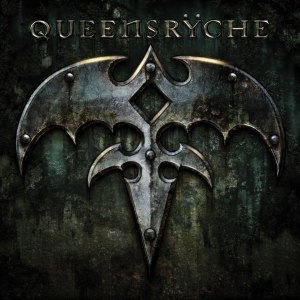
Ever since Queensrÿche cleaved in two last year, its members have found themselves in separate camps.
On the one side there’s founding singer Geoff Tate. On the other are three founding musicians — guitarist Michael Wilton, bassist Eddie Jackson and drummer Scott Rockenfield — who are joined by guitarist Parker Lundgren and former Crimson Glory singer Todd La Torre on vocals.
Some would say the latter act has its work cut out for it. For many longtime Queensrÿche fans, Tate is the real-deal — the voice of the Queensrÿche sound.
Lundgren is himself a fairly recent addition to the Queensrÿche camp, having joined the group in 2009. But he and his bandmates have been hard at work winning over skeptics with their new self-titled album. It’s a disc that not only feels like the band’s second coming but also stays true to Queensrÿche’s original sound.
A judge will decide later in November which of the two Queensrÿches is allowed to carry on with the name. Until then, Lundgren and company will be hard at work making their case before the fans, one gig at a time.
Read the rest of my interview with Parker Lundgren by Clicking Here!
Thirty years ago, Night Ranger were transformed from an opening act to a headliner with the release of their album Midnight Madness. The 1983 record became a smash hit within months of its October release, thanks to tracks like “Sister Christian,” “(You Can Still) Rock in America” and “When You Close Your Eyes.”
For Night Ranger guitarist and founding member Brad Gillis, the time between then and now seems like a lifetime. Over the years, in addition to recording and touring with Night Ranger, Gillis has released solo albums and written hundreds of songs for the ESPN network.
Although his greatest fame came with Night Ranger, Gillis is also remembered for replacing Randy Rhoads in Ozzy Osbourne’s band immediately after Rhoads’ death while on tour with Ozzy in 1982. At the time, Night Ranger were still unknowns, whereas Osbourne was a star. Eventually, Gillis would be forced to choose between staying with Ozzy or continuing with Night Ranger.
Guitar World recently caught up with Gillis to talk with him about Midnight Madness, his tenure with Ozzy and his and Night Ranger’s forthcoming albums.
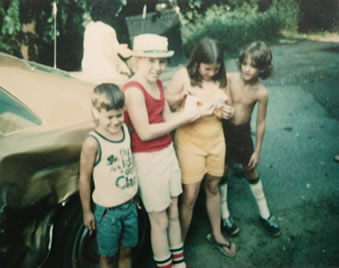
Next to the 1977 Malibu Classic – Guess which one is me.
I was driving in to work Monday morning and doing what I sometimes do at 5:20 am: switching between channels on my satellite radio system.
Normally, the fifteen minute commute along the highway known as Route 22 near my home is laden with the sounds of Smooth Jazz echoing through the cabin of my 2022 Ford Bronco Sport.
I know, shocking.
You’d probably expect a metal-head like me to have Hair Nation turned up to ten at all times. But I’ve come to realize that whether it’s because I’ve started to open myself up to small changes in musical taste or just the fact that I’m getting old (I prefer the former); listening to smooth jazz in the morning relaxes me and helps me face the day.
But on this particular Monday it just wasn’t cutting it. So I started switching the dial around to find something different and eventually stumbled upon the 70’s on 7 station. That was when a tune came on that I hadn’t heard on a car radio in more almost 40 years. Hearing that song again not only brought back some good memories but also gave me the ammunition I needed for today’s post.
What I’ve done is compiled together a list of the Top 4 songs I remember most listening to on the car radio. The caveat of this list is, all of these songs were on occasions when I was riding in the back seat while my parents drove.
You may find some of these choices a bit strange but these songs, when played on the car stereo at a particular moment in time, placed a permanent bookmark in my memory bank. Memories that still to this day stick with me whenever I hear them.
So here you go – The Top 4 Songs I Remember from Car Drives.
4. Lido Shuffle (Boz Scaggs) – 1977
This was the song that came on the radio on my drive into work this morning. I still have never taken the time to figure out the lyrics but what I do know is that hearing this song still takes me back to 1977 and those drives in my Dad’s Malibu Classic. It didn’t even really matter where we were going or if I was riding in the back seat or had the honor of riding shotgun next to him.
I can still picture my dad, sitting in the driver’s side with his white t-shirt and dungarees. The windows are down and the wind is blowing the sweet smell of summer honeysuckle into the car’s cabin. Thinking about it again now (much like I did on the drive in to work), I can still taste the innocence of childhood.
3. Happy Days Theme – 1976
This one may shock you but considering my fascination with the power of The Fonz it was inevitable that I was going to like this theme song. This song was recorded in 1976 and actually charted at #5 on the Billboard Hot 100 and received quite a bit of radio play.
There was this little fishing spot up along Bushkill Drive that our family used to take excursions to on summer weekends. My parents always referred to it as ‘The Creek.” I remember sitting in the back seat next to a half-dozen or so fishing poles when this song just happened to come on the radio one day while we were pulling in. I’ll never forget begging my parents not to turn off the ignition and for us all to just sit and listen to the radio until the song was over. Fortunately they complied or else I might have thrown a hissy fit.
Speaking of hissy fit…..
2. Bad, Bad Leroy Brown (Jim Croce) – 1973
It was sometime in the mid-70’s when Dad took me and my brother on our first overnight camping trip with a bunch of people to Camp Hugh Beaver in his 1965 Mustang. I remember this because I was extremely excited about going camping, that is until we arrived. From then on, I immediately wanted to go home for a reason that to this day still eludes me.
I remember voicing my opinion for home very loudly, and eventually through tears. My dad would ignore my pleas and made us stay there that first night, but once the sun came up I was back at it again; crying and wanting to go home. Eventually, he gave in to my demands and we all packed up early and headed home.
Why do I remember this, you ask? Because on the drive home the song “Bad Bad Leroy Brown” came on the car radio. In addition to really digging the song, the thing I remember most is asking Dad about it and him telling me that Jim Croce had recently been killed in a plane crash.
and you KNEW this one was coming!!
1. Cum On Feel The Noize (Quiet Riot) – 1983
It was several years after the camping debacle; sometime in 1983 for sure. Dad was driving my siblings and I along a rural stretch of Pennsylvania road when the drums kicked in. My immediate instinct was to yell “TURN IT UP!!!”
I don’t know what it was, but something about that song hooked me in from the get-go. It was unlike anything I had ever done before. It was the first time I had ever heard the song and I still recall telling the rest of the people who were in the car with me to shut the f#ck up so I could listen (Ok, I said “heck” – after all, my Dad was there).
Now it’s your turn. Feel free to share your own list of songs. The ones you remember most from driving as a kid!
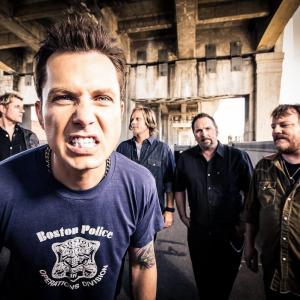 For Something Beautiful, the first Oleander album in eight years, guitarist Rich Mouser wanted an aggressive combination of hard-edged guitars and layered vocals.
 Circa Zero — a new band featuring guitarist Andy Summers (the Police), singer/bassist/guitarist Rob Giles (the Rescues) and Canadian drummer Emmanuelle Caplette — got together after a mutual friend invited Summers to Giles’ shows with the Rescues.
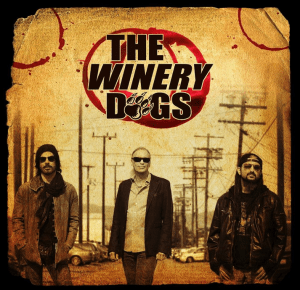 Are they a supergroup? Well, yes.
 In an age when most new albums begin with the tracking of instruments in home studios and emailing files back and forth cross-country, it’s refreshing when a band comes along that likes to do things the old-fashioned way.
 Read the rest of my interview with guitarist Scott Holiday by
  For guitarist Tom Keifer, The Way Life Goes is an appropriate title for his first solo album.


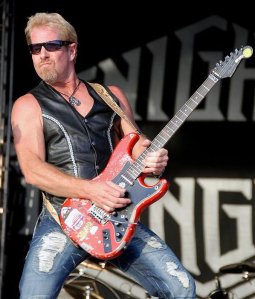 Thirty years ago, Night Ranger were transformed from an opening act to a headliner with the release of their album Midnight Madness. The 1983 record became a smash hit within months of its October release, thanks to tracks like “Sister Christian,” “(You Can Still) Rock in America” and “When You Close Your Eyes.”
 go.Jimmy.go